

Dark Bronze Urn Pair
A dark bronze urn pair brings sculptural weight and classical symmetry to a room, offering matched focal points rooted in nineteenth-century craftsmanship.
Dark Bronze Urn Pair
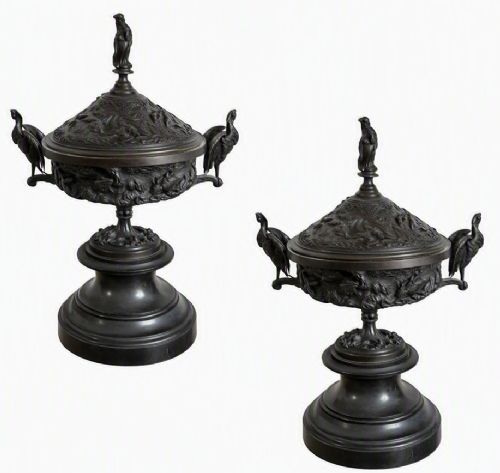
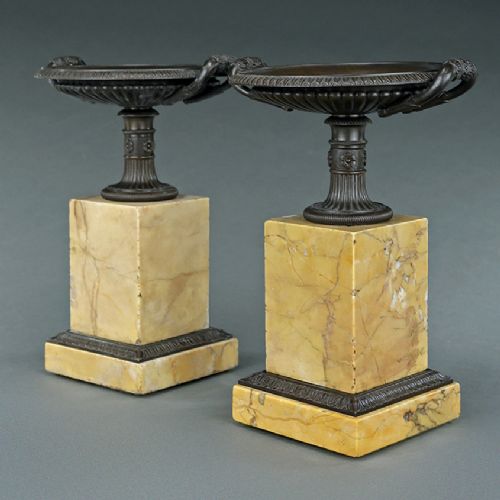
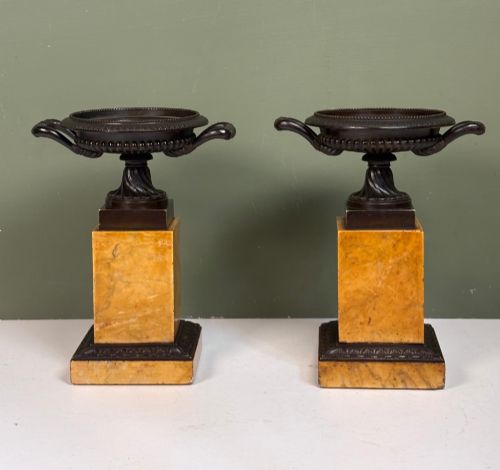
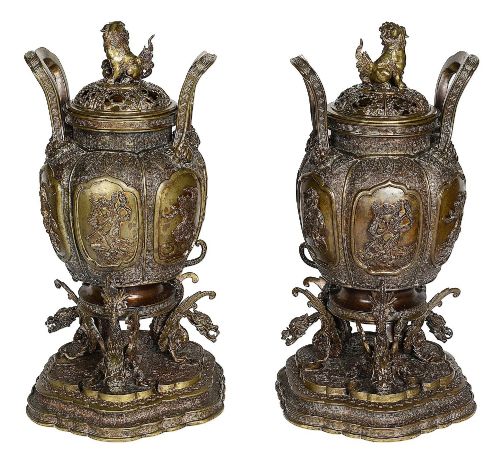
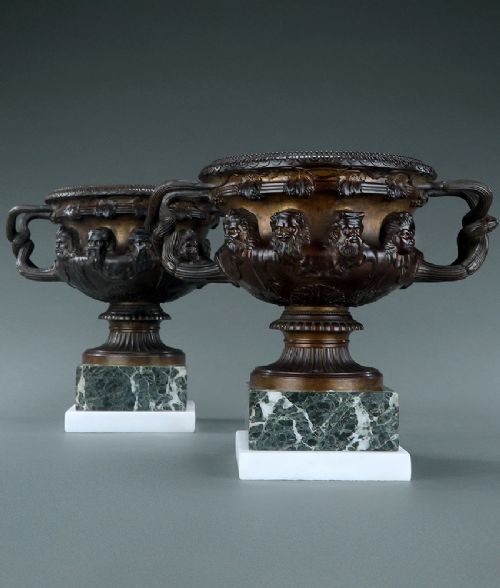
A dark bronze urn pair consists of matching decorative vessels cast in metal and shaped by classical or eastern traditions, frequently emerging during the nineteenth century. These items appear across various forms such as campana shapes, tazzas, and lidded vessels, often mounted upon contrasting bases of marble or stone.
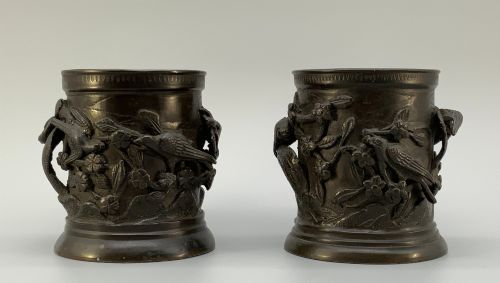
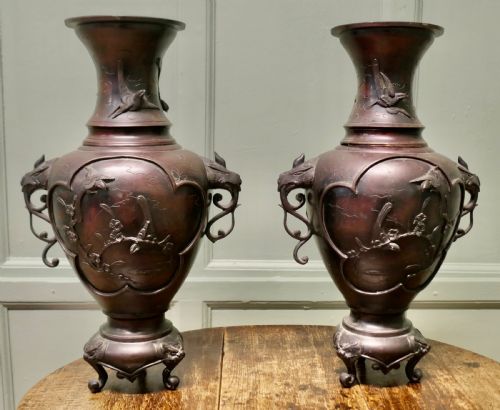
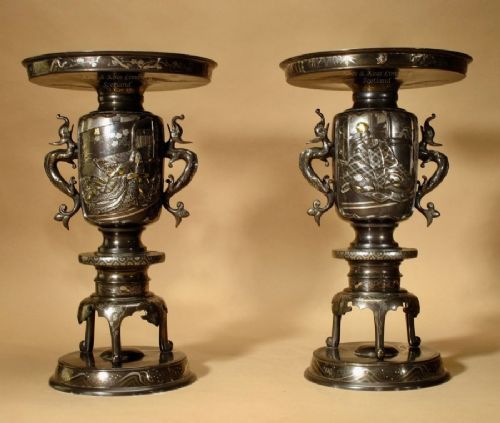
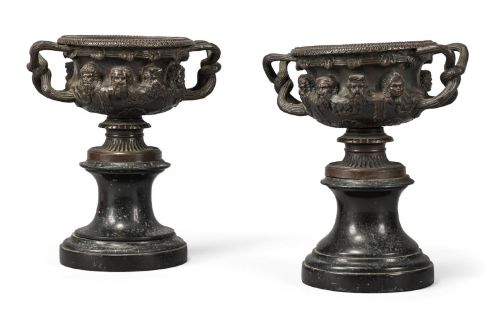
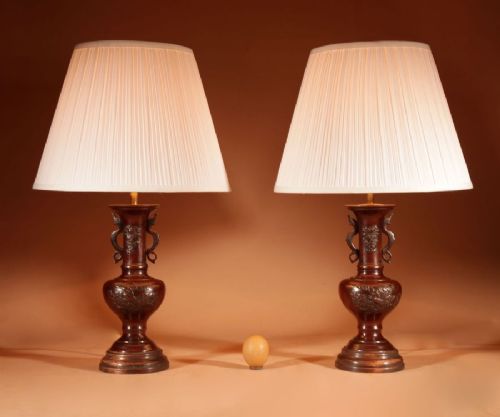
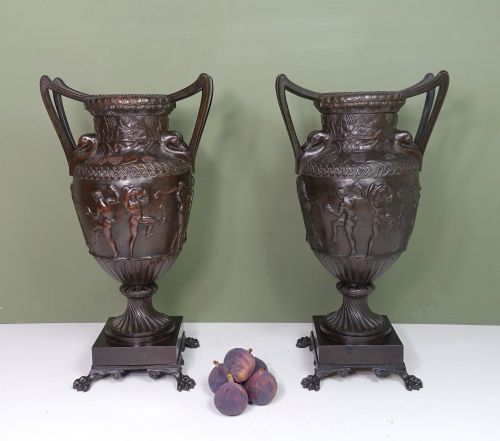
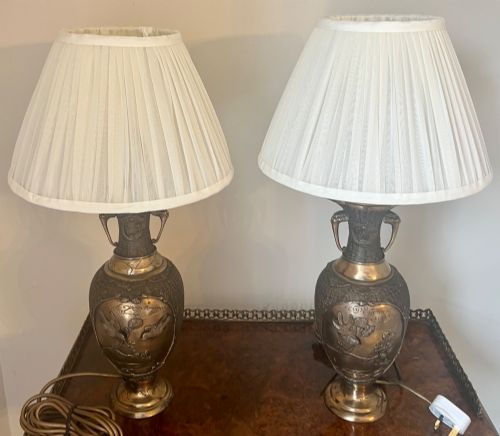
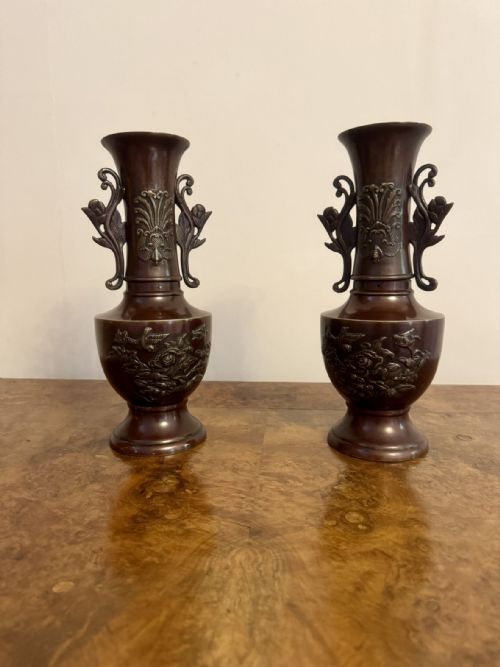
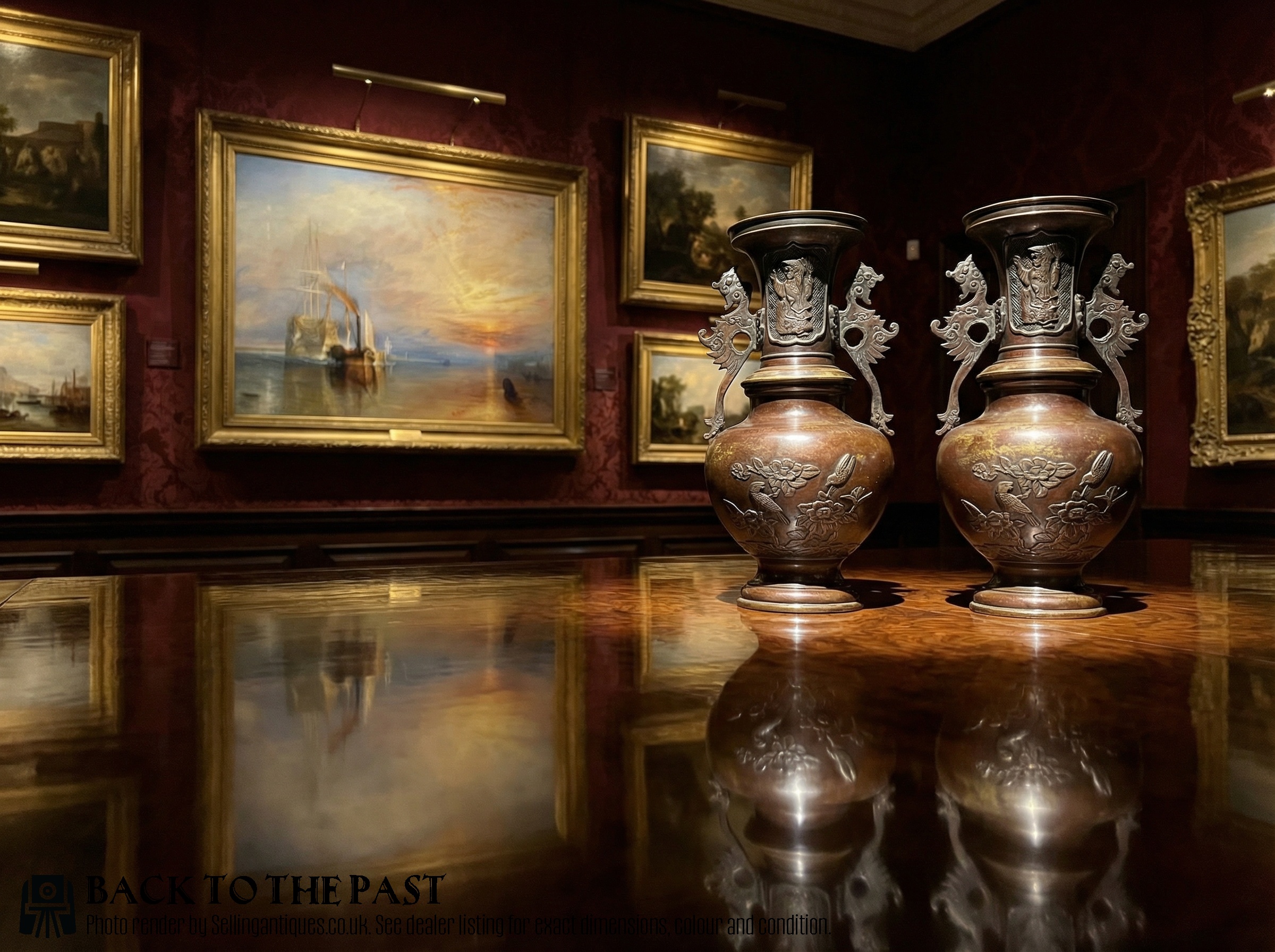
The selection on this page divides broadly between European neoclassical interpretations, including Grand Tour souvenirs and French Empire designs, and Japanese Meiji period bronzes featuring raised bird and floral motifs. Buyers encounter both rigorous classical revivals and intricate oriental casting traditions within these listings.
How they were made
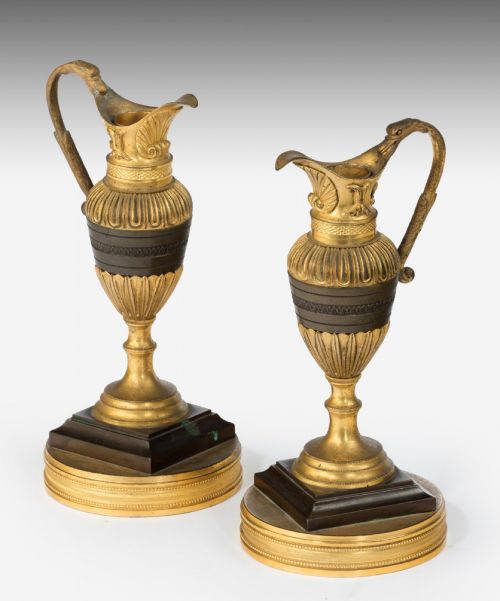
Foundries typically utilised traditional lost-wax casting methods to achieve complex sculptural details like handles formed as birds, figures, or classical masks. Artisans then applied chemical patination to create deep dark bronze surfaces, sometimes combining the dark metal with gilt bronze, ormolu, or inlaid mixed metals.
Many of these urns and vases incorporate integrated stone elements, mounting the metal bodies upon siena or stepped marble plinths. Alternative manufacturing methods in the period also produced bronzed spelter pairs for decorative domestic use.
Listings feature items spanning the nineteenth century, including specific periods like the Regency, French Empire, and Japanese Meiji eras.
What varies in quality
Quality rests upon the crispness of the chased and finished details, distinguishing finely hand-modelled feathers, foliage, and figures from softer, commercially cast alternatives. The depth and integrity of the dark bronze patina, alongside the weight and selection of accompanying marble bases, further separate standard decorative objects from superior works.
The distinction also lies in the fidelity of the casting and the prestige of the maker or foundry behind the piece. Signatures or documented attributions elevate certain French and Japanese works above anonymous production items.
Jules Moigniez·Clodion
The Dark Bronze Urn Pair Glossary
- Campana urn
- A bell-shaped vessel with a flaring rim and a footed base, frequently styled on ancient Roman pottery forms.
- Ormolu
- Gilded bronze achieved by applying a mercury-gold amalgam to the metal surface, creating bright golden highlights against dark bronze.
- Patinated bronze
- Metal treated with chemical solutions to produce a controlled dark surface colour rather than relying on bare polished alloy.
- Meiji period
- The era in Japanese history spanning from 1868 to 1912, known for highly detailed bronze casting and export art.
- Tazza
- A shallow saucer-like vessel mounted on a stem and foot, often utilised in pairs for classical display.
Dark Bronze Urn Pair: Frequently Asked Questions
What is a dark bronze urn pair?
A dark bronze urn pair comprises two matching ornamental vessels cast in metal with a darkened chemical finish. These symmetrical objects were designed primarily for decorative display on mantelpieces, pedestals, or library tables.
Originating largely across the nineteenth century, they draw upon European classical antiquity or Japanese Meiji craft traditions. Their matched forms provide balanced focal points within traditional interior schemes.
How were these urns used historically?
Historically, these vessels served as decorative accents in formal rooms, libraries, and galleries. European examples often commemorated educational travels known as the Grand Tour.
Japanese Meiji period vases and urns were created for both domestic appreciation and the burgeoning international export market. They functioned as standalone sculptures or sophisticated display pieces celebrating nature and classical myth.
How do I style them at home?
Styling a pair works best when placing them symmetrically on a substantial piece of furniture such as a sideboard, console table, or mantelpiece. Their dark metal tones contrast effectively against lighter stone or wood surfaces.
Ensure they have adequate surrounding space so their sculptural handles and patinated finishes remain visible. Some versions adapted as table lamps also provide functional lighting alongside decorative presence.
How can I tell French and Japanese pieces apart?
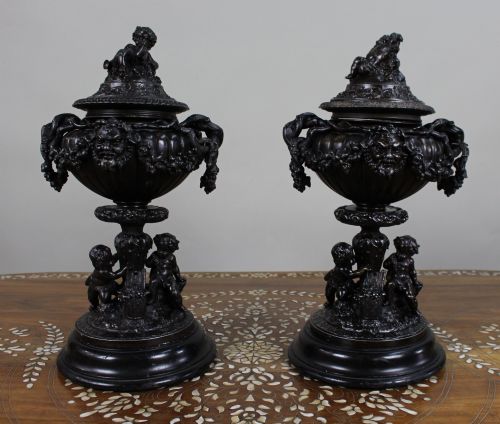
French pieces typically display European classical motifs such as Bacchic masks, putti, handles shaped like swans or scrolls, and often incorporate ormolu or marble plinths. They frequently reference neoclassical, Empire, or Renaissance styles.
Japanese Meiji period items generally feature naturalistic subjects including birds, blossoms, and egrets, often utilising mixed metal inlay or distinctive handle designs like the mimikuchi form. Their stylistic vocabulary draws directly from traditional Eastern artistry.