


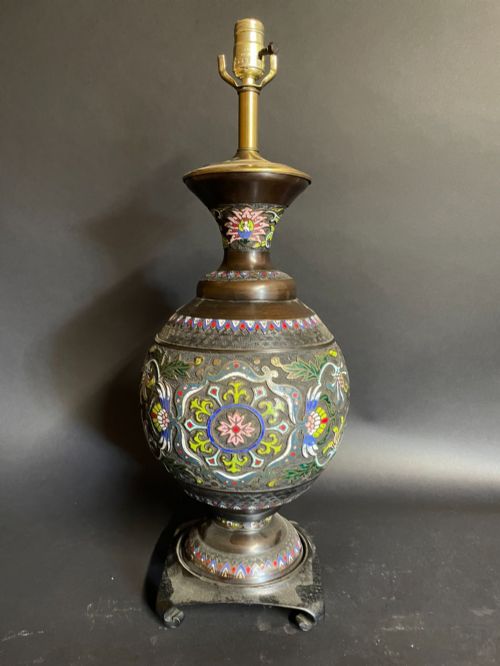


Dark Bronze Table Light
These dark bronze table lights range from Japanese Meiji bronzes to French classical columns, built to cast a warm glow across a room.
Dark Bronze Table Light
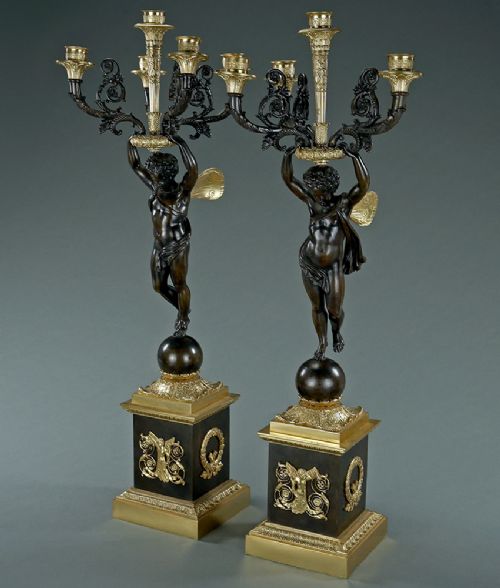
A dark bronze table light serves as a functional illuminator and a sculptural object for a desk or side table. The selection spans the nineteenth century through the early twentieth century, drawing on diverse aesthetics from Japanese Meiji period castings to French Empire revivals.
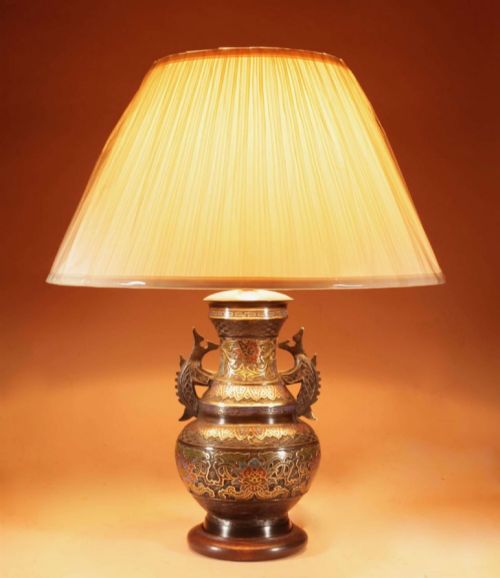
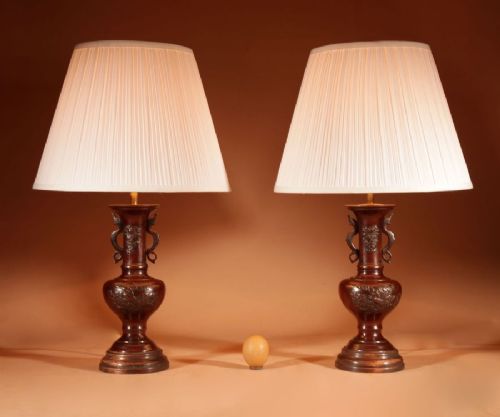
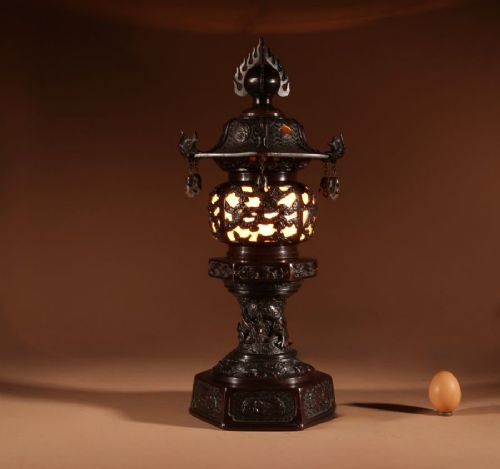
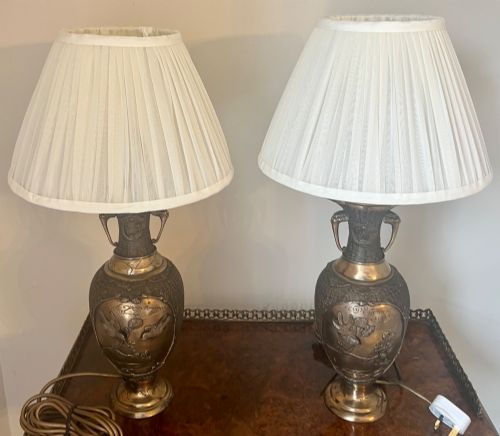
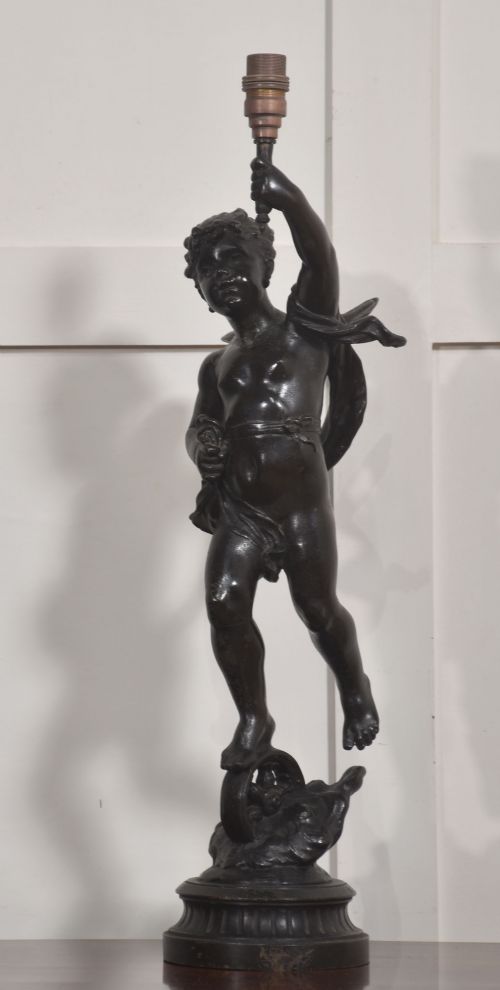
Buyers frequently encounter conversion pieces alongside period lamps, where earlier candlesticks, candelabra, and lanterns have been adapted for electrical wiring. Forms vary from simple classical columns and figurative cherubs to intricate Chinoiserie lanterns and mythological figures.
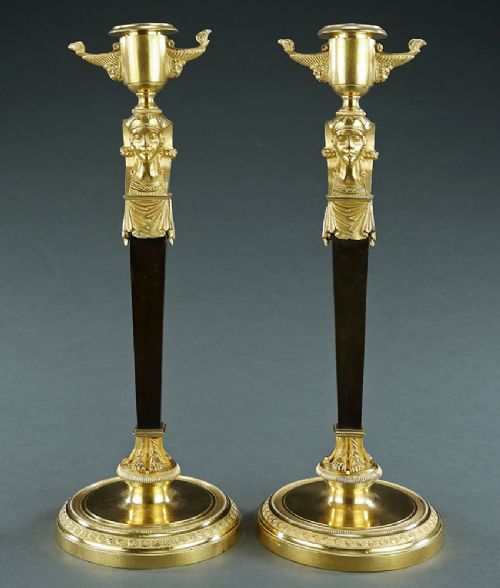
Origins stretch across European and Asian workshops, with French neoclassical styles and Japanese bronze vessels forming a large share of the available objects. These pieces often incorporate subsidiary materials such as marble bases, ormolu mounts, and glass cabochons.
How they were made
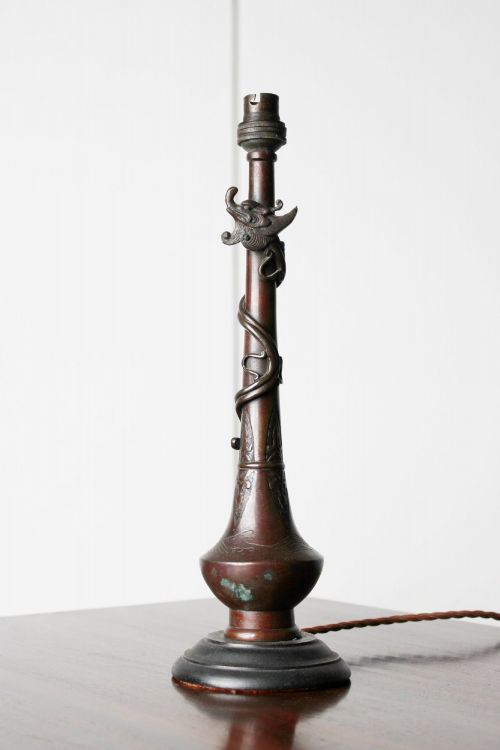
Makers utilised traditional lost-wax casting and sand-casting methods to shape the dark bronze bodies, capturing fine details in dragons, cherubs, and classical drapery. Artisans then applied chemical patination to achieve deep brown, black, or greenish surface tones.
Many examples combine bronze with contrasting metals like gilt bronze and ormolu, while others integrate carved marble plinths, rock crystal columns, or glass inserts. Hand-chasing completed the metalwork, sharpening the relief on figures and foliage before final assembly.
Mermaids, mermen, and mythical figures occasionally support the lamps, bringing a touch of nineteenth-century fantasy to the bedside table.
What varies in quality
Material integration also dictates quality, distinguishing solid patinated bronze bodies with heavy marble bases from lighter white metal alternatives or composite spelter castings. The subtlety of the patination and the integrity of any gilt bronze or ormolu mounts complete the distinction.
G. Amodio Naples·Georges Leleu·Emile Picault·Ivan Zaiec
The Dark Bronze Table Light Glossary
- Patination
- The surface colour and texture developed on bronze through age or chemical treatment. This chemical layer protects the metal and gives the object its characteristic dark tone.
- Ormolu
- Gilded bronze produced by applying a mercury-gold amalgam to the metal surface and heating it. This technique creates a durable, bright gold finish that contrasts with dark bronze.
- Champlevé
- An enamelling technique where troughs are dug into the bronze surface and filled with vitreous enamel before firing. It frequently appears on Japanese decorative pieces.
- Candelabra
- A branched candlestick designed to hold multiple candles simultaneously. Many period examples are later converted to hold electrical fittings.
- Meiji Period
- The era in Japanese history from 1868 to 1912 noted for high-quality metalwork exported to the West. Bronzes from this period often feature dragons and lantern forms.
Dark Bronze Table Light: Frequently Asked Questions
Are these lights converted from older items?
Many table lights originate as nineteenth-century candelabra, candlesticks, or hanging lanterns that were fitted for electricity at a later date.
This adaptation preserves the antique metalwork while updating the wiring for modern domestic use.
How do I identify the period of a bronze lamp?
Stylistic clues such as French Empire motifs, Art Nouveau plant tendrils, or Japanese Meiji dragons point toward specific decades and manufacturing centres.
Examining the weight, casting seams, and base construction provides further context on the age of the piece.
What is the difference between bronze and spelter?
Bronze is a durable alloy of copper and tin that accepts deep patination and holds fine chisel work. Spelter is a cheaper zinc-based metal alloy used for lighter decorative figures.
Bronze examples feel heavier and retain sharper relief details across the cast surfaces.
How should I clean a dark bronze surface?
Dust the metal gently with a soft, dry cloth to prevent the accumulation of grit in the recesses of the casting. Avoid using chemical polishes or water, which can strip away the original patination.
Applying a very light coat of microcrystalline wax occasionally helps protect the finish.