



Antique Cloisonne Lighting
Antique cloisonne lighting brings vibrant colour and meticulous metalwork into rooms through transformed vases, candlesticks, and candelabra.
Antique Cloisonne Lighting
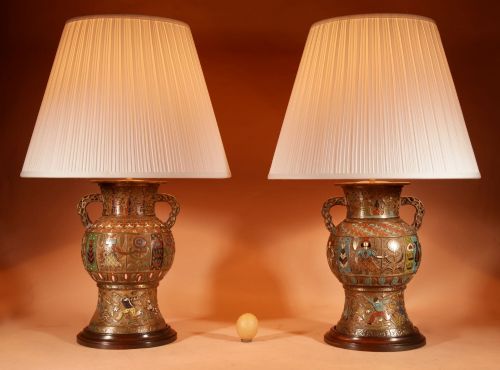
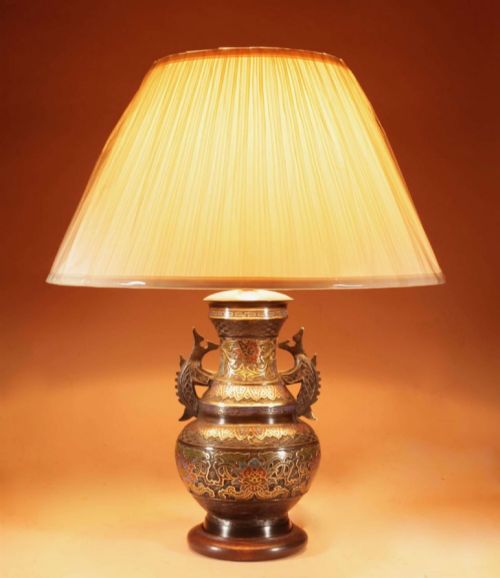
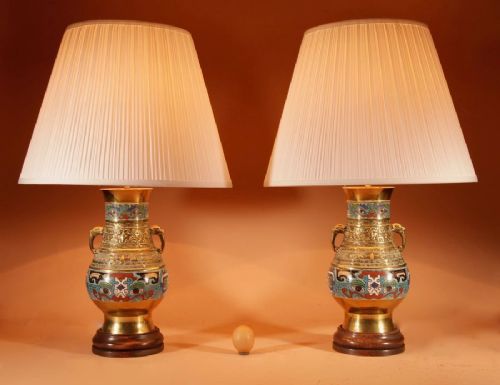
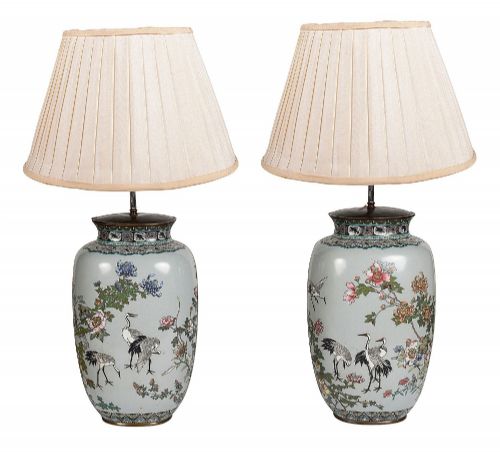
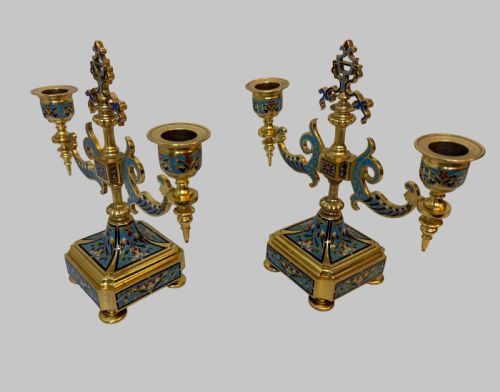
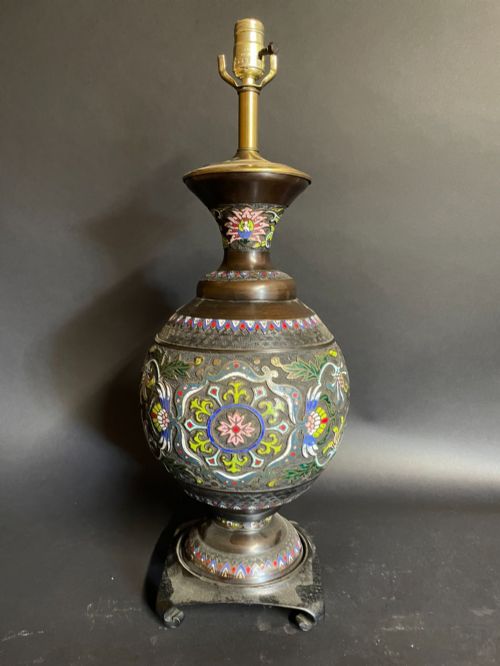
When you search for antique cloisonne lighting, you are looking at decorative vessels and candle holders from the nineteenth and early twentieth centuries that have been converted into functional lamps. The most common form on this page is the pair of table lamps created from Japanese Meiji period or Chinese export vases, alongside French ormolu-mounted candelabra.
Many of these conversions utilise antique vases or twin-handled lamp bases fitted for electricity while retaining their original brass, bronze, or gilt bronze mounts. Originating from distinct Eastern and European workshops, they bridge traditional decorative arts and practical domestic illumination.
How they were made
The foundation of each piece rests on a metal body of brass, copper, or bronze, upon which thin metal wires are soldered to form intricate cellular patterns. Artisans then filled these individual compartments with coloured enamel pastes before firing and polishing the surface to a smooth, lustrous finish.
Makers often mounted these enamelled bodies on ormolu bases or paired them with fabric shades, integrating structural hardware during later conversions to house electrical fittings safely.
At least one Victorian traveller brought home a micro mosaic chamber stick that somehow survived the Grand Tour intact.
What varies in quality
The distinction between standard examples and the finest pieces lies in the precision of the wirework and the depth of the enamel palette. Superior items display microscopic cell boundaries and flawless firing without pitting, whereas simpler productions show heavier lines and minor surface irregularities.
Mounting quality also dictates the tier of the piece, with heavy cast bronze, intricate ormolu framing, and substantial weight separating masterwork conversions from lighter, more commercial adaptations.
The Antique Cloisonne Lighting Glossary
- Cloisonne enamel
- A decorative metalwork technique where fine wires create cells filled with coloured paste and fired. This method defines the primary surface ornamentation across all listed lamps.
- Champleve
- An ancient enamelling method where troughs are gouged directly into a thick metal base and filled with vitreous paste. Several listed Japanese lamps and French candlesticks utilise this specific technique.
- Ormolu
- Gilded bronze mounts applied to furniture and decorative objects for structural support and embellishment. French candelabra frequently employ this material to frame the enamelled body.
- Chinoiserie
- European artistic style reflecting Chinese motifs and decorative traditions. This aesthetic appears in Grand Tour pieces and certain nineteenth-century Western adaptations.
Antique Cloisonne Lighting: Frequently Asked Questions
Are these lamps newly wired?
Conversion dates vary, and many antique bases receive updated wiring to meet modern electrical safety standards while preserving the historic body.
Buyers should inspect the specific wiring configuration upon arrival and consult a qualified electrician if rewiring is necessary for daily use.
How do I clean the enamel?
Dust the surface gently with a soft, dry cloth to prevent any accumulation of dirt within the delicate wire channels.
Avoid chemical polishes and abrasive cleaners entirely, as they damage both the vitreous enamel and the aged metal mounts.
Can I find matching pairs?
The inventory frequently includes matched pairs of vases converted into table lamps or candelabra originating from the same period.
These paired sets offer symmetrical balance for mantelpieces, sideboards, or large tables.
How do I date these pieces?
Dating relies on stylistic markers such as Meiji period Japanese motifs, Victorian brass hardware, and nineteenth-century manufacturing techniques.
Makers often left unmarked bases, so dating depends on comparative analysis of the enamel colours and metal casting styles.