



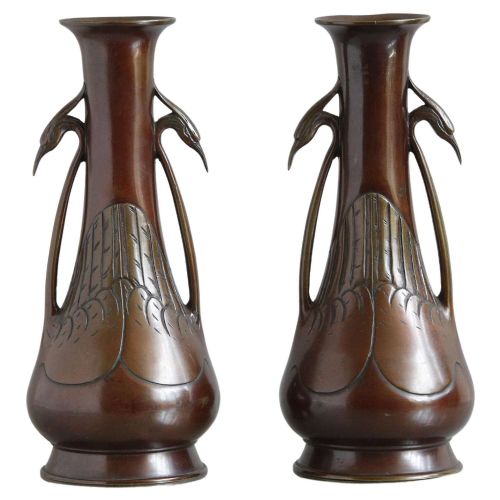
Dark Bronze Japanese Vases
Dark bronze japanese vases are heavy metal vessels cast with patinated surfaces and flora or fauna motifs, prized for sculptural weight and intricate detailing.
Dark Bronze Japanese Vases
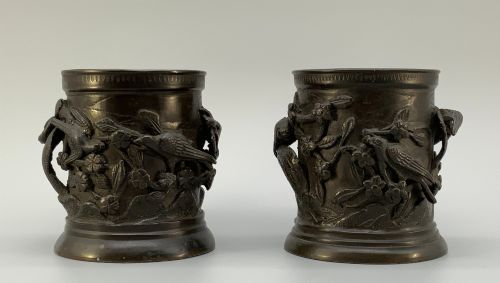
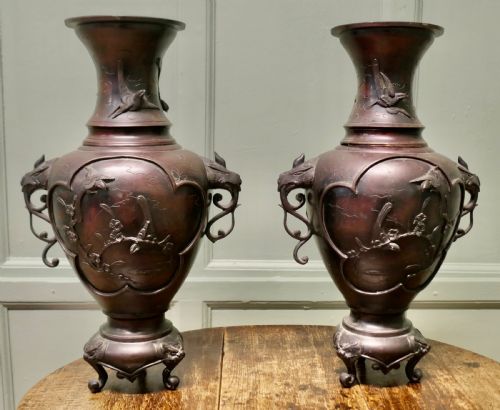
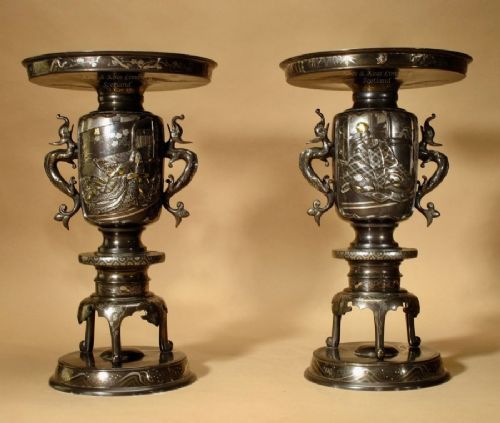
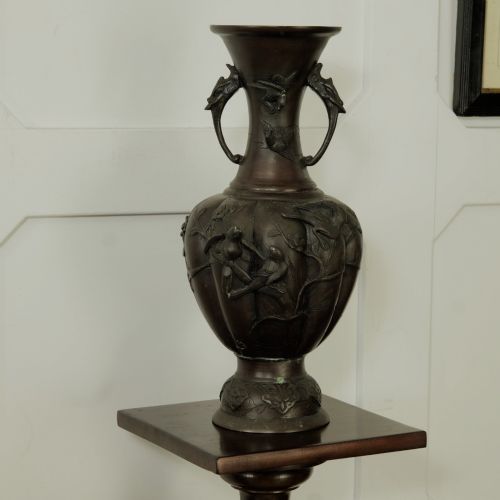
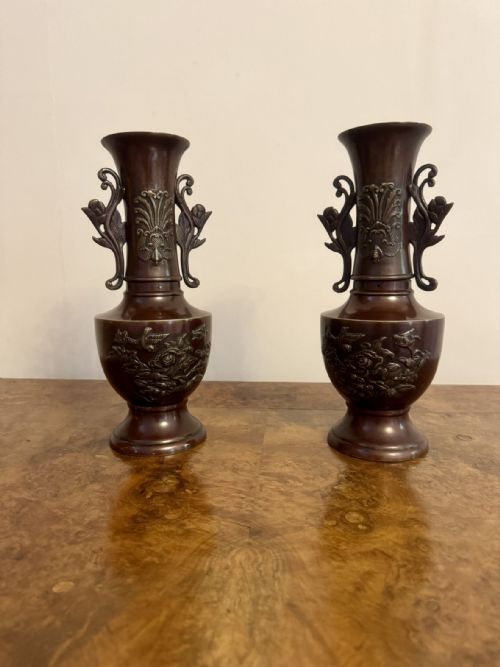
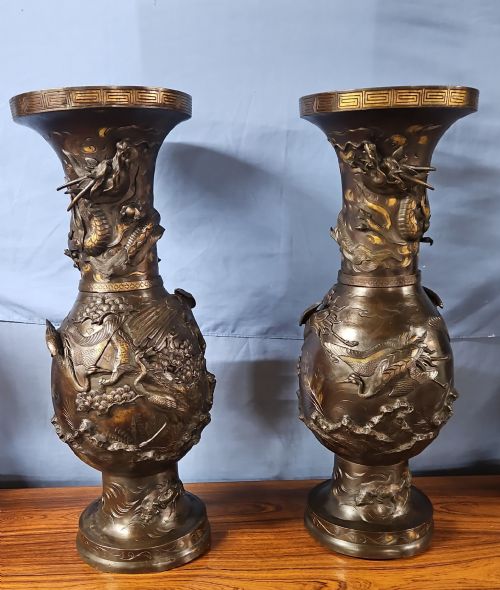
Dark bronze japanese vases comprise heavy metal vessels originating largely from the Meiji period and the later Victorian decades. Buyers encounter pairs of baluster urns, twin-handled vessels and larger floor-standing pieces decorated with birds, blossoms and dragons.
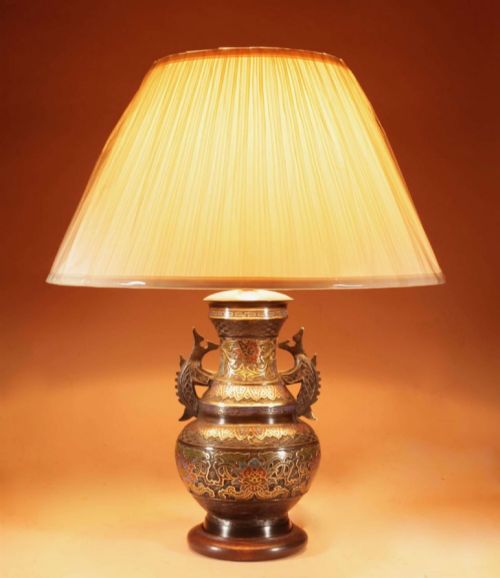
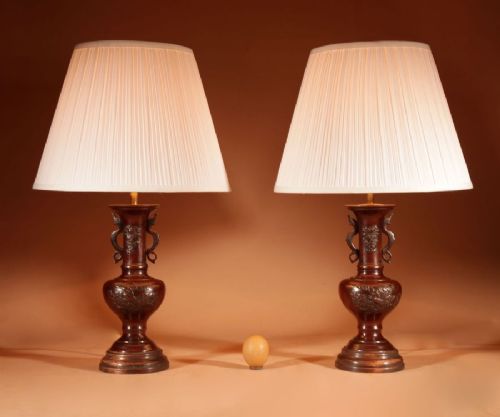
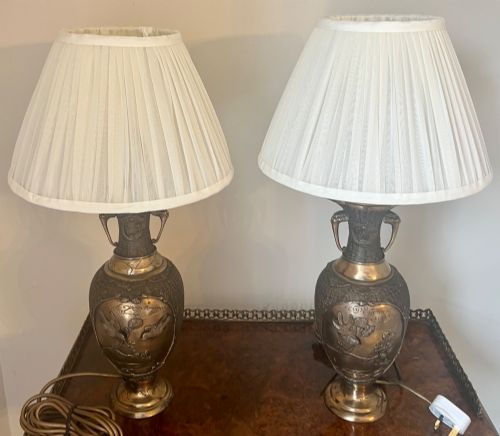
Many examples stem from the late nineteenth century and cross into the early twentieth century, showing influences from traditional metalworking traditions. Table lamps converted from original vases also appear frequently across the selection.
How dark bronze japanese vases were made
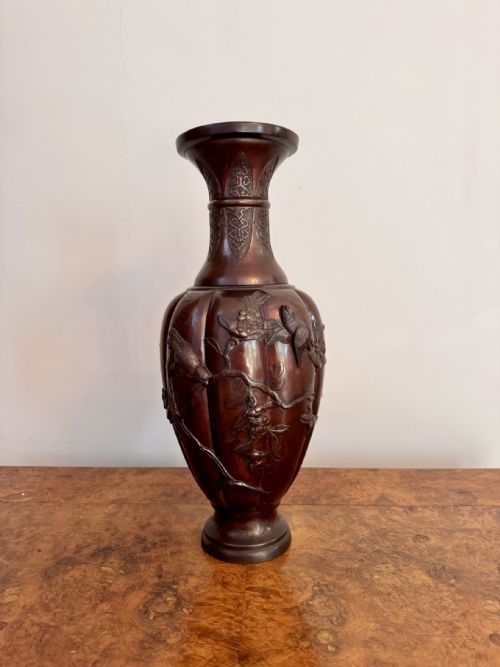
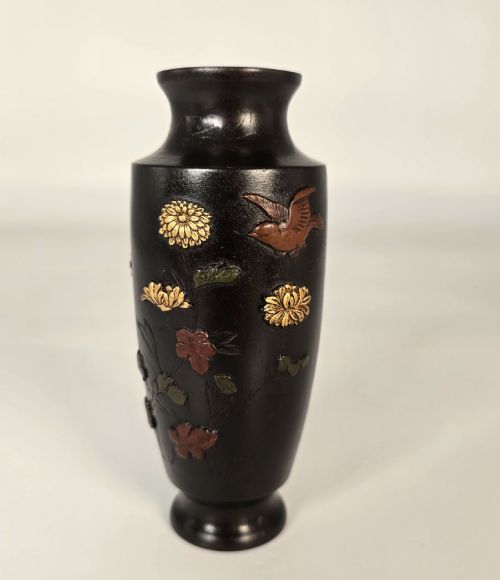
Metalworkers utilised bronze and patinated bronze, often enhancing the dark surfaces with gold inlay and mixed metal elements. Casting techniques allowed for high-relief decoration depicting egrets, carp and floral branches directly onto the body of the vessel.
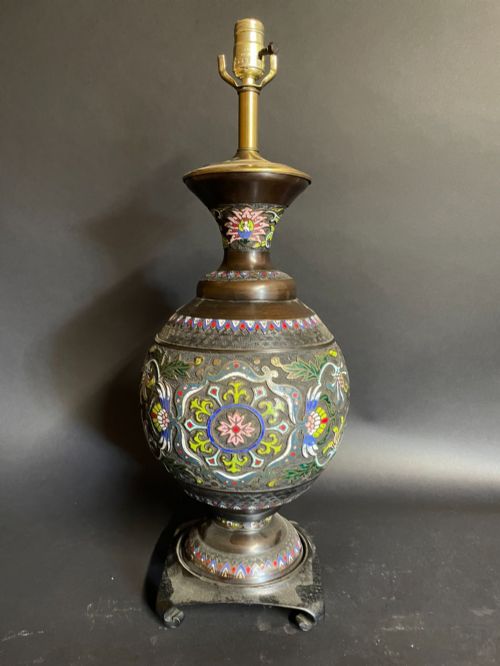
Some pieces incorporate champlevé enamel or incorporate applied handles shaped as birds or mythical beasts. The metal is finished with a deliberate dark patina that accentuates the chased and engraved details.
Watch for sculptural egrets serving as handles, keeping a watchful metallic eye over the room.
What varies in quality in dark bronze japanese vases
The degree of crispness in the chased and cast relief decoration distinguishes standard production from superior examples. Fine pieces display meticulously rendered feathers, scales and floral textures that remain sharp across the entire surface.
Proportion and the depth of the original dark patina also determine the visual impact of the vessel. Heavier castings with balanced handles and integrated mixed metal work command greater attention from collectors.
The Dark Bronze Japanese Vases Glossary
- Meiji Period
- The era in Japanese history spanning from 1868 to 1912, noted for a surge in decorative metalwork exported to the West. Pieces from this time often exhibit advanced casting and patination techniques.
- Patinated Bronze
- Metal treated with chemicals to produce a stable dark surface colour. This finish protects the bronze while highlighting fine engraved details.
- Champlevé
- An enamelling technique where troughs or cells are carved into the bronze body and filled with coloured vitreous enamel before firing. It creates vibrant decorative contrast against the dark metal.
- Mixed Metal
- The technique of combining different metal alloys such as copper, brass and silver on a bronze base to create multicoloured pictorial details. This method requires specialist inlay skills.
- Baluster
- A vase shape characterised by a rounded body that tapers toward the base and flares at the neck. It provides a stable and classic silhouette for heavy metal vessels.
Dark Bronze Japanese Vases: Frequently Asked Questions
How do I date dark bronze japanese vases?
Most pieces date from the Meiji period between the late nineteenth and early twentieth centuries. Stylistic indicators include the presence of mixed metal inlay and traditional bird or dragon motifs.
Examining the depth of the dark patina and the method of casting helps confirm the era. Pieces bearing signatures often point to specific workshops active during the late nineteenth century.
Were these vases made for export?
A large proportion of these bronze vessels was produced specifically for Western export markets during the Meiji period. Makers adapted traditional forms to satisfy European and British demand for decorative interior objects.
As a result, many surviving examples display a scale and finish tailored for Victorian drawing rooms and studies.
Can these vases be used as lamps?
Several examples are wired as table lamps or adapted from original vessels with fitted electrical hardware. Many conversions retain the structural integrity of the antique bronze base.
Careful placement on sturdy surfaces ensures safe display in modern rooms.
How do I care for the patina?
Maintaining the dark surface requires only gentle dusting with a soft dry cloth. Abrasive cleaners and polishes must be avoided to preserve the original chemical finish.
Keeping the metal away from direct moisture protects the integrity of the antique bronze.