



Dark Bronze Cherub Sculptures
Dark bronze cherub sculptures bring classical myth and playful nineteenth-century allegories into interiors through enduring metalwork figures.
Dark Bronze Cherub Sculptures
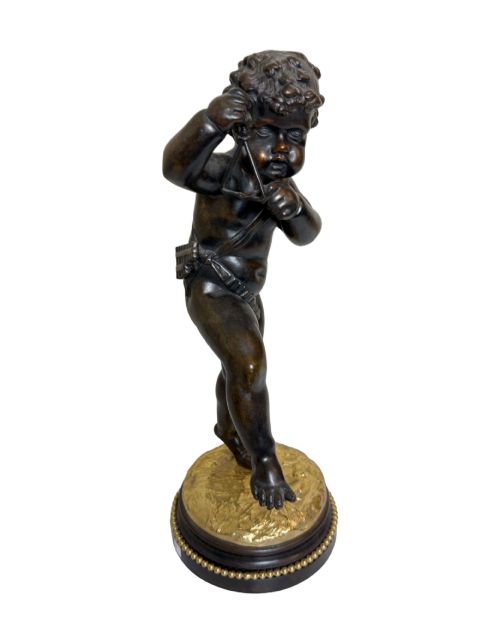
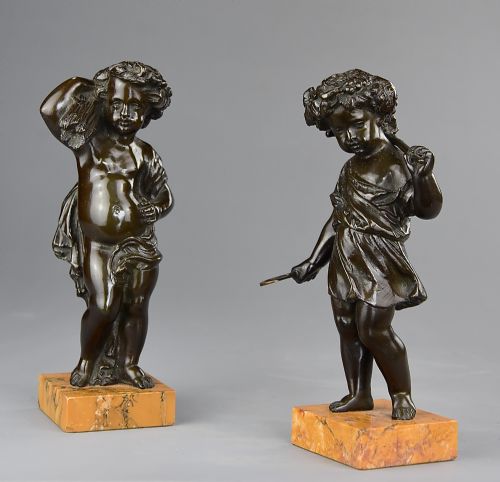
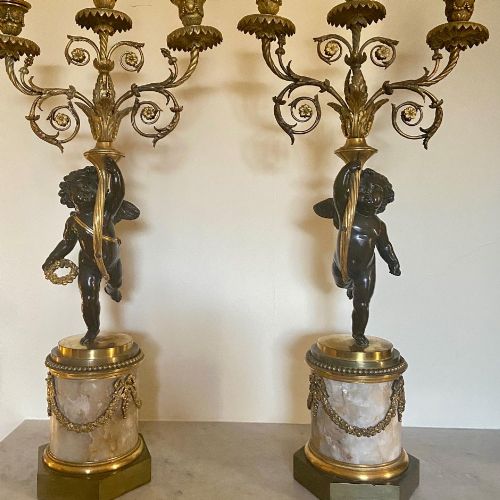
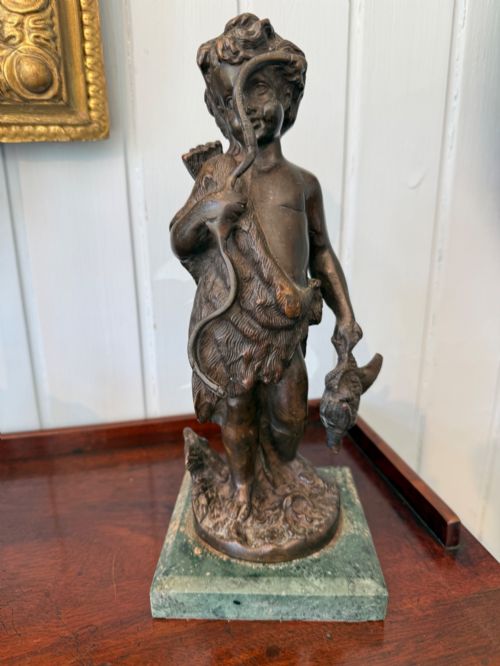
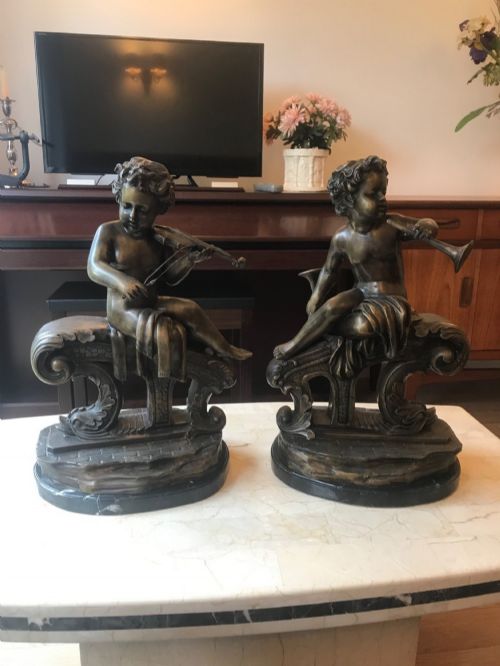
When buyers search for dark bronze cherub sculptures, they encounter cast metal figures of winged infants, putti, and cupids drawn from classical mythology. These works frequently appear as single statuettes, matched pairs, or functional objects such as lamps, candelabra, and bookends.
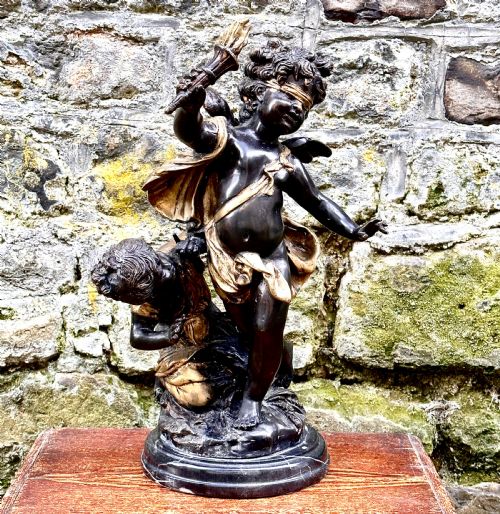
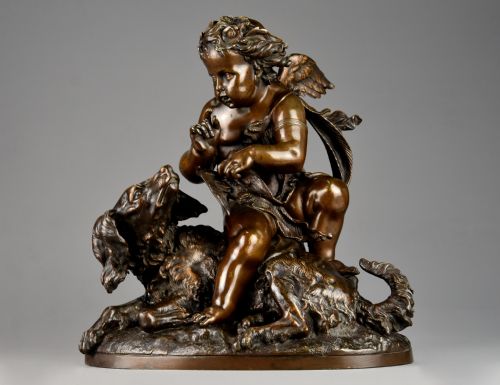
The selections on this page are dominated by nineteenth-century French and Italian Grand Tour pieces, alongside later twentieth-century interpretations. Figures often interact with attributes like musical instruments, grapes, bows, and domestic animals.
Many examples incorporate pedestals of marble or combine patinated dark surfaces with gilt highlights. Buyers will find both small cabinet bronzes and larger sculptural groups reflecting neoclassical and rococo revival tastes.
Materials and casting methods
These works rely primarily on bronze cast through traditional foundry methods, frequently enhanced with chemical patination to achieve deep brown or nearly black surface tones. Artisans often combined patinated bronze with contrasting ormolu highlights to emphasise drapery and anatomical details.
Many compositions integrate structural elements of carved marble for bases, while specific candelabra incorporate fluorspar components. Chasing and cold-working tools finished the cast metal surfaces to define hair, feathers, and facial expressions before mounting.
Listings feature nineteen-century French patinated bronze figures alongside Italian Grand Tour marble and bronze works.
Evaluating sculptural execution
The depth and consistency of the dark patina also distinguish finer works from simpler commercial productions. Furthermore, integrated bases of high-grade marble and secure structural assembly indicate superior workshop standards.
Claude Michael Clodion·Francois Redmond·K and O·Louis Auguste Moreau·Charles Cumberworth·Ferrand·Pigale
The Dark Bronze Cherub Sculptures Glossary
- Putto
- A plump, often winged male child figure frequently seen in classical art. These cherubic motifs originate in Renaissance interpretations of ancient Eros and cupid figures.
- Grand Tour
- A cultural journey undertaken by wealthy young Europeans visiting historical sites in Italy. Souvenirs included small bronze models and classical sculptures purchased abroad.
- Patination
- The chemical or thermal treatment applied to metal surfaces to produce deliberate colouration. Dark bronze finishes rely on patination to create rich brownish-black tones.
- Ormolu
- Gilded bronze decorative elements mounted onto furniture or incorporated into sculptural objects. The technique involves applying a mercury-gold amalgam to the bronze base.
- Fluorspar
- A colourful halide mineral occasionally utilised for decorative bases or urns in nineteenth-century decorative arts. It appears alongside patinated bronze in select candelabra.
Dark Bronze Cherub Sculptures: Frequently Asked Questions
What is a putto?
A putto is a chubby, winged infant figure derived from classical mythology, commonly representing love or seasonal allegories in nineteenth-century art.
Artists utilised these figures to add narrative charm and movement to decorative bronzes, candlesticks, and lamps.
How do I identify a Grand Tour bronze?
Grand Tour bronzes are typically nineteenth-century reductions of famous classical statues acquired by travellers in Italy. They often feature dark patination and mount onto simple marble or slate bases.
These pieces reflect the classical education and aesthetic interests of collectors during the Victorian era and earlier decades.
What is the difference between a cherub and a cupid?
While both terms describe winged infant figures in decorative art, a cupid specifically carries attributes of love such as a bow and arrow. Cherubs often appear in broader allegorical scenes involving music, harvest, or general play.
Victorian makers frequently used the terms interchangeably in titles for domestic bronze sculptures and bookends.
Where should I place a bronze sculpture at home?
Bronze cherub figures suit stable surfaces away from direct moisture, such as mahogany sideboards, mantelpieces, or library desks. Functional variants like lamps and bookends integrate easily into everyday living spaces.
Allowing sufficient clearance lets the detailed patinated surfaces catch natural room light effectively.