
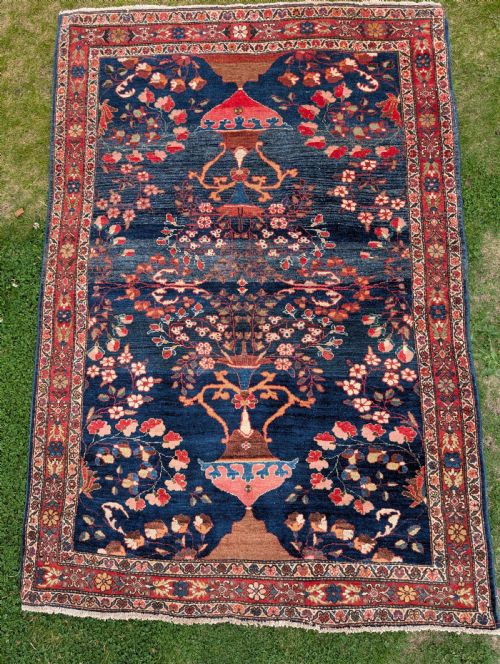
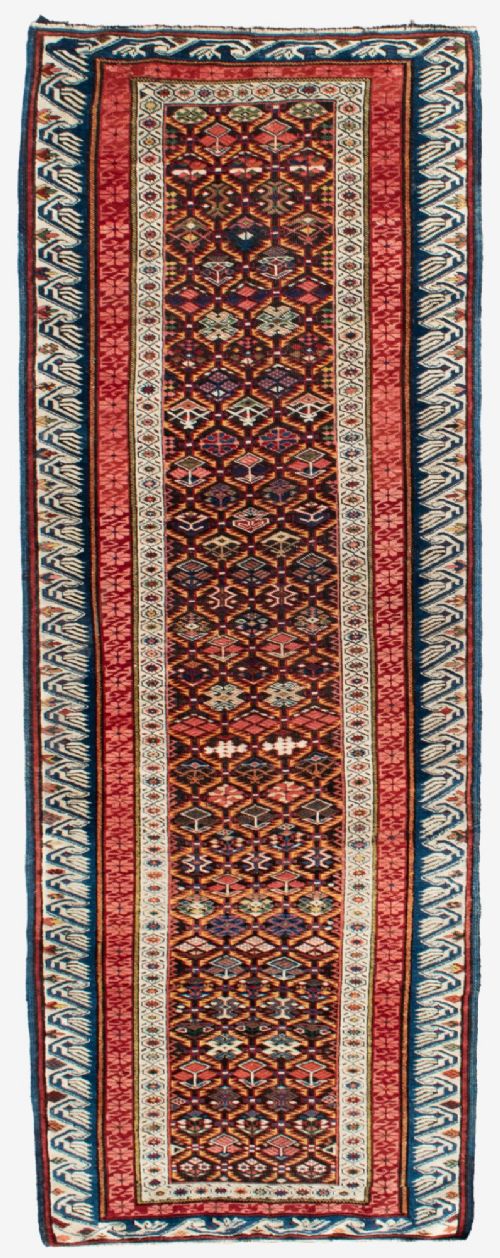


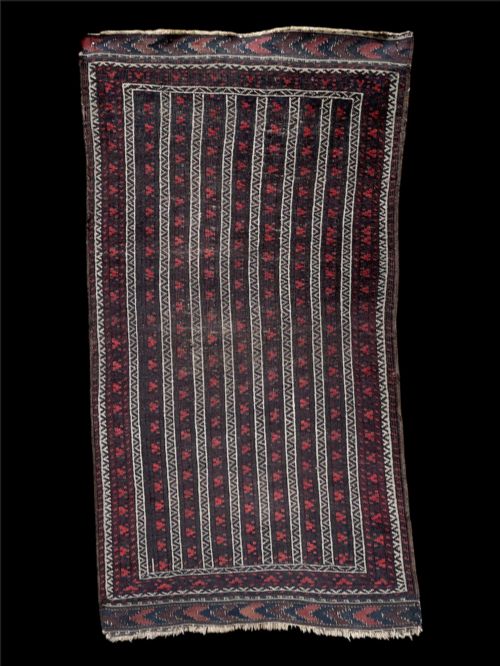

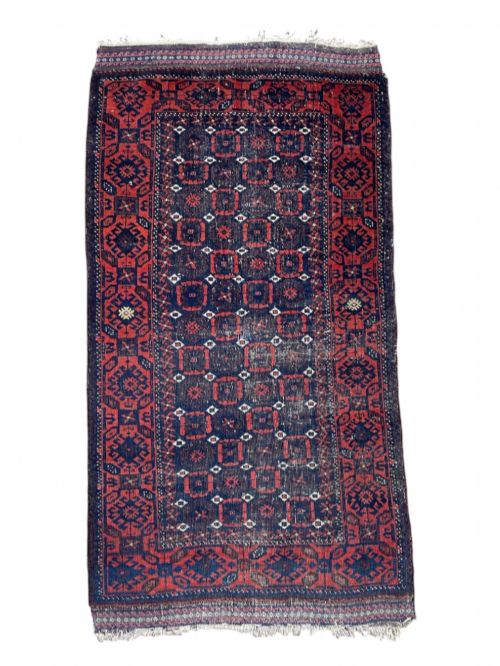


Dark Blue Wool Carpet
These dark blue wool carpets are woven textiles originating from tribal and village traditions, bringing deep indigo ground colours and tactile warmth to an interior.
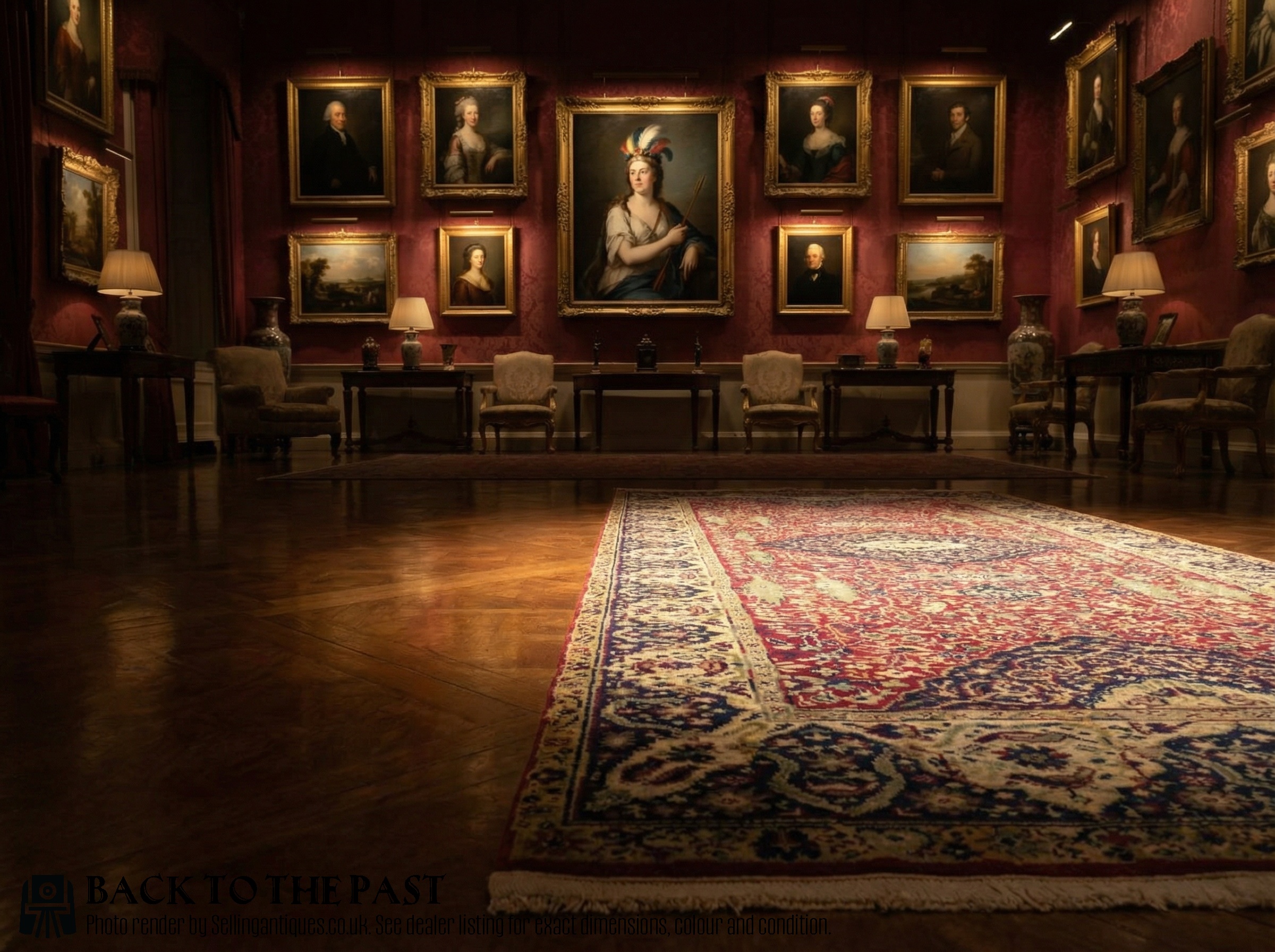
Dark Blue Wool Carpet
A dark blue wool carpet encompasses hand-knotted tribal rugs, village runners, and room-sized floor coverings grounded in deep indigo tones. When searching for a dark blue wool carpet, buyers encounter nomadic Baluch prayer rugs, Turkish village pieces, and Persian nomadic weaving traditions.
The objects span from the nineteenth century into the early twentieth century, incorporating classical motifs like the Kalam Donnech and Dokhtar-e-Qazi designs. Most examples originate from Anatolian, Persian, or Western Afghan workshops, reflecting regional weaving idioms.
Village rugs and nomadic prayer formats dominate the selection, offering smaller area rug dimensions suited to concentrated spaces. These textiles display the distinct iconographies of groups such as the Luri, Timuri, and Baluch tribes.
Materials and Construction
These carpets rely primarily on wool for the pile and structure, often paired with cotton foundations for stability. Natural dyes provide the enduring depth of the indigo and dark blue ground colours seen across the pieces.
Weavers knotted the wool by hand onto warps and wefts, employing tribal techniques passed down through generations. The use of natural colourants results in subtle variations and abrash across the dark blue fields.
Dark Blue Wool Carpet Retail Price Guide 2026
Typical asking prices for dark blue wool carpet among the pieces listed under this phrase on Sellingantiques today, from the lower quarter to the upper quarter. They describe what is for sale here now, not the wider market.
Listings feature pieces utilising wool and cotton, with production dates spanning the nineteenth century and the early twentieth century.
Assessing Quality and Execution
Quality rests in the precision of the knotting, the complexity of the tribal iconography, and the integrity of the natural dyes. Finer examples show crisp execution of motifs like the Kalam Donnech alongside a supple, resilient wool pile.
The handling of the dark blue indigo ground separates standard village weaving from exceptional tribal pieces. Richness of tone and depth of material define the upper tier of these historical textiles.
The Dark Blue Wool Carpet Glossary
- Abrash
- Natural tonal variation within a field of colour, caused by changes in dye batches or hand-spun wool. This characteristic is particularly noticeable in dark blue wool carpets.
- Prayer Rug
- A small rug featuring a mihrab or arch design, traditionally used for daily Islamic prayers. Timuri and Baluch weavers frequently produced these formats.
- Natural Dyes
- Colourants derived from plants, insects, and minerals rather than synthetic compounds. These materials yield the rich, stable hues found in older tribal weaving.
- Nomadic Tribal Rug
- A textile produced by wandering pastoral groups rather than sedentary workshops. These pieces often feature geometric motifs and memory-driven designs.
Dark Blue Wool Carpet: Frequently Asked Questions
What is a dark blue wool carpet?
A dark blue wool carpet is a hand-knotted textile created by tribal or village weavers, utilising natural indigo dyes and wool pile.
These pieces range from small Baluch prayer rugs to larger Persian and Turkish village carpets produced during the nineteenth and early twentieth centuries.
How do I identify tribal rugs?
Tribal rugs are identified by geometric motifs, asymmetric village designs, and spontaneous colour shifts in the wool.
Weavers from groups like the Baluch, Luri, and Timuri incorporated local iconography and symbols unique to their nomadic heritage.
How should I care for an antique rug?
Antique wool rugs require gentle vacuuming without rotating brush heads to protect the hand-knotted pile.
Professional cleaning tailored to natural dyes and wool fibres ensures the textile remains preserved for daily use.
Where were these carpets made?
These carpets originate from regions spanning Anatolia, Persia, and Western Afghanistan.
Village communities and nomadic tribes produced them using traditional hand-knotting methods and locally sourced materials.