
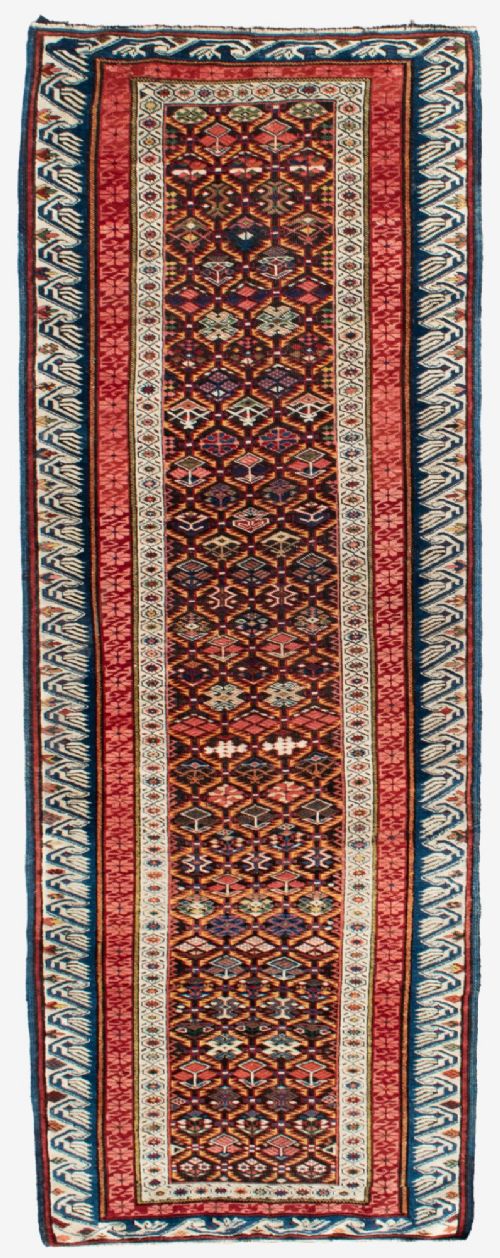


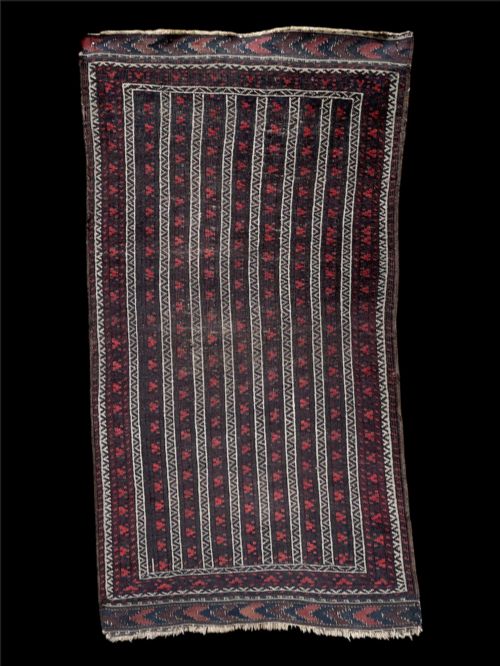

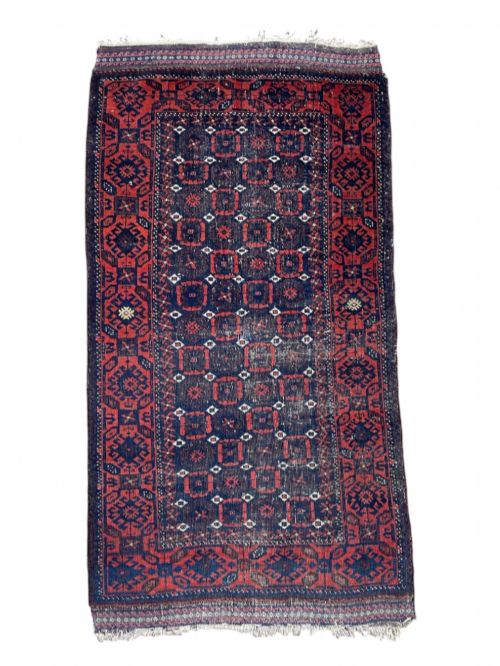


Dark Blue Runner
When you search for dark blue runner, you enter a world of woven textiles built for long hallways and striking interior layouts.
Dark Blue Runner
A dark blue runner is a narrow, elongated textile designed primarily for hallways, passages, and transitional spaces within a home. These floor coverings draw on tribal and village weaving traditions from Persia, the Caucasus, and surrounding regions.
Most examples found in this category originate from nomadic or village workshops, displaying geometric patterns, medallions, and repeated motifs. The format balances utility with decorative impact, framing domestic pathways with rich indigo tones.
The selections span late nineteenth-century productions up through the early twentieth century, offering varied lengths suited to diverse architectural proportions.
Materials and Construction
Weavers constructed these textiles using hand-spun wool, cotton, and occasionally goat hair, knotting the pile firmly onto strong foundation warps and wefts. These natural fibres provided the durability necessary for high-traffic corridors.
Colours were achieved through natural dyes, which produced deep indigo shades and rich secondary hues that mellow gracefully over decades of exposure and use.
Listings span several decades, featuring materials like hand-spun wool and natural dyes across Persian and Caucasian tribal styles.
Assessing Quality and Execution
Quality rests in the precision of the knotting, the handling of the wool, and the depth of the dye work. Tighter foundations and well-balanced proportions separate finer tribal weaving from standard utilitarian output.
Artistic execution dictates distinction, where deliberate placement of motifs and harmonious colour saturation elevate a piece from a simple floor covering to a textile of note.
The Dark Blue Runner Glossary
- Runner
- A long, narrow carpet format specifically proportioned for corridors, staircases, and narrow rooms. This shape guides movement through a building.
- Natural Dyes
- Colourants derived from plants, insects, and minerals rather than synthetic formulas. They impart subtle tonal variations across the wool pile.
- Warp
- The stationary vertical threads stretched on a loom that form the structural foundation of the textile. Fringe is typically an extension of these core threads.
- Weft
- The horizontal threads passed alternately over and under the warp threads to secure the knots in place. Together with the warp, they create the grid of the rug.
- Medallion
- A central ornamental design motif placed as the focal point of the field. These geometric or floral shapes anchor the composition.
Dark Blue Runner: Frequently Asked Questions
Where should I place a runner?
These narrow textiles suit hallways, corridors, and long entryways where floor protection and visual warmth are required.
They also function effectively beside beds or in galley kitchens to define narrow architectural zones.
How do I care for antique wool?
Regular gentle vacuuming without a rotating brush roll helps remove grit from the pile without straining the foundation threads.
Professional specialist cleaning is recommended for deep maintenance to preserve the natural lanolin in the wool.
What causes indigo shade variations?
Natural indigo dye absorbs into wool fibres differently depending on the batch and the preparation of the dye vat.
Over time, exposure to light and air can create subtle tonal shifts known to collectors as abrash.
How are tribal designs identified?
Tribal designs rely on geometric symbols, stylized animals, and repeating medallions passed down through regional weaving groups.
Local traditions dictate the specific palette and structural quirks that link a piece to its makers.