

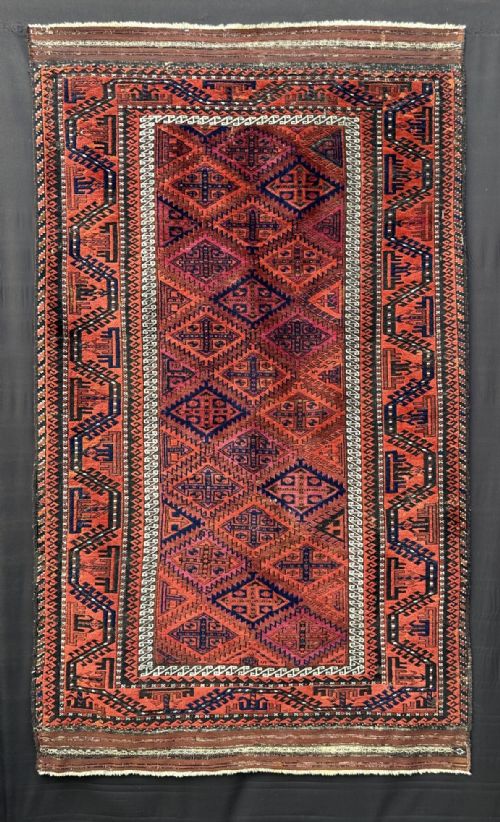
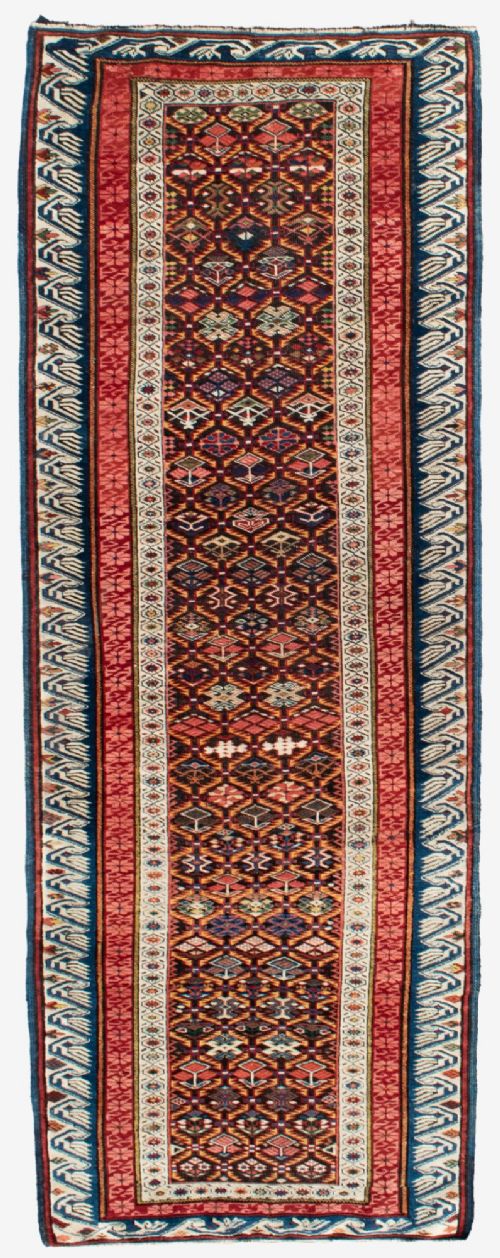


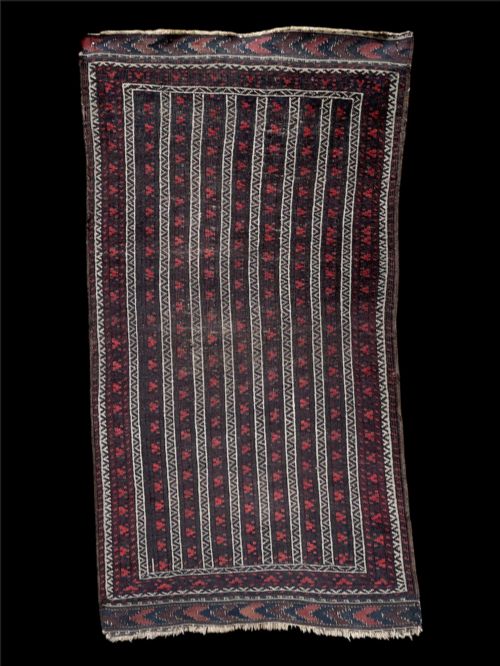


Dark Blue Runner Rug
A dark blue runner rug brings deep indigo tones and tribal geometry to a hallway, grounding a narrow space with enduring character.
Dark Blue Runner Rug
A dark blue runner rug brings long, narrow proportions to corridors and passages, drawing the eye along the floor with traditional tribal patterns. These floor coverings emerge from various regional traditions, including Persian, Caucasian, and Afghan workshops, spanning the late nineteenth and early twentieth centuries.
The selections available here lean heavily into narrow formats such as the antique Heriz, Seychor, and Kelardasht runners. These formats accommodate long, restricted spaces while displaying complex geometric layouts and rich indigo fields.
How they were made
Weavers relied on hand-spun wool and cotton, combining durable pile yarns with sturdy foundation threads to withstand generations of foot traffic. Artisans utilised natural dyes to achieve deep indigo and dark blue shades that gain complexity over time.
Nomadic and village weavers knotted these textiles by hand, incorporating goat hair for structural durability in selected tribal pieces. The application of traditional dyestuffs ensures the dark blue grounds retain depth and variation across the surface.
Dark Blue Runner Rug Retail Price Guide 2026
Typical asking prices for dark blue runner rug among the pieces listed under this phrase on Sellingantiques today, from the lower quarter to the upper quarter. They describe what is for sale here now, not the wider market.
What varies in quality
Quality rests in the precision of the knotting and the depth achieved by natural dyestuffs within the dark blue ground. Finer examples display crisp geometric delineation and balanced proportions that reflect the weaver's deliberate planning.
The handling of wool preparation and dye saturation determines how the pile ages and catches the light. Superior pieces maintain structural integrity in the foundation while exhibiting rich tonal shifts across the indigo fields.
The Dark Blue Runner Rug Glossary
- Runner
- A long, narrow carpet format designed specifically for hallways, staircases, and corridors. These pieces measure significantly longer than they are wide.
- Mina Khani
- A repeating grid pattern of floral motifs and rosettes connected by delicate vines. This design frequently appears across Persian and Baluch weaving traditions.
- Kelleh
- A large, rectangular format carpet, traditionally proportioned between a full-size carpet and a runner. It occupies a distinct space in antique tribal nomenclature.
- Torba
- A traditional tent bag or storage face produced by Turkmen tribes. These pieces display distinct tribal gul designs and meticulous knotting.
Dark Blue Runner Rug: Frequently Asked Questions
Where should I place a dark blue runner rug?
These narrow formats suit hallways, corridors, and bedside areas where floor space is constrained. Their deep indigo tones absorb heavy foot traffic while anchoring long architectural paths.
Ensure the floor beneath is clear to let the geometric borders frame the space effectively. They add warmth and definition to otherwise plain wooden or stone floors.
How do I care for antique wool runners?
Regular gentle vacuuming without a rotating brush roll keeps dust from settling into the wool pile. Professional cleaning suited for antique textiles preserves the natural lanolin and dyestuffs.
Avoid placing these pieces in direct, harsh sunlight for prolonged periods to protect the dark blue and indigo dyes. Rotating the runner occasionally ensures even wear along high-traffic paths.
What periods do these runners come from?
The pieces available span from the late nineteenth century through the early twentieth century. This era encompasses the height of traditional village and tribal weaving before synthetic dyes became widespread.
Each decade brings subtle shifts in wool preparation and regional design motifs. Dating relies on stylistic markers, structure, and material analysis rather than single documentation points.
How do I distinguish regional tribal styles?
Baluch and Afghan pieces often feature deep indigo fields with characteristic goat hair selvedges and geometric medallion layouts. Persian village runners like Heriz and Hamadan display bolder structural grids and larger scale floral abstractions.
Studying the border arrangements and foundation materials reveals the distinct hand of specific weaving groups. Each region maintained strict adherence to local colour palettes and knotting habits.