
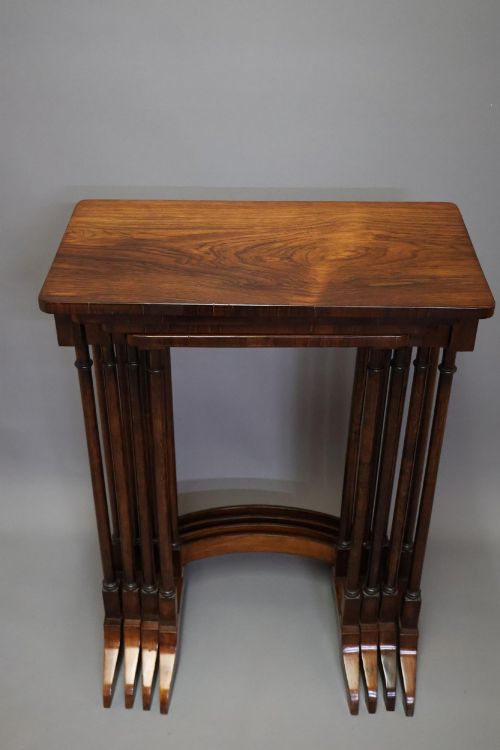


Dark Bamboo Side Table
A dark bamboo side table brings slender utility and exotic texture to a room, drawing on Victorian and Edwardian interpretations of Eastern design.
Dark Bamboo Side Table
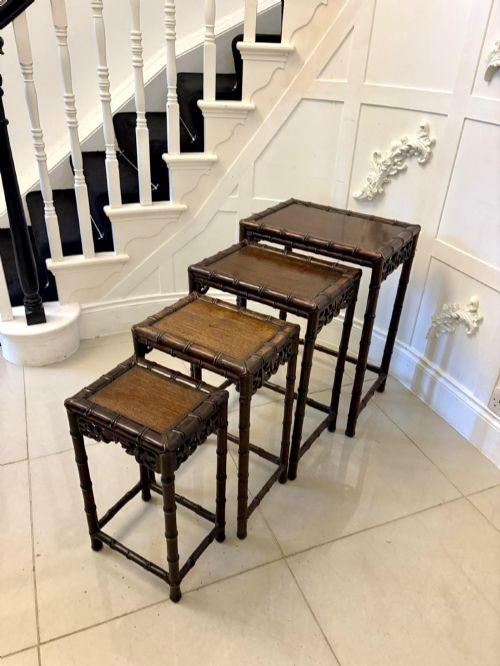
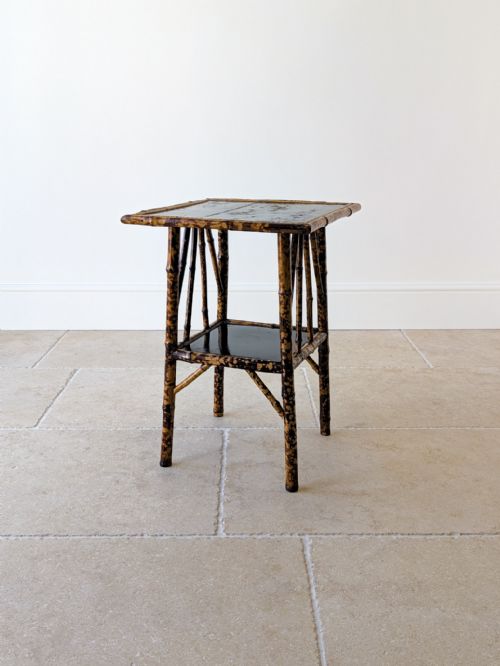
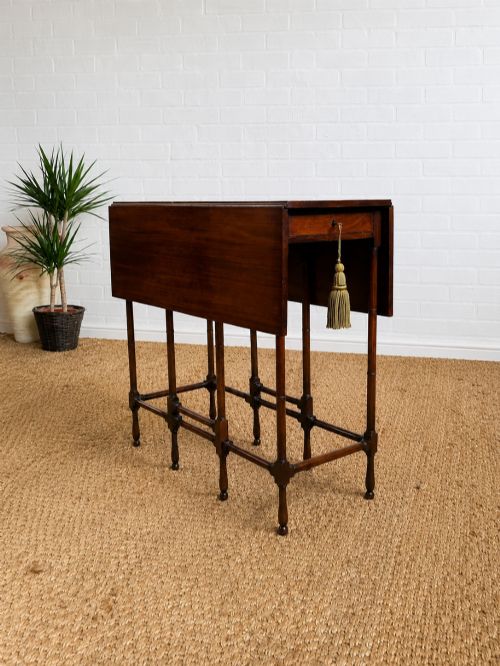
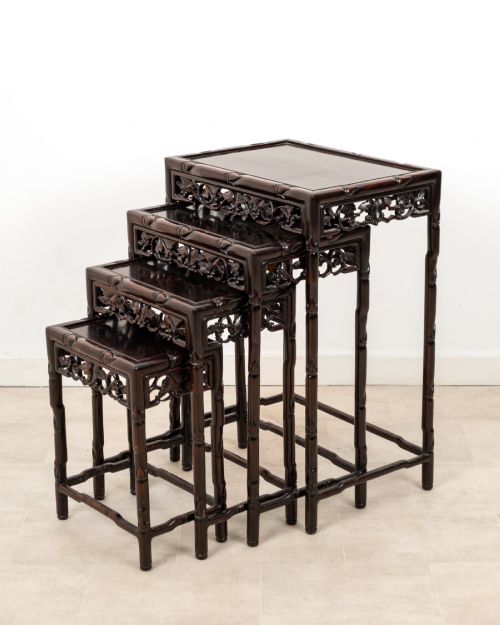
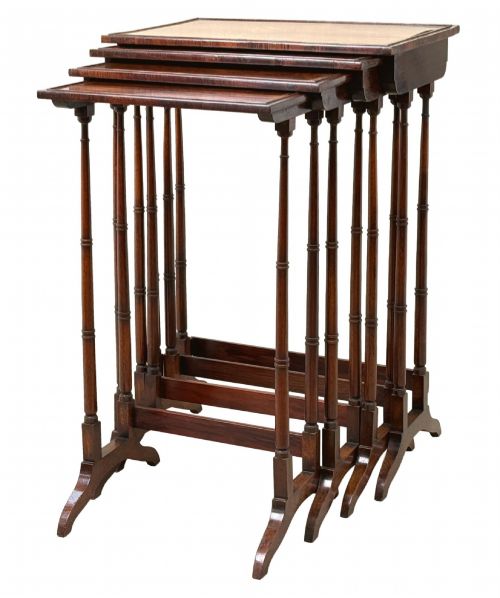
A dark bamboo side table typically appears as a compact occasional piece, often taking the form of a nest of tables or a plant stand. These items emerged strongly during the Victorian and Edwardian periods, frequently reflecting the Aesthetic Movement and Chinoiserie tastes.
Buyers seeking a dark bamboo side table will encounter both actual bamboo frames and clever hardwood imitations with bamboo-turned legs. Many examples originate from Chinese export workshops or domestic British cabinet makers influenced by Anglo-Japanese design.
Materials and construction
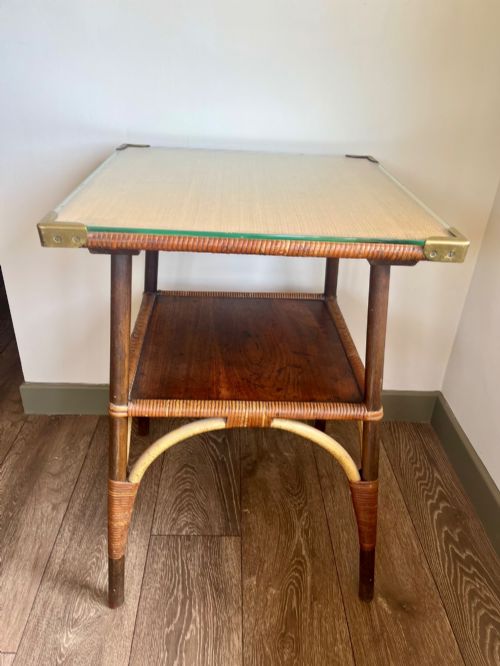
Makers utilised natural bamboo, rattan, and various dark hardwoods such as mahogany, rosewood, and hongmu to build these stands. Brass fittings and leather inserts occasionally appear on top surfaces, while lacquer and woven reed add decorative texture.
Construction techniques combine traditional joinery for hardwood frames with steam-bending and pegging for lighter bamboo and rattan elements. Surfaces often received dark ebonising or clear polishing to highlight the grain and contrast with lighter decorative panels.
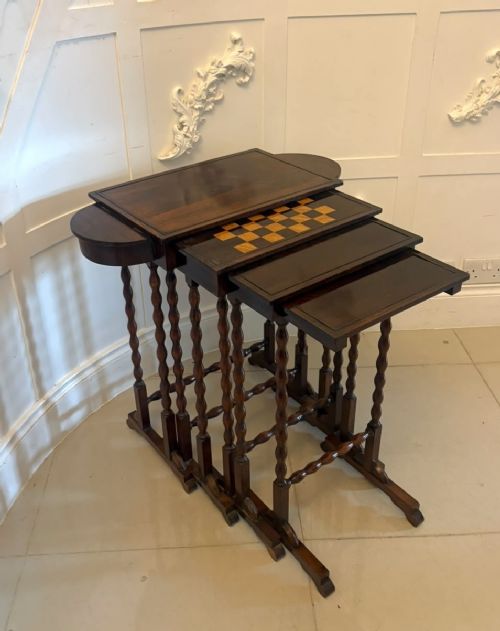
Some tables double as chess boards, proving that Victorians took their parlor games firmly into the realm of nested furniture.
Assessing quality and craftsmanship
Quality rests upon the integrity of the joints and the selection of materials, particularly where bamboo meets timber or where nesting tables slide smoothly together. Heavier hardwoods like rosewood and hongmu indicate higher workshop standards than softer secondary timbers.
The finesse of hand-carved detailing on tops and aprons distinguishes standard production from finer examples. Original surface finishes and intact woven reed or leather elements preserve the integrity of the piece.
Liberty and Co
The Dark Bamboo Side Table Glossary
- Quartetto
- A set of four graduating tables designed to nest together. This term frequently applies to Regency and Victorian occasional sets.
- Canterbury
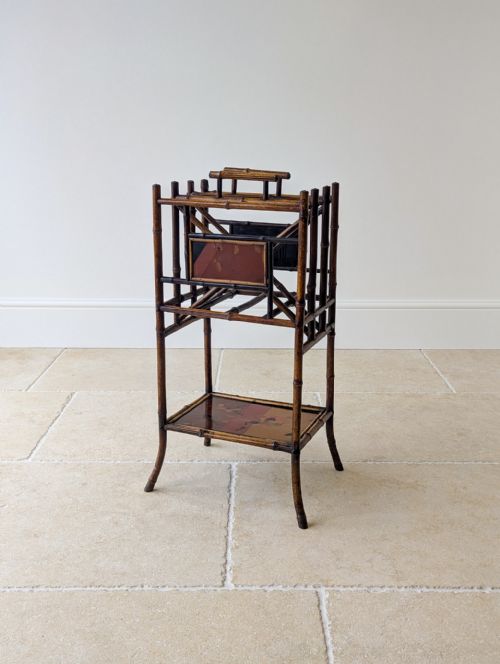
- A low stand fitted with vertical divisions for holding music sheets or periodicals. These often incorporate bamboo framing or turned legs.
- Hongmu
- A dense, dark Chinese hardwood frequently used for export furniture and carved stands. It translates literally as red wood.
- Aesthetic Movement
- A late nineteenth-century design style emphasising visual beauty over narrative meaning. It drew heavily on Japanese and Chinese motifs.
- Faux bamboo
- Wood turned on a lathe to imitate the jointed segments of real bamboo. Cabinet makers utilised this technique on mahogany and other timbers.
Dark Bamboo Side Table: Frequently Asked Questions
How do I care for a bamboo table?
Keep wooden and bamboo surfaces clean with a dry or barely damp cloth, avoiding excessive moisture that might warp the natural fibres.
Apply occasional quality wax to hardwood elements to maintain the finish without harming delicate cane or lacquer.
Are these tables sturdy enough for daily use?
Most occasional tables and nests suit normal placement for cups and books, though lighter bamboo frames require gentle handling.
Heavier hardwood stands offer greater stability for heavier items like lamps or small planters.
How do I identify the period of a table?
Examine the joinery methods and secondary timbers underneath or inside the drawers, as machine-cut screws indicate later production.
Stylistic cues such as Aesthetic Movement ebonising or Qing Dynasty carving help narrow down the decade.
What is the difference between real and faux bamboo?
Real bamboo consists of hollow natural cane sections held together by pins and structural wrapping at the joints.
Faux bamboo is solid timber turned on a lathe to mimic the characteristic nodes of the living plant.