


D Shaped Dining Table
A d shaped dining table offers adaptable geometry, pairing straight architectural edges with soft curves to suit formal rooms and smaller spaces alike.
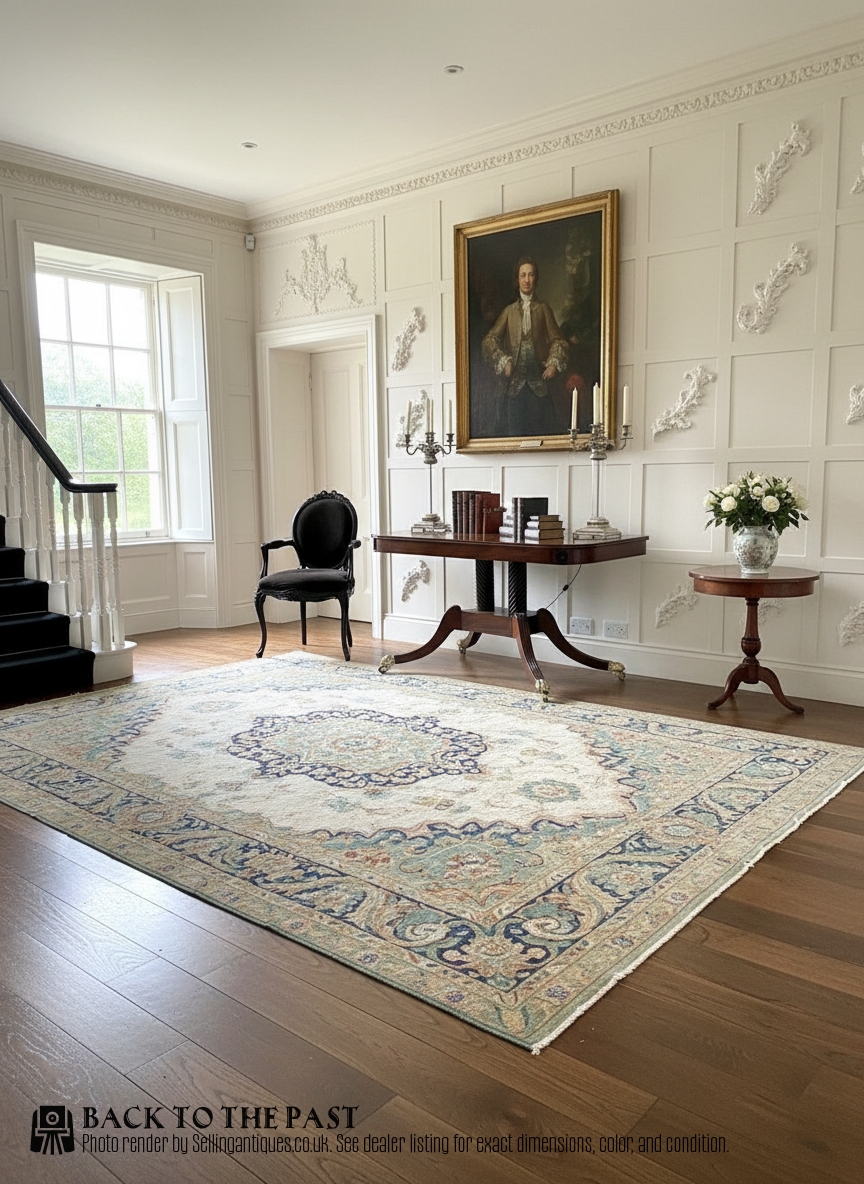
D Shaped Dining Table
A d shaped dining table comprises modular sections with one straight side and one curved perimeter, often designed to combine with central leaves for extended dining lengths. When searching this phrase, buyers encounter examples originating primarily from the Georgian, Regency, and Victorian periods, alongside later twentieth-century iterations.
The format frequently appears as part of a larger dining suite or as metamorphic furniture capable of splitting into console or demi-lune sections. Mahogany and burr walnut dominate the surviving pieces, reflecting the favoured cabinet woods of the nineteenth century.
How they were made
Cabinet makers constructed these tables using dense timbers such as mahogany, rosewood, and burr walnut, frequently applied as veneers over stable secondary woods. Solid brass clips or rule joints often secure the separate sections together, ensuring alignment along the straight edges.
Surfaces received hand-applied polish finishes that highlighted the natural grain patterns and figures of the timber. Frame construction relied on traditional joinery, incorporating pedestal bases or tapering legs that supported the heavy top sections.
Listings feature mahogany, burr walnut, rosewood, and oak across nineteenth-century and twentieth-century periods.
What varies in quality
Excellence in these tables rests on the selection of timber veneers, where symmetrical figure and rich depth of colour distinguish superior examples from plain stock. The precision of the joining mechanisms and the stability of the pedestal or leg mounts also determine the structural integrity.
Top-tier pieces demonstrate careful attention to edge moulding and secondary framing timbers, maintaining smooth operation when the table separates into individual console units.
Heal s·Ridgways
The D Shaped Dining Table Glossary
- Demi-lune
- Half-moon shape, describing tables constructed with one straight edge and a curved front. These sections often stand against walls when not joined for dining.
- Metamorphic
- Furniture designed to transform its function or configuration, such as a table that converts into multiple smaller console arrangements. This engineering requires precise pivot or folding mechanisms.
- Vveneer
- A thin layer of decorative wood applied to a sounder underlying timber base. Burr walnut and figured mahogany veneers provide the characteristic patterns seen on table tops.
- Pedestal
- A central support column rising from a foot or base, frequently used on circular or d shaped dining tables to maximise legroom.
- Rule joint
- A hinged joint used on drop-leaf or modular tables where a rounded edge meets a hollowed recess. This detail allows leaves to move smoothly while concealing the mechanism.
D Shaped Dining Table: Frequently Asked Questions
How do I configure a d shaped dining table?
These tables typically consist of modular ends and optional central leaves that join together using brass clips or pegs underneath.
Separating the sections allows the straight edges to sit against walls as console tables when dining space is required for other purposes.
What timber types should I expect to find?
Mahogany and burr walnut form the majority of the surfaces, often complemented by rosewood or oak in specific regional or period pieces.
Cabinet makers selected these hardwoods for their durable qualities and rich grain patterns, which responded well to traditional polishing.
How do I date an antique d shaped table?
Dating relies on observing the timber selection, leg styles, and construction techniques, comparing them against documented Georgian, Regency, and Victorian design traits.
Hardware such as brass connecting clips and the composition of secondary woods underneath also provide reliable chronological indicators.
Can I use daily polish on these tables?
Traditional wax polish applied sparingly helps maintain the lustre of historic timber surfaces without building up heavy residue.
Avoid modern silicone sprays, as they penetrate old finishes and complicate future conservation work.