

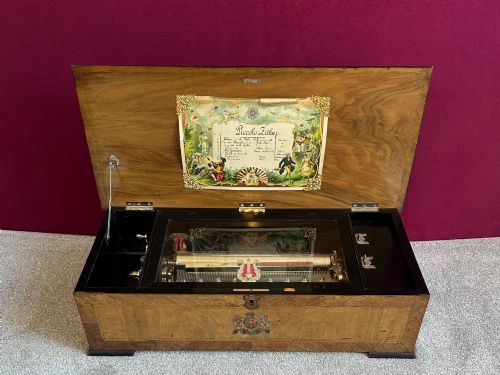





Cylinder Musical Box
A cylinder musical box fills a room with precise mechanical tunes, bringing nineteenth century Swiss craftsmanship straight to your table.
Cylinder Musical Box
A cylinder musical box delivers pre-set mechanical melodies driven by pinned metal cylinders and tuned steel teeth. When you search for a cylinder musical box, you encounter table pieces housing complex pinned barrels playing multiple tunes across varying airs. The examples on this page date predominantly from the Victorian period, stretching from the mid-nineteenth century into the Edwardian era.
Most pieces you meet here originate from Swiss workshops, often featuring marquetry inlay, bells, drums, or visible working parts. Rosewood, walnut, and ebonised wood form the primary case materials enclosing the brass and steel mechanisms. These instruments range from simple eight-air boxes to elaborate multi-air arrangements with visible bells and drums.
Materials and construction
Makers housed the intricate movements within sturdy timber cases constructed from rosewood, walnut, and ebonised wood, frequently decorated with marquetry inlay. Inside, brass beds support steel combs with tuned teeth alongside pinned metal cylinders that rotate to pluck the notes.
Cylinder Musical Box Retail Price Guide 2026
Typical asking prices for cylinder musical box among the pieces listed under this phrase on Sellingantiques today, from the lower quarter to the upper quarter. They describe what is for sale here now, not the wider market.
Recorded periods span from the eighteenth century through the nineteenth century and into the early twentieth century.
Variations in quality
Quality rests upon the musical capability of the movement and the precision of the steel comb teeth. Finer boxes offer a greater number of airs, cleaner tone from the comb, and intricate subsidiary effects like visible bells, drums, or zither attachments.
Cabinetwork distinguishes the better examples, utilising superior rosewood or walnut veneers paired with detailed marquetry inlay. The crispness of the cylinder pin placement and the overall harmony of the restored works separate standard pieces from exceptional ones.
Langdorff And Fils·B A Bremond·Nicole Freres·Lecoultre Freres·LeCoultre
The Cylinder Musical Box Glossary
- Air
- A distinct tune or melody played by the musical box during one complete rotation of the cylinder.
- Cylinder
- The rotating pinned metal barrel that triggers specific teeth on the comb to produce notes.
- Comb
- The tuned flat plate of steel containing individual teeth plucked by the cylinder pins.
- Marquetry inlay
- Decorative patterns formed by fitting contrasting pieces of wood veneer into the cabinet surface.
- Zither
- An attachment that presses paper or silk against the comb teeth to create a muted mandolin effect.
Cylinder Musical Box: Frequently Asked Questions
How do I wind the box?
Most pieces utilise an internal spring barrel wound via a dedicated key inserted into an aperture on the side or top of the wooden case. Turn the key gently until you feel resistance, avoiding overwinding to protect the internal mechanism.
Once wound, use the exterior levers to start, stop, or change the selected air, letting the pinned cylinder rotate freely against the steel comb.
What are airs?
Airs refer to the individual tunes programmed onto the rotating pinned metal cylinder. A standard box might play eight distinct melodies, whereas larger exhibition pieces manage twelve or more.
As the cylinder shifts laterally, a different set of pins engages the steel comb teeth to produce each successive tune in the sequence.
Can I see the mechanism working?
Certain designs incorporate glass lids or internal viewing windows that let you watch the pinned cylinder rotate and the comb teeth vibrate. Others conceal the works entirely beneath solid wooden rosewood or walnut cabinetry.
Models featuring bells in sight or visible drums naturally expose more of the active musical components during playback.
How should I care for the wood?
Keep the rosewood, walnut, or ebonised timber cases away from direct sunlight and dramatic temperature shifts to prevent veneer cracking. Dust the marquetry inlay regularly with a dry, soft cloth.
Avoid liquid polishes and consult a specialist for any internal maintenance regarding the brass and steel movement.