
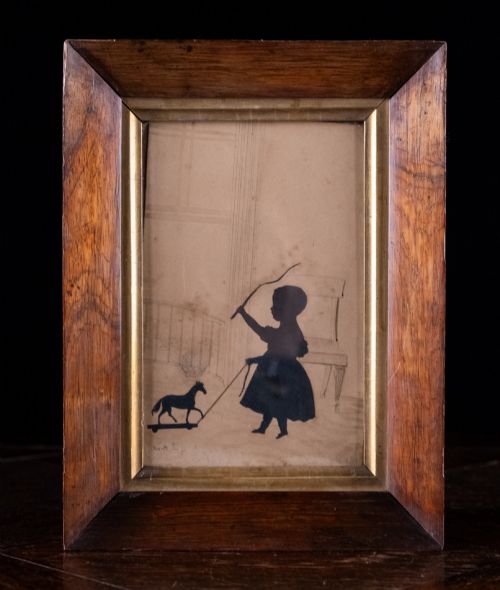


Cut Paper Shadow Portrait
These cut paper shadow portrait works capture individual likenesses through precise silhouette cutting, offering intimate glimpses into historical lives.
Cut Paper Shadow Portrait
A cut paper shadow portrait represents a human likeness delineated in profile through precise paper cutting, often enhanced with ink or gold leaf highlights. When you search for a cut paper shadow portrait, you encounter framed artwork originating mainly across the Georgian, Regency, and Victorian periods.
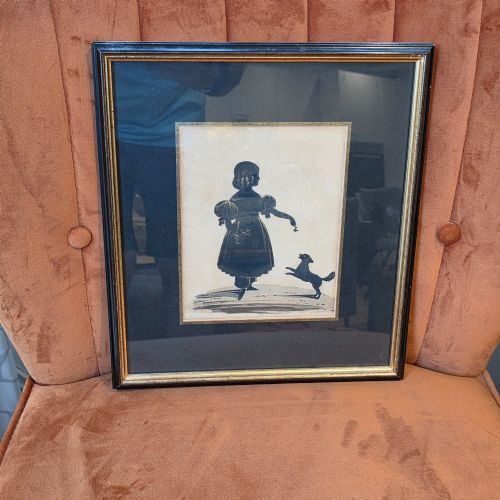
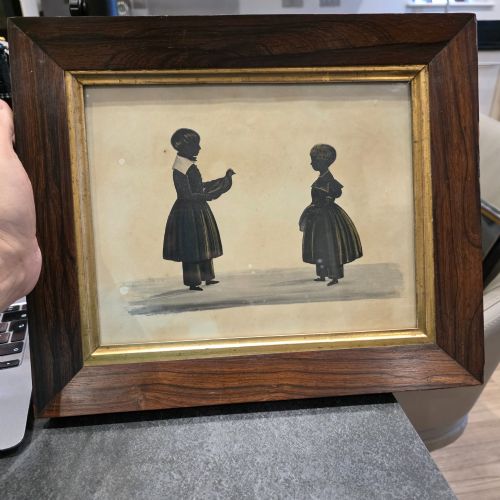
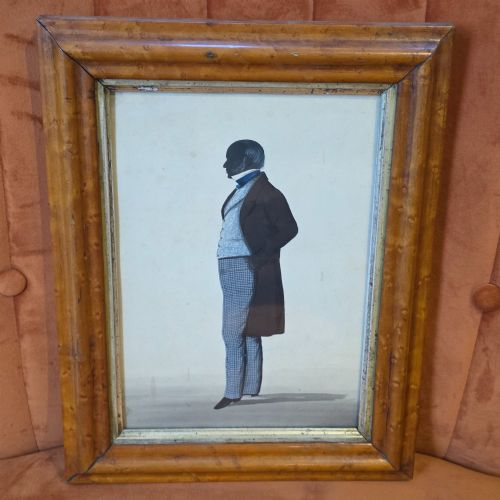
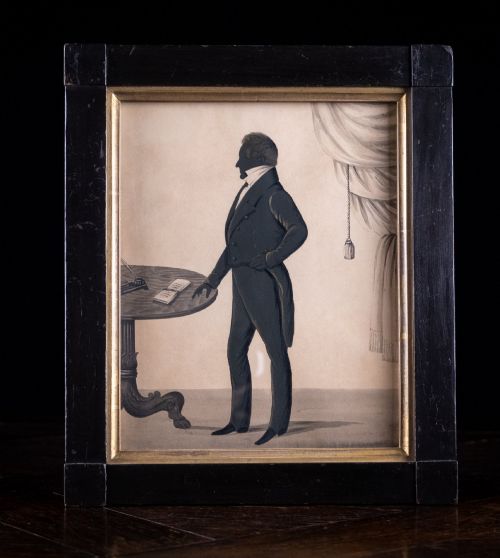
The selections on this page span single full-length figures, children with pets, and elaborate conversation pieces showing multiple individuals. These framed portrait miniatures preserve domestic scenes and personal identities from the nineteenth century with remarkable clarity.
Most examples present individuals in strict profile, mounted against contrasting backdrops within timber frames made of maple, rosewood, or ebony. These works function as historical wall art that records the appearance of past generations before the widespread use of photography.
Materials and construction
Maker execution relies upon dark paper cut meticulously with small scissors or knives to form the silhouette profile. This cut paper figure is then mounted onto a contrasting pale ground, sometimes enriched with delicate ink details or gold leaf embellishment.
Protective framing utilises glass fronting held within moulded wood frames fashioned from maple, rosewood, or ebony. Brass hangers and backing boards complete the construction, preserving the fragile paper works over successive centuries.
Early artists occasionally enlisted children and family pets to sit still whilst their shadows were immortalised in paper.
Judging quality in cut paper shadow portrait pieces
The integration of secondary elements such as watercolor highlights, gold leaf detailing, and contemporary framing elevates the overall merit of the piece. Provenance and attribution to established galleries or profile artists add distinct historic weight to the artwork.
William James Hubard·Frith·Augustin Edouart·Alfred Darbyshire·Skeolan
The Cut Paper Shadow Portrait Glossary
- Silhouette portrait
- A profile likeness filled in with a solid dark colour, traditionally cut from paper or painted on card. This form records the outline of a sitter's face or full figure.
- Conversation piece
- An artwork depicting a group of figures engaged in a social scene or domestic activity. These multi-figure compositions often include children, pets, and detailed interior settings.
- Profile
- A side view of the human head or figure, which forms the defining perspective of shadow portraiture. This orientation emphasises the distinctive contours of the nose, brow, and chin.
- Gold leaf
- Very thin gold beaten into sheets, utilised to add highlights and embellishments to the paper silhouette. This material catches the light within the frame.
- Portrait miniature
- A small-scale painting or silhouette executed with fine detail. These compact works were designed for intimate display within domestic spaces.
Cut Paper Shadow Portrait: Frequently Asked Questions
How do I hang a cut paper shadow portrait safely?
Hang your framed silhouette away from direct sunlight to prevent the paper and ink from fading over time. Ensure the wall fixings match the weight of the timber frame and glass.
Keep the artwork in a stable environment with minimal humidity fluctuations to protect the fragile paper interior. Secure the frame firmly to avoid any accidental knocks against the wall.
Were these portraits made for families or individuals?
Artists produced shadow portraits for both single sitters and entire family groups, depending on the commission. Individual profiles recorded personal likenesses, whilst conversation pieces captured domestic interactions.
Group portraits often included children, servants, and family pets arranged in narrative scenes. These larger works served as visual records of household life during the nineteenth century.
How can I tell a Georgian silhouette from a Victorian one?
Georgian and Regency examples frequently feature lighter frames, delicate gold leaf highlights, and refined attire such as turban caps. The cutting tends toward high precision with subtle watercolor additions.
Victorian pieces often display heavier rosewood or maple frames and may incorporate multiple figures or embossed studio stamps. Costume details within the silhouettes typically reflect mid-nineteenth-century fashions.
What is a silhouette conversation piece?
A conversation piece is a detailed artwork showing multiple people interacting within a room or landscape setting. These complex compositions often incorporate furniture, pets, and architectural elements.
Artists arranged these cut paper figures to tell a story about the family's daily life and status. They represent more ambitious projects than standard single-subject portrait miniatures.