


Victorian Cut Silhouette
A victorian cut silhouette captures likenesses in crisp black paper, offering a direct window into nineteenth-century life.
Victorian Cut Silhouette
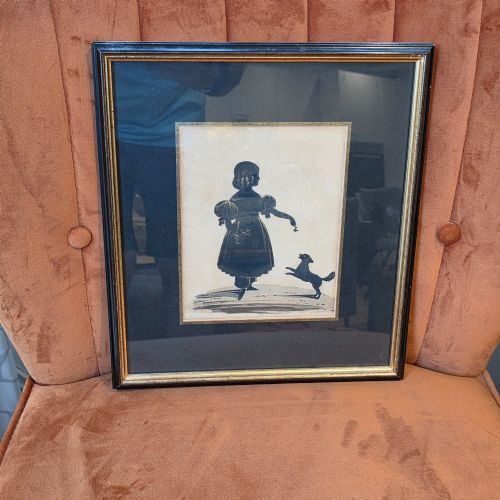
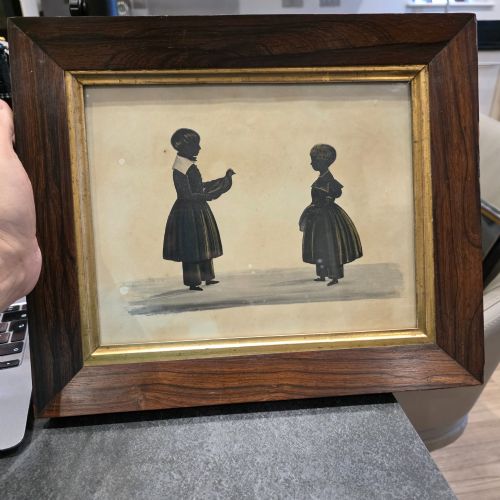
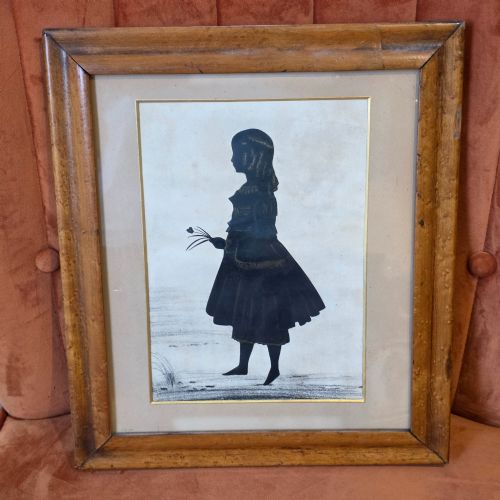
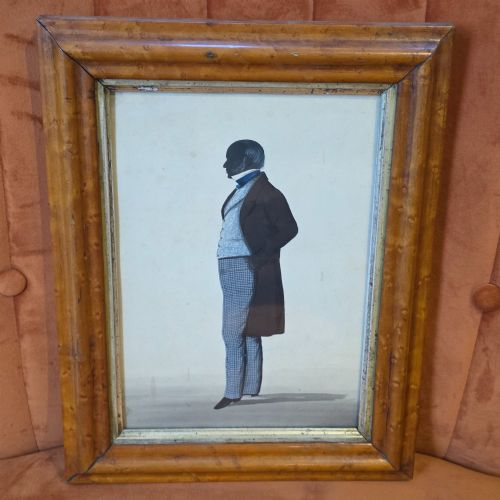
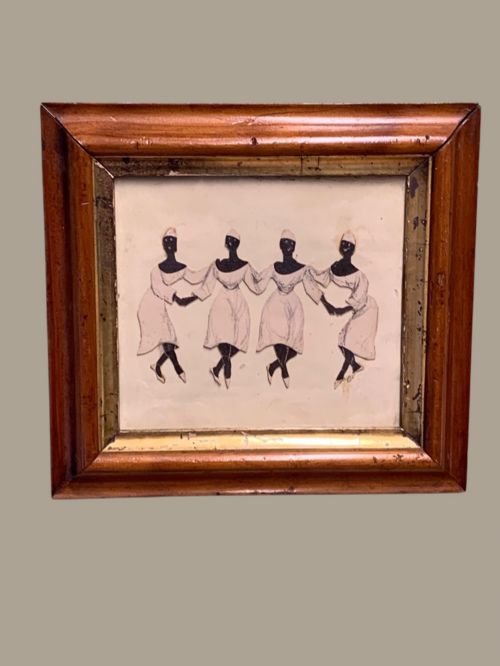
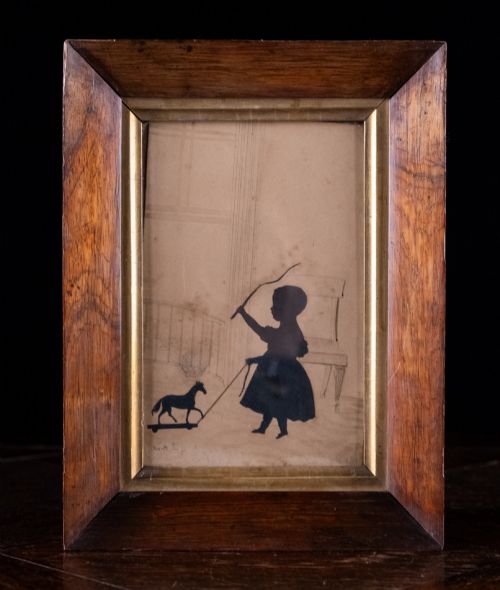
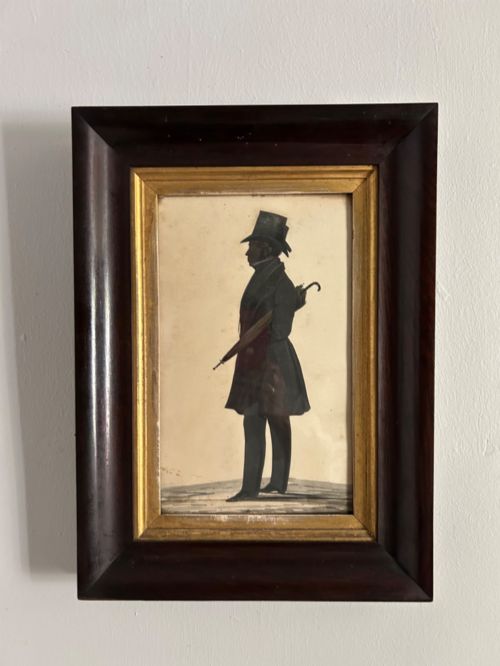
When you search for a victorian cut silhouette, you encounter framed portraits and conversation pieces depicting individuals, children, and animals. These works record likenesses through profile cuttings, often mounted against contrasting backgrounds.
The pieces on this page span the nineteenth century, including Regency and early Victorian examples. They appear as single portraits, pairs, and complex groupings involving multiple figures.
Framed artwork forms the primary format for these items, utilising glass, wood, and brass mountings to protect the delicate paper work within. Subjects range from solitary gentlemen and ladies to children with horses and dogs.
How they were made
Gilt, gold leaf, and brass often highlight the framing and inner borders, providing contrast against the dark silhouette. Wood frames, including rosewood, enclose and preserve the fragile paper compositions behind glass.
Listings feature works from the nineteenth century, including Regency and Victorian periods, executed in cut paper, ink, and watercolour.
What varies in quality
Precision in the hand-cutting separates simple profile keepsakes from masterworks produced by skilled practitioners. The crispness of edges and the natural proportions of figures indicate the level of technical control.
Complexity of composition alters the character of the piece, moving from standard bust portraits to full-length figures accompanied by animals or elaborate interior settings. The inclusion of watercolour detailing and signed attributions adds distinction.
William James Hubard·Augustin Edouart·Frederick Frith·Alfred Darbyshire·Skeolan
The Victorian Cut Silhouette Glossary
- Conversation piece
- An informal group portrait depicting people engaged in common activities or interacting together. These scenes often include family members or children with pets.
- Cut paper
- The method of forming an image by slicing shapes out of sheet material using scissors or a blade. This requires steady hands and precise execution to maintain structural integrity.
- Gilt
- A thin layer of gold applied to wood, metal, or paper surrounds. This finish adds brightness and contrast to the framing of the portrait.
- Rosewood
- A dense, dark timber utilised for framing nineteenth-century artwork. Its rich grain provides a traditional border for paper works.
Victorian Cut Silhouette: Frequently Asked Questions
How do I hang a silhouette?
Protect antique paper from direct sunlight by placing the frame on interior walls away from windows. Maintain stable room humidity to preserve the paper and framing materials.
Secure the frame using appropriate picture hooks suited to the weight of the wood and glass. Grouping pairs or family portraits together creates a balanced display.
How do I identify a cut silhouette?
Examine the edges of the dark profile under magnification to check for scissor or knife cuts rather than printed ink. Genuine cut work reveals slight physical texture and depth in the paper.
Look for traces of pencil guidelines near the edges or backing sheets. Period pieces often feature handwritten notes or signatures from the artist on the reverse.
What is a conversation piece silhouette?
A conversation piece portrays multiple figures interacting in a domestic or outdoor setting rather than a simple solo bust. These works might show children playing with animals or family members gathered together.
These compositions offer a narrative element, recording social activities and clothing styles of the nineteenth century. They demand greater skill from the cutter to maintain accurate scale across several figures.
How do I date a silhouette?
Assess the clothing styles, hairstyles, and framing materials visible in the artwork. Regency and Victorian fashions provide clear chronological markers for the date of creation.
Look for artist signatures, gallery stamps, or inscriptions on the backing paper. These details frequently connect the piece to specific working periods of known profile cutters.