


Victorian Silhouette Artwork
Victorian silhouette artwork captures delicate profiles and lively domestic scenes in paper, ink, and glass, offering a direct window into nineteenth-century life.
Victorian Silhouette Artwork
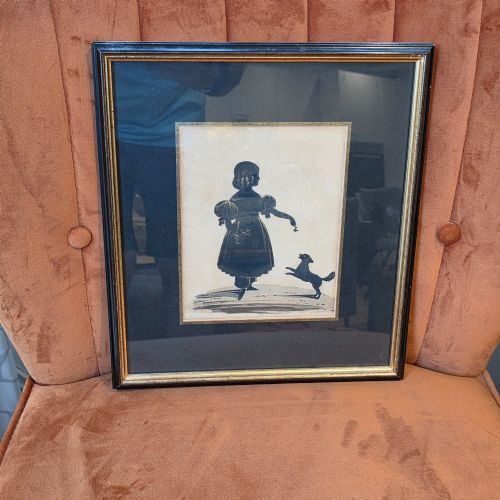
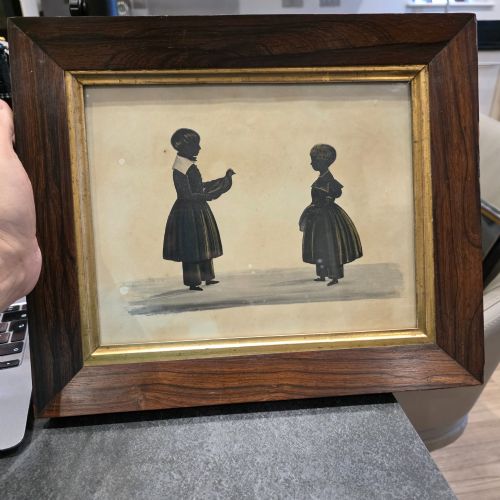
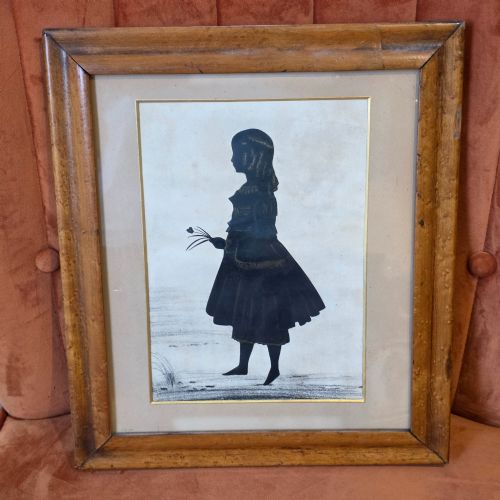
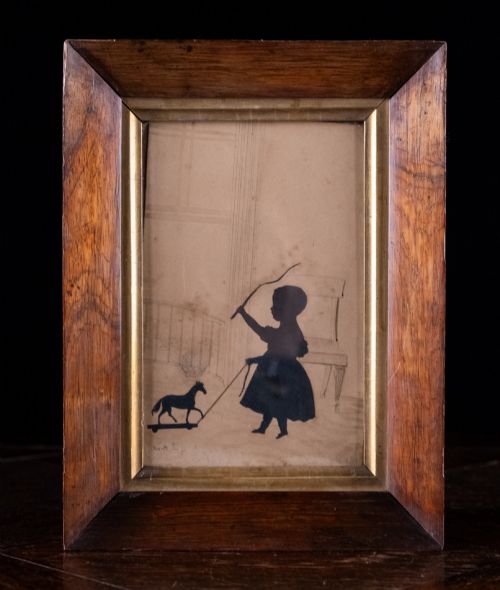
Victorian silhouette artwork comprises framed profile portraits, conversation pieces, and reverse glass paintings produced during the nineteenth century. These pieces record family groups, children with animals, jockeys, and equestrian scenes through sharp cut paper or painted forms.
The versions most frequently met on this page include nineteenth-century framed cut-paper silhouettes, miniature watercolours, and detailed collage work. Makers ranged from named artists working in studios to galleries like the Hubard Gallery and the Royal Victoria Gallery.
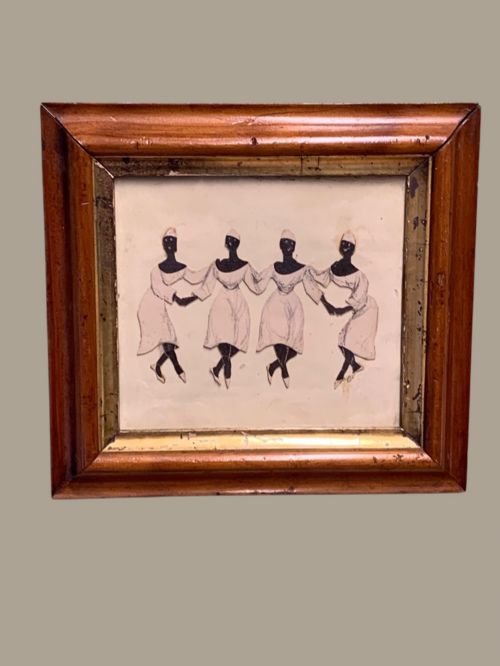
Works span styles from Regency elegance to Early Victorian and later nineteenth-century framing, often incorporating gold leaf highlights. Subjects extend from single child portraits to multi-figure conversation pieces and dancing figures.
Materials and Technique
Makers utilised paper and ink, often combining cut-paper silhouettes with delicate watercolour details and gold leaf highlights. Portraits were meticulously scissored or painted with fine brushes to capture exact facial profiles and costume details.
Glass and wood protected these fragile works within period frames, preserving the paper and ink from moisture and handling. Some pieces employ reverse silhouette painting on glass, applying pigment directly to the reverse side to create a glossy, deep finish.
Listings feature periods including Regency, eighteen-eighty, and the broader nineteenth century, utilising glass, paper, wood, ink, and gold leaf.
Quality and Execution
The sharpness of the paper cutting and the precision of the ink or watercolour detailing separate standard profiles from superior examples. Master practitioners achieved striking likenesses and fluid movement in miniature form.
Framing and material preservation also distinguish pieces, with original rosewood or brass frames and intact glass adding substantial character. The complexity of the composition, such as multi-figure conversation pieces or the inclusion of animals, elevates the work.
William James Hubard·Augustin Edouart·Frederick Frith·Alfred Darbyshire·Skeolan
The Victorian Silhouette Artwork Glossary
- Silhouette
- A two-dimensional portrait profile filled in with a solid dark colour, typically black, against a lighter background. This form relies entirely on contour and outline to convey identity.
- Reverse Glass Painting
- An artwork technique where the image is painted on the reverse side of a glass panel and viewed from the front. This method produces a smooth, reflective surface protecting the pigment.
- Conversation Piece
- An informal group portrait depicting people engaged in common activities, often within a domestic or outdoor setting. In silhouette work, these pieces show multiple figures interacting.
- Collage Work
- An artistic composition made from differing materials, such as cut paper and mixed media, assembled on a single backing. This technique creates textured, layered historical scenes.
- Gold Leaf
- Gold beaten into extremely thin sheets, utilised to highlight costume details, jewellery, or borders within silhouette artwork. It catches ambient light to accentuate the dark profile.
Victorian Silhouette Artwork: Frequently Asked Questions
How are silhouette portraits dated?
Portraits are dated through artist signatures, studio stamps on the backing, and stylistic clues in clothing and hair. Frame types and backing papers also provide reliable chronological markers.
Evidence on this page shows dates spanning from the Regency period through to the eighteen-eighties, often recorded directly by the maker.
What is a conversation piece?
A conversation piece is an informal portrait showing family members or groups interacting in a shared space. These works capture narrative scenes rather than a single static head profile.
Examples listed here include children with animals, equestrian groups, and dancing figures.
How do you display antique silhouettes?
Antique silhouettes should be hung away from direct sunlight to prevent the fading of paper, ink, and watercolour pigments. Stable indoor humidity protects the delicate paper and original wood or brass frames.
Grouping pairs or small collections together creates an effective historical display on a wall.