
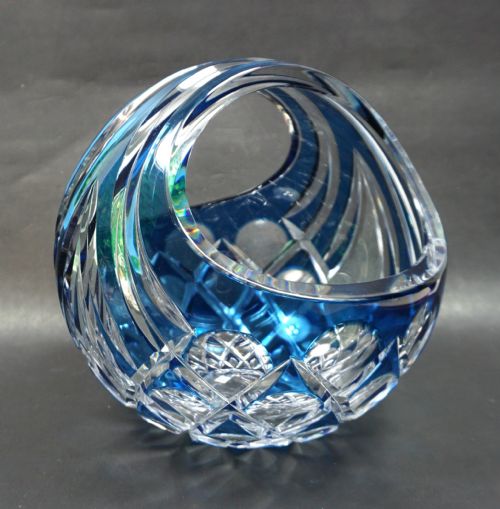


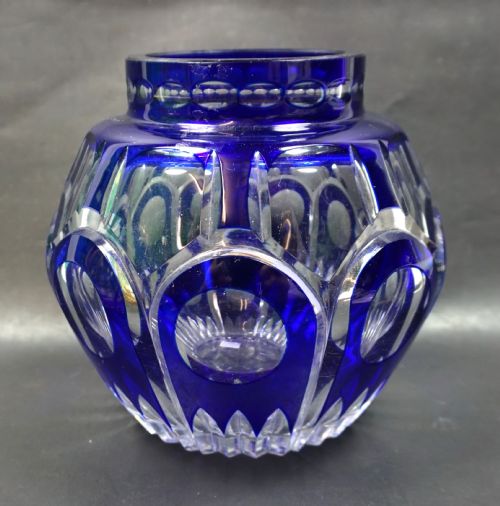


Cut Overlay Glass Vase
A cut overlay glass vase brings deep colour and brilliant faceted depth to a room, made by layering contrasting glass colours and cutting through the outer layer.
Cut Overlay Glass Vase
When you search for a cut overlay glass vase, you are looking at decorative glassware formed from distinct layers of coloured and clear or contrasting glass. These pieces range from nineteenth-century Victorian Bohemian examples to sleek Art Deco designs from Belgium.
The most common versions met here include vibrant blue, green, and red over crystal glass vases. Makers such as Val St. Lambert produced notable modernist examples, while earlier pieces come from nineteenth-century Bohemian workshops.
Forms extend beyond standard vases to include mantel lustres, baskets, and goblets. Each variation displays how artisans manipulated layered glass to reveal contrasting tones beneath.
How they were made
Makers formed these objects using lead crystal and cased glass, fusing a coloured outer layer over a clear or contrasting body. This multilayer technique allowed craftsmen to carve deeply into the surface.
Artisans employed wheel-cutting to slice through the outer overlay, exposing the clear crystal underneath to create sharp geometric or floral patterns. Some pieces incorporate additional ornamentation such as gold leaf and enamel detailing.
The combination of heavy crystal blowing and precise mechanical cutting produced the characteristic weight and brilliance of these objects. Workshops in Belgium and Bohemia mastered this demanding thermal and physical process.
Listings feature lead crystal, cased glass, and enamel materials spanning the Victorian era through the Art Deco period.
What varies in quality
Quality rests upon the crispness of the wheel-cutting and the depth of the colour layer. Superior examples display sharp, clean facets that pierce entirely through the overlay without blurring into the base crystal.
The weight of the lead crystal and the purity of the glass dictate the substance of the piece. Master designers like Charles Graffart and Joseph Simon achieved refined proportions that elevate the glassware above standard production.
The integration of secondary decoration, such as gold leaf work, separates standard items from finer artistic achievements. The precision of the colour contrast defines the visual success of the vessel.
Joseph Simon·Charles Graffart·Val St. Lambert
The Cut Overlay Glass Vase Glossary
- Overlay glass
- Glass composed of two or more distinct layers of different colours, fused together while molten. This layering provides the foundation for subsequent cutting.
- Cased glass
- A synonym for layered glass where a core vessel is encased in one or more outer jackets of coloured glass. It allows craftsmen to achieve rich chromatic effects.
- Mantel lustre
- A decorative tabletop vessel hung with glass prisms, often produced in pairs during the nineteenth century. These items were designed to sit upon fireplace mantels.
- Lead crystal
- A heavy, clear glass containing metallic oxides that increase refractive index and brilliance. This material responds exceptionally well to deep wheel-cutting.
Cut Overlay Glass Vase: Frequently Asked Questions
What is a cut overlay glass vase?
It is a decorative vessel made by fusing a layer of coloured glass over a clear crystal base. Artisans then cut through the top layer to reveal the contrasting glass underneath.
This technique creates striking visual patterns and a heavy, tactile surface texture.
How do I identify a Victorian piece?
Victorian examples often feature rich cobalt blue or ruby red hues with ornate Bohemian cutting and panelled sides. They tend to have heavier ornamentation compared to later designs.
Look for nineteenth-century manufacturing traits such as polished pontil marks and traditional forms like mantel lustres.
Where were these vases made?
The listings show origins primarily in Belgium and Bohemia during the nineteenth and twentieth centuries. Val St. Lambert in Belgium produced notable modernist works in the nineteen-thirties.
Bohemian workshops dominated earlier nineteenth-century production with vibrant coloured glass and crystal overlays.
How do I care for my vase?
Wash the glass gently by hand using lukewarm water and mild soap to protect the surface and any gold leaf details. Avoid sudden temperature changes to prevent stress fractures in heavy lead crystal.
Keep the piece away from direct sunlight for extended periods to preserve the depth of the coloured glass layers.