




Geometric Art Deco Glassware
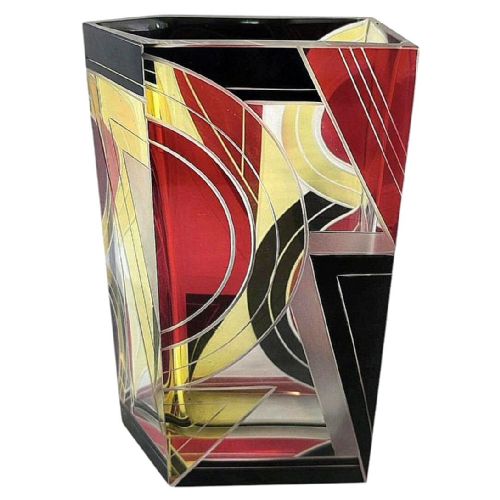
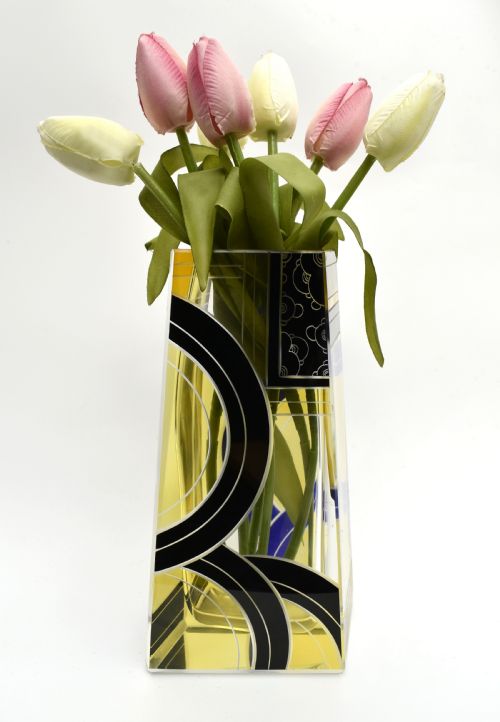
Geometric art deco glassware brings sharp architectural lines and vibrant enamel decoration to interior surfaces through distinctively twentieth-century forms.
Geometric Art Deco Glassware
Geometric art deco glassware encompasses functional and decorative objects produced during the 1930s, defined by strict linear motifs and angular profiles. The objects span tall vases, complete decanter sets with matching glasses, perfume bottles, and decorative bowls.
Vases and decanter sets dominate the selection, frequently displaying precise enamel patterns or layered colour applications across the surface. These pieces often originate from Czech workshops and Belgian manufacturers operating during the period.
The aesthetic relies heavily on structured repetition and stark contrasts, utilising transparency alongside solid pigments to emphasise the underlying geometry. Buyers encounter items ranging from simple moulded vessels to deeply etched and enamelled showpieces.
Assessing quality in geometric glassware
Quality depends on the precision of the cutting and the crispness of the enamel application, where clean boundary lines distinguish superior studio work from standard production. The weight and clarity of the crystal glass itself indicate the grade of the original material.
The complexity of overlay layers and the depth of the chemical or mechanical etching dictate the visual richness of the object. Pieces bearing attributed designer names or specific factory marks demonstrate documented provenance that elevates their standing within the category.
Several decanter sets come with their original matching glasses, ready for a 1930s cocktail hour.
Karl Palda·Val St Lambert·Charles Graffart·Joseph Simon
The Geometric Art Deco Glassware Glossary
- Cased glass
- A method where a layer of coloured glass is fused over a contrasting body. This technique allows artisans to cut through the exterior layer to reveal the colour beneath.
- Overlay glass
- Similar to cased glass, this involves multiple distinct layers of glass fused together. The outer layer is partially removed by cutting or engraving to create contrasting patterns.
- Lead crystal
- Glass containing a high proportion of lead oxide, which increases the weight, refractive index, and clarity. This material permits deeper and sharper facet cutting.
- Enamel decoration
- The application of melted coloured glass powders onto a finished glass surface to create permanent designs. It hardens during a secondary firing process.
- Etched glass
- A surface treatment where acid or mechanical abrasion eats into the glass body. This technique produces matte lines and frosted geometric motifs.
Geometric Art Deco Glassware: Frequently Asked Questions
How do I identify genuine art deco glassware?
Look for characteristic 1930s forms, such as sharp angles, stepped profiles, and linear enamel patterns that reflect the period aesthetic.
Examine the weight and the clarity of the material, as genuine pieces often employ heavy lead crystal or layered overlay glass.
What is cased glass?
Cased glass consists of two or more distinct layers of glass fused together during the blowing process.
This method allows makers to cut away parts of the outer layer to reveal contrasting colours underneath.
Where were these pieces made?
A significant portion of geometric art deco glassware originates from Czech workshops and Belgian factories active during the 1930s.
These regions produced both large-scale commercial items and highly detailed decorative vessels.
How should I clean enamelled glass?
Clean enamelled glass gently using lukewarm water and a mild detergent, avoiding harsh scrubbing brushes or abrasive cleaning agents.
Submerging older pieces for extended periods can damage fragile surface enamels and etched details.