


Cut Glass Vanity Container
A cut glass vanity container is a heavy, bright dressing table piece that holds powders, salts or perfumes with absolute brilliance.
Cut Glass Vanity Container
A cut glass vanity container sits on a dressing table or desk to hold small personal items, from powder and pins to cologne and stamps. When you search for a cut glass vanity container, you encounter heavy glass vessels fitted with metal lids, which survive in various forms across several periods.
The pieces appearing on this page span the Victorian, Edwardian, and Art Deco eras, alongside nineteenth-century examples. You meet vanity jars, trinket boxes, scent bottles, and rouge pots, each showing how dressing table wares evolved across decades.
Most examples combine clear or amethyst glass bases with sterling silver mounts, enamel work, or tortoiseshell. Their origins cross regional assay offices and notable workshops, uniting functional storage with decorative presence.
How they were made
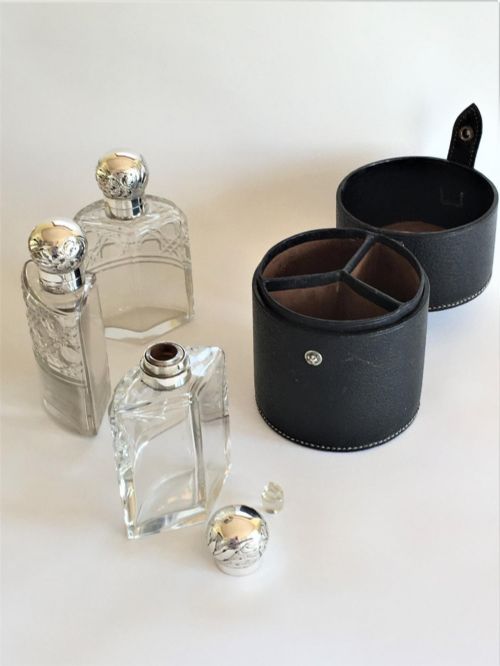
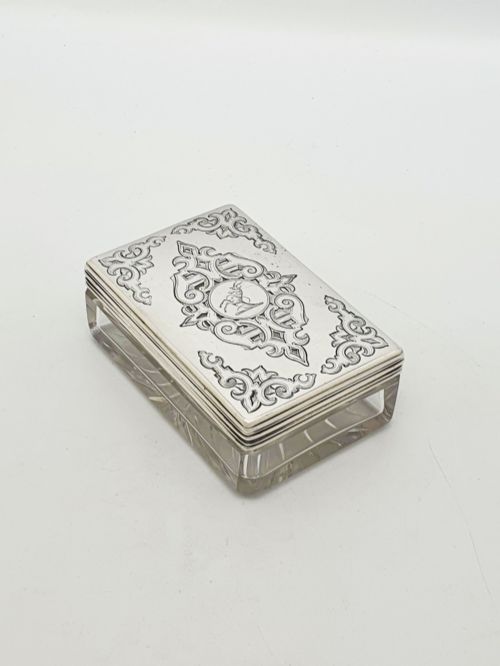
Makers formed the heavy bodies of these containers from glass or crystal, often cutting deep geometric or floral patterns into the thick walls to catch the light. This labour-intensive cutting produced sharp facets and substantial weight.
The glass vessels were then fitted with sterling silver mounts, collars, and lids, frequently stamped with Birmingham or Sheffield assay marks. Some lids feature guilloche enamel or inset tortoiseshell, secured to the glass rims by skilled silversmiths.
Some Edwardian travellers carried miniature cologne trios, ensuring they smelled of fresh lavender even in the middle of a bumpy carriage ride.
What varies in quality
Quality rests in the crispness of the glass cutting and the thickness of the crystal walls. Deeper, sharper incisions create a brilliant play of light that distinguishes finer vessels from plain, pressed glass alternatives.
The weight and gauge of the sterling silver mounts also mark the standard of a piece. Substantial silver lids that fit snugly against the glass collar indicate careful manufacturing, whereas thin or bruised metal diminishes the overall integrity of the container.
Goldsmith's and Silversmith's Co.·Hoffman
The Cut Glass Vanity Container Glossary
- Guilloche
- An ornamental pattern engraved into metal by a machine with a rotating cylinder. It provides a geometric texture beneath translucent enamel.
- Sterling silver
- An alloy of silver containing parts of other metals for durability, standard in British manufacture. It carries hallmarks indicating its assay town and year of testing.
- Overlay
- A layer of coloured glass or metal applied over a clear base. In these pieces, it adds striking contrast to the cut glass body.
- Assay mark
- A stamped set of symbols on precious metal indicating the standard of purity, the town of testing, and the year of manufacture. These stamps help date the mounted lids.
Cut Glass Vanity Container: Frequently Asked Questions
What were vanity containers used for?
These containers held daily grooming essentials like cold creams, tooth powders, and scented waters on the dressing table. They kept volatile perfumes from evaporating and protected delicate powders from moisture.
Over time, they adapted to hold stamps, pins, and cigarettes as dressing routines and desk accessories shifted in the early twentieth century.
How do I date a silver mounted jar?
The silver lid or collar usually carries a set of British hallmarks that reveal the assay office and the exact year of testing. These stamps provide a reliable anchor for the age of the mounted piece.
The style of the glass cutting and the shape of the container offer further clues, moving from ornate Victorian forms to clean geometric Art Deco lines.
Are the lids removable?
Most lids lift off freely or screw onto a threaded silver collar fitted securely to the glass rim. Hinged boxes feature pins that allow the lid to open smoothly to a fixed angle.
When handling these pieces, check whether the hinge or collar remains firmly attached to the heavy glass base.
How should I clean cut glass?
Wash the glass base in warm, soapy water using a soft cloth to clear away dust from the deep cuts. Avoid harsh scouring pads that might scratch the surface.
Polish the silver mount separately with a gentle cloth, keeping polishes away from any enamel or tortoiseshell panels.