
Silver Topped Bottle
A silver topped bottle brings refined metalwork together with glass or crystal in forms from perfume vessels to barware.
Silver Topped Bottle
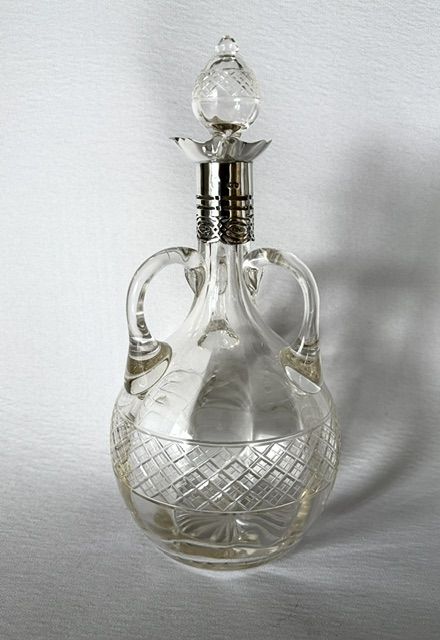
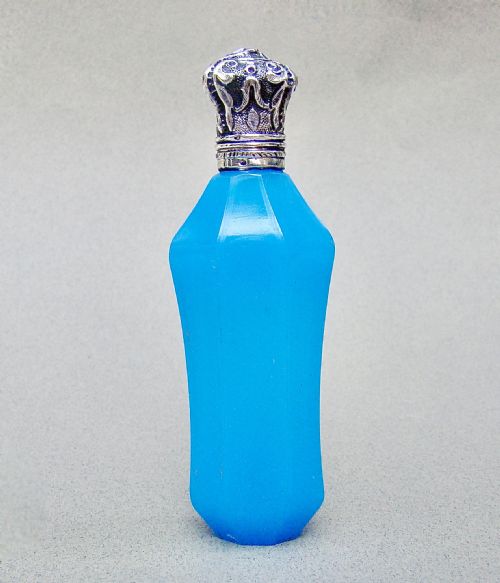
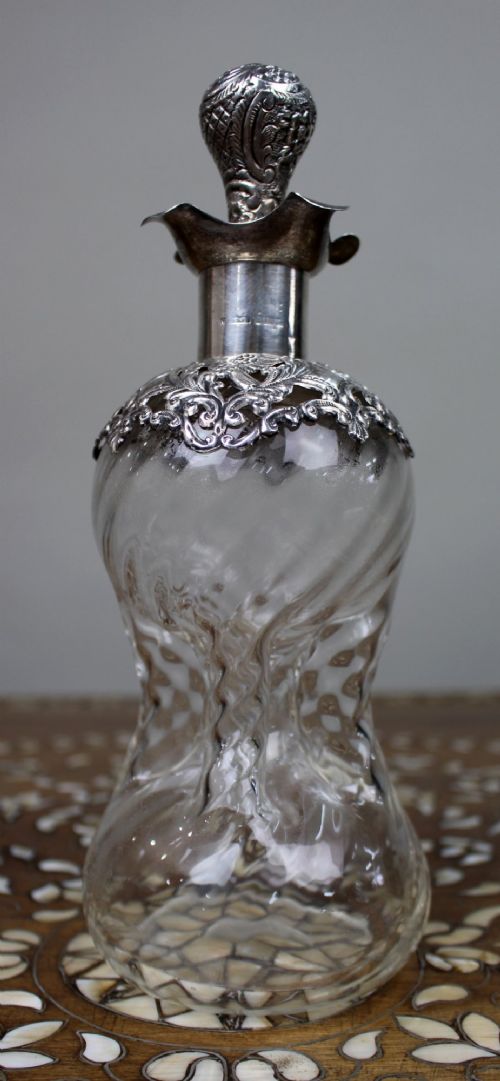
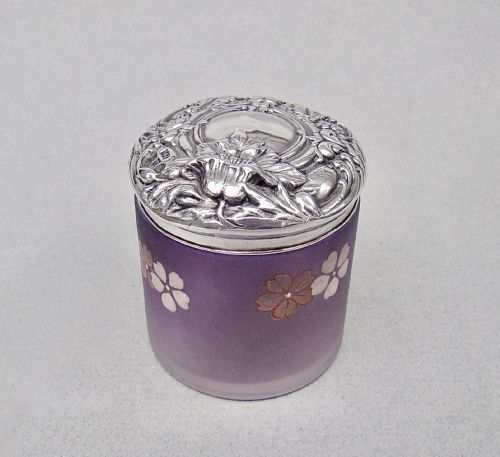
A silver topped bottle encompasses scent bottles, perfume vessels, decanters, and dressing table jars created across the Victorian, Edwardian, and Art Deco periods. Buyers search for these pieces to acquire functional vessels that combine precious metal mounts with coloured, cut, or opaline glass bodies.
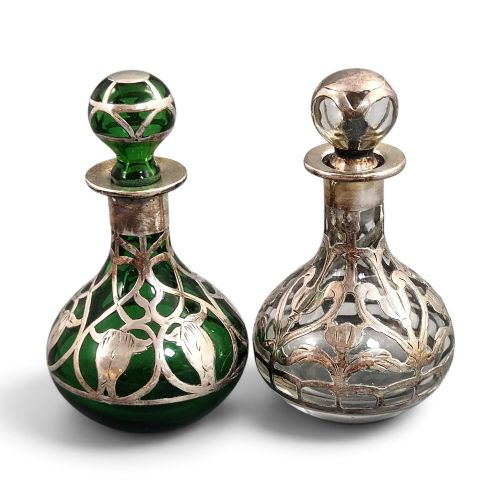
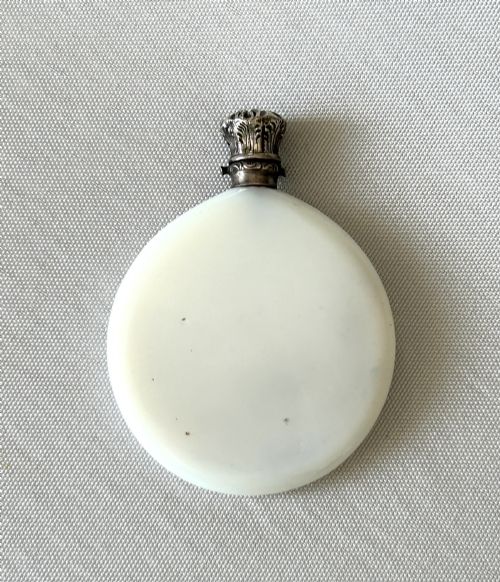
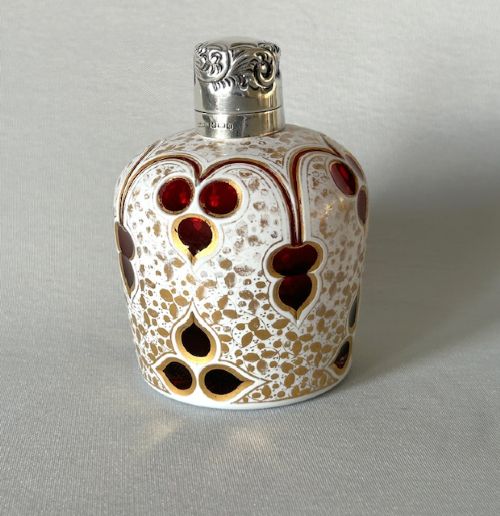
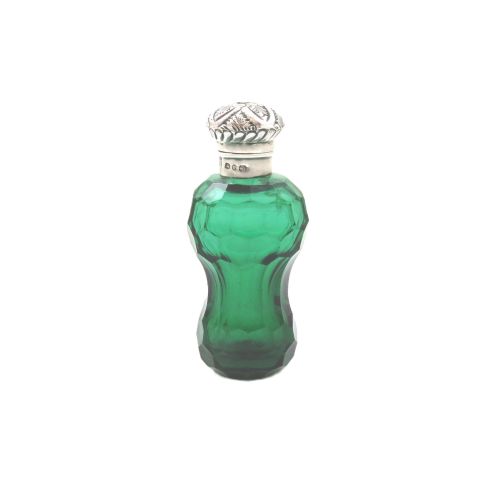
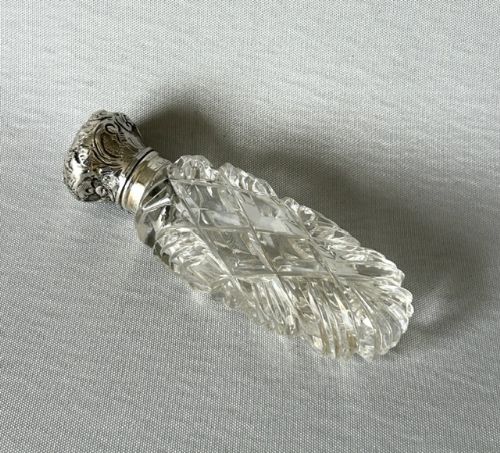
The versions most frequently encountered on this page are Victorian and Edwardian scent bottles and decanters. These range from simple glass flasks with sterling silver screw caps to elaborate coloured glass vessels encased in pierced or overlaid silver mounts.
Origins span English workshops in Birmingham and London alongside continental European centres including France and Bohemia. Pieces often reflect specific design movements such as Art Nouveau curves or Art Deco geometric lines.
Materials and Techniques
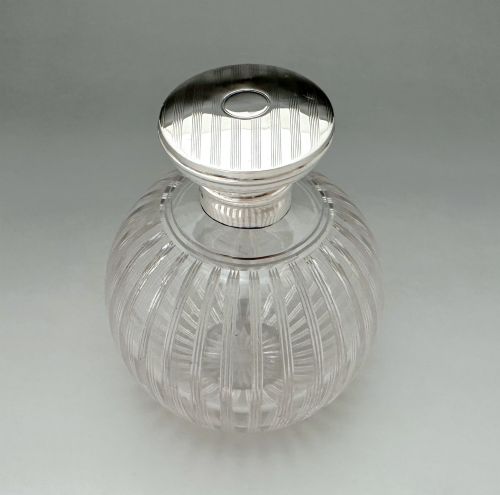
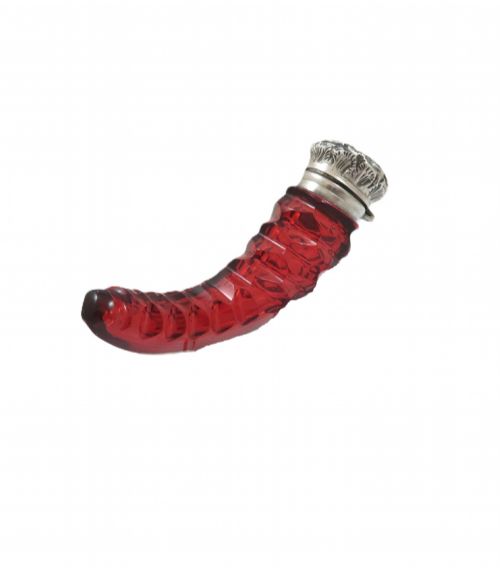
Makers combined sterling silver or solid silver mounts with various forms of glass, including cut crystal, opaline, cranberry, and crackle glass. Silver components were shaped via casting, chasing, or piercing, whilst glass bodies were blown, moulded, or cut by hand.
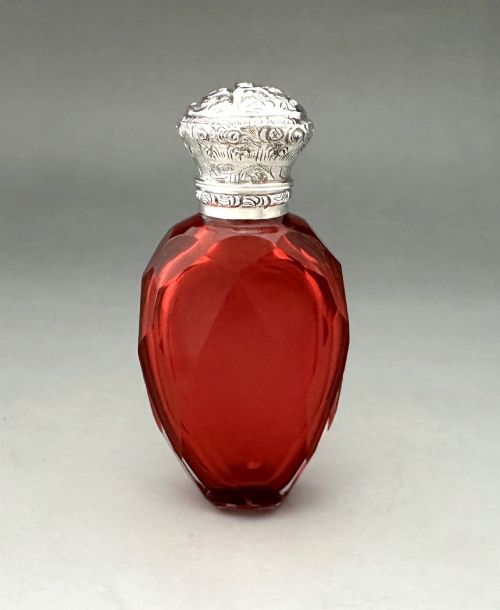
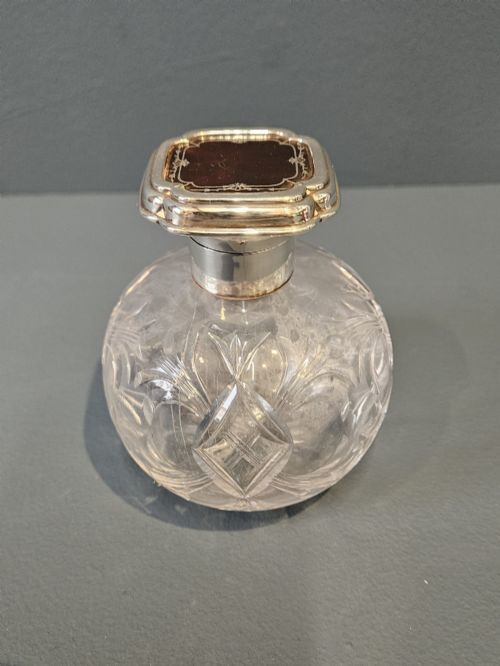
Specialised decorative techniques included guilloché enamel applied to silver lids, tortoiseshell inlays, and intricate silver overlay bonded directly to the glass surface. Glass vessels frequently utilised traditional regional colours such as Bristol green or ruby red.
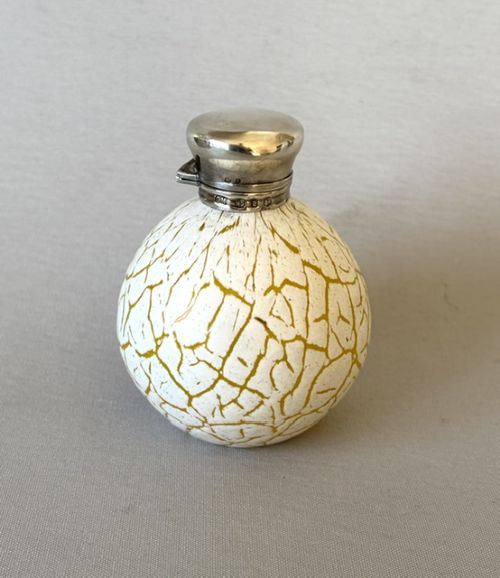
Among the functional barware and scent bottles, a speckled ceramic egg disguises a secret glass scent bottle from Victorian times.
Evaluating the Pieces
Quality rests upon the crispness of the silver work and the weight and clarity of the glass vessel. Finer examples display detailed hallmarks, substantial metal gauge, and precise hand-cut facets on the crystal or glass body.
The integration between the silver top and the glass container dictates overall standard. Superior items feature securely fitted, original mounts that complement the proportions and colour of the glass without obscuring its craftsmanship.
Gorham·Harold Bushell and Co·Henry Perkins·Franchini and Bigaglia
The Silver Topped Bottle Glossary
- Sterling silver
- A silver alloy containing 92.5 percent pure silver by mass, frequently stamped with assay office hallmarks to indicate origin and date.
- Opaline glass
- An opaque or translucent glass developed in various pastel shades, highly popular during the nineteenth century for dressing table wares.
- Guilloché enamel
- A decorative technique where a precise geometric pattern is engraved beneath a transparent layer of vitreous enamel on metal.
- Clichy glass
- Nineteenth-century glassware produced in France, known for distinct colour palettes and advanced paperweight or bottle construction.
- Whisky noggin
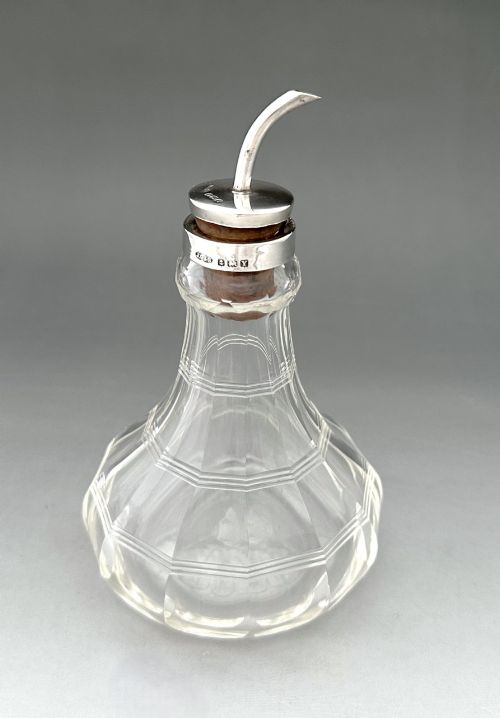
- A small vessel or jug fitted with a silver mount, designed for holding a single measure of spirits alongside a decanter.
Silver Topped Bottle: Frequently Asked Questions
What glass colours do these bottles feature?
The selection includes transparent cut crystal alongside coloured glass such as cranberry, ruby, amethyst, Bristol green, and opaque opaline.
These varied hues reflect nineteenth and early twentieth-century preferences for decorative dressing table and bar accessories.
How are periods identified?
Periods are determined by silver hallmarks, structural styles, and manufacturing techniques characteristic of Victorian, Edwardian, or Art Deco design.
Assay office marks and date letters stamped on the silver mounts provide the most precise indication of manufacture.
Were these bottles used for travel?
Many smaller scent and perfume bottles were designed for fitted dressing cases or travel use, featuring secure screw or hinged caps.
Larger vessels like decanters and whiskey noggins remained stationary on sideboards or bar trays.
What items are included besides perfume bottles?
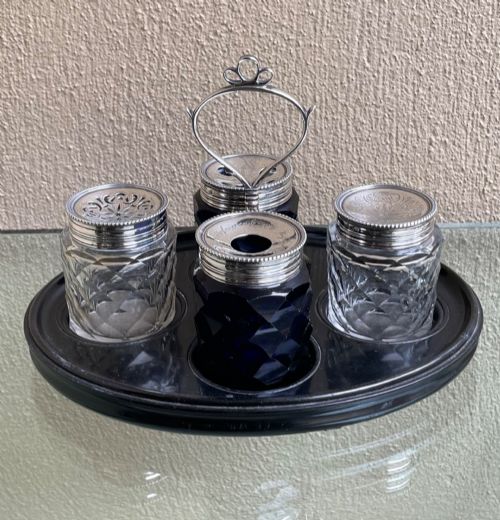
The category extends to barware such as decanters, bitters jiggers, soda syphons, and hunting flasks, alongside inkstands and dressing table jars.
These pieces share the characteristic combination of glass bodies and functional silver mounts.