


Cut Glass Table Lamp
A cut glass table lamp catches the light across a room, bringing depth and period weight to an interior.
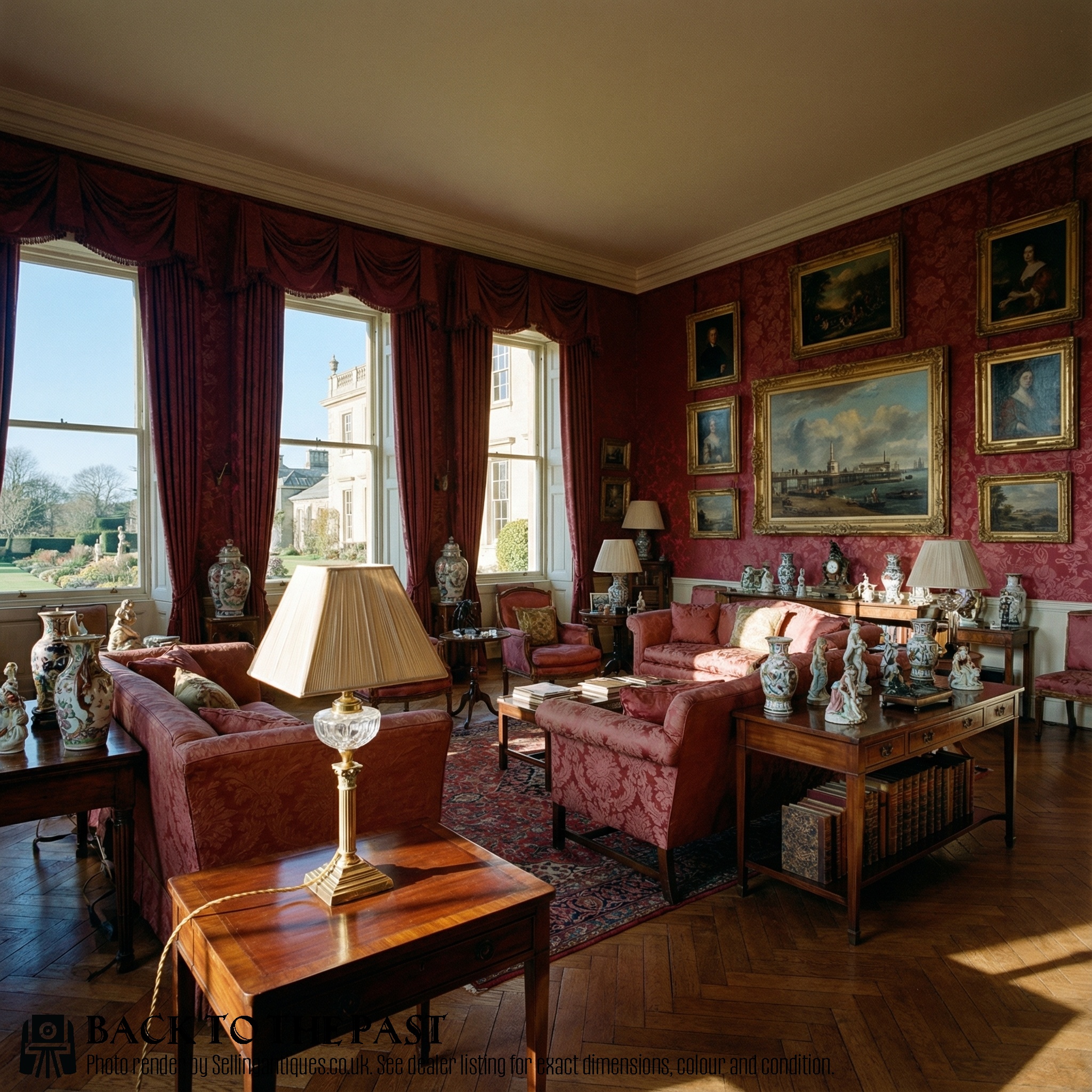
Cut Glass Table Lamp
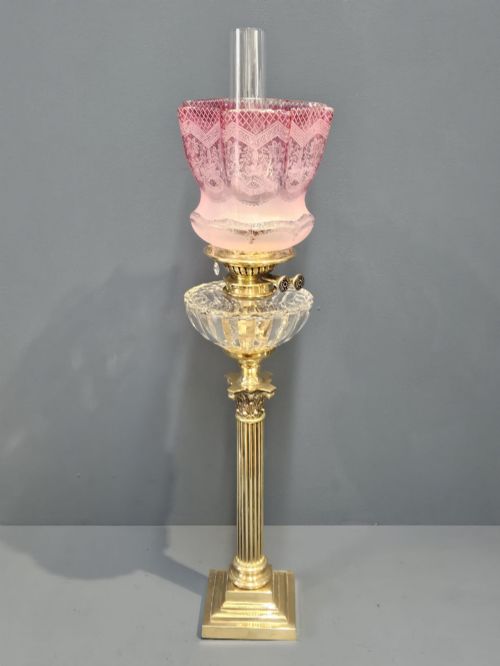
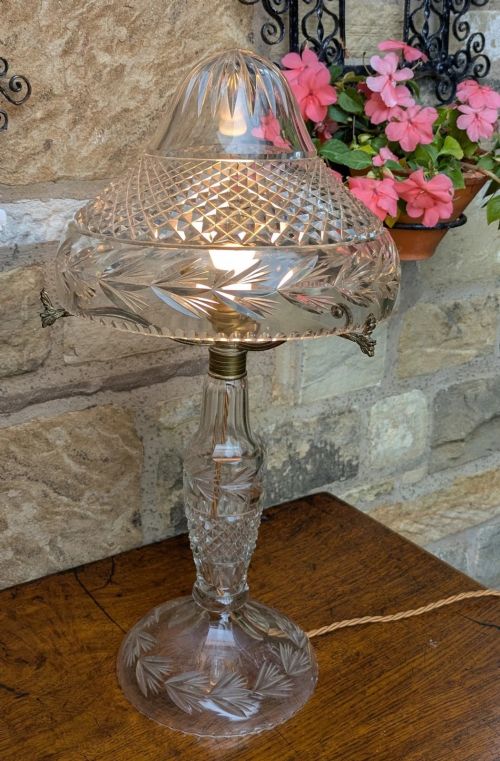
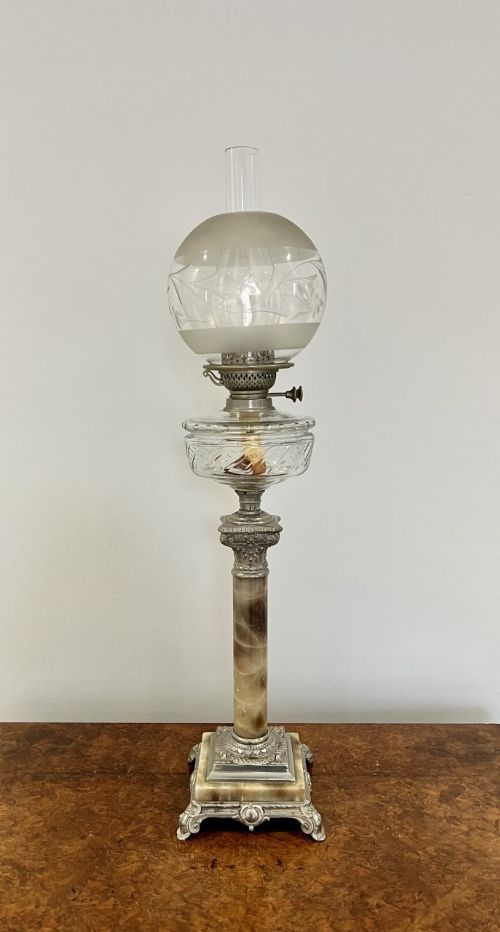
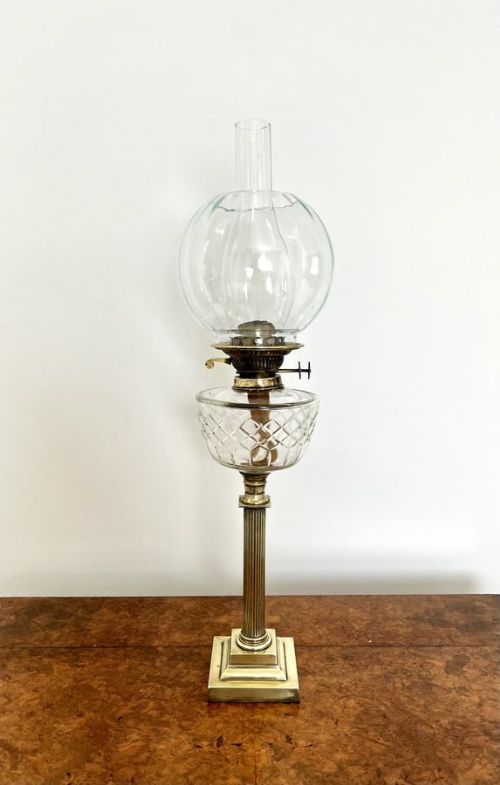
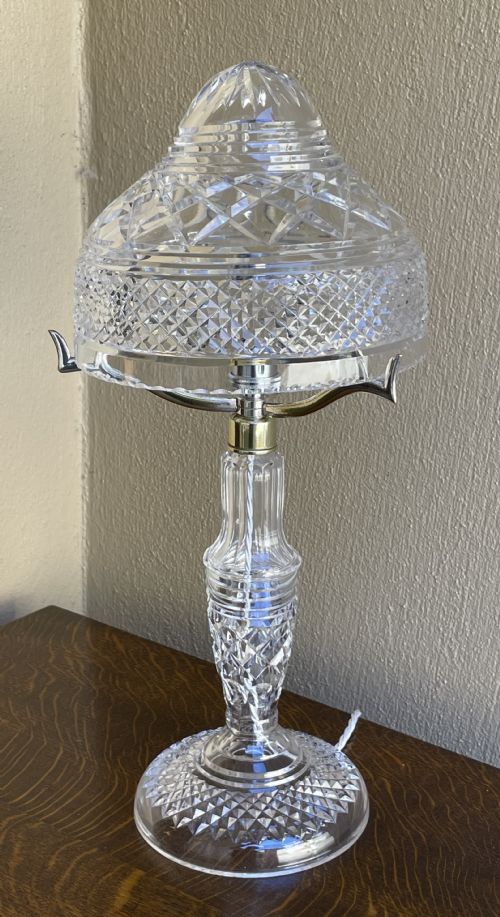
A cut glass table lamp spans the Victorian, Edwardian and Art Deco eras, appearing in forms from converted oil lamps to distinct mushroom shapes and column profiles. These pieces originate from domestic and formal settings where functional illumination met decorative glasswork.
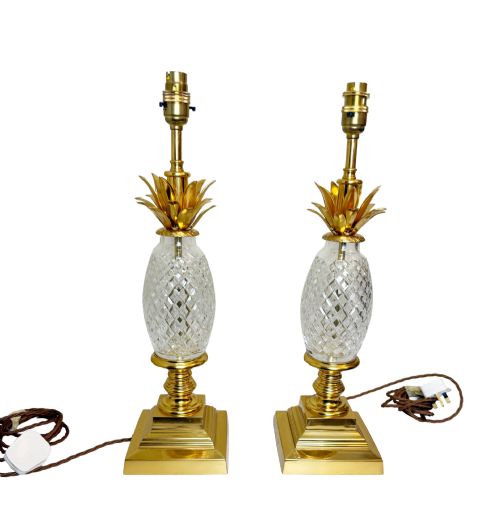
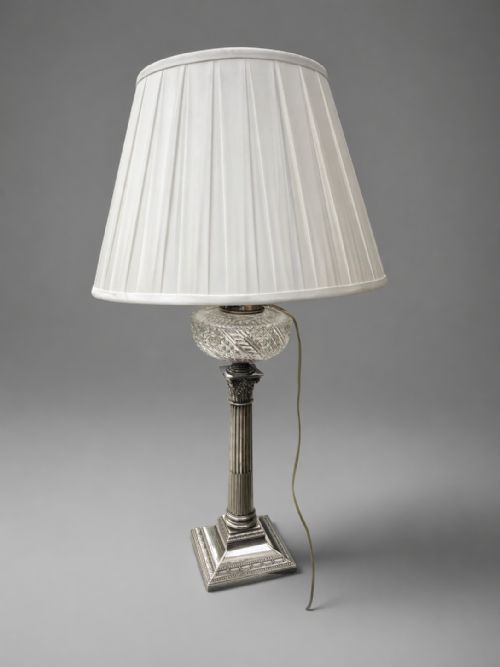
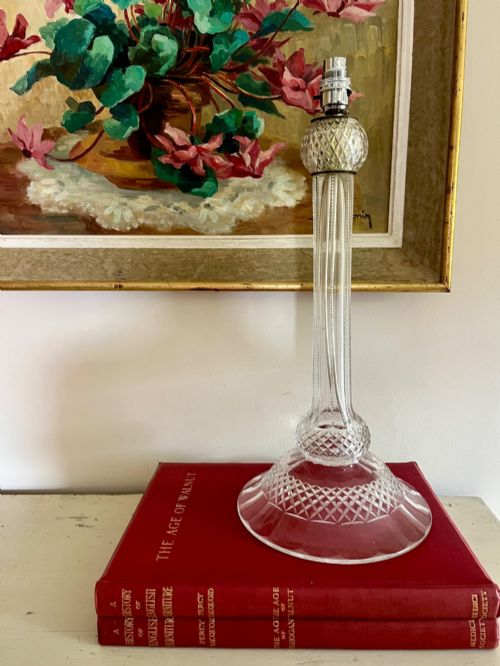
The selection here includes slender Corinthian column designs alongside heavy crystal mushroom profiles and twin bulb configurations. Many carry metal mounts in brass, ormolu or silver plate, grounding the refractive glass in a solid architectural frame.
How They Were Made
Makers shaped heavy lead crystal and standard glass blanks by hand, applying wheel-cut facets, flutes and diamond patterns to catch and refract light. These glass bodies were then mounted onto cast brass, gilt bronze or silver plated hardware, often utilising threaded internal rods for stability.
Conversion pieces reveal the transition from oil and paraffin burning mechanics to electric wiring, incorporating original fonts, burners and reservoirs into functional contemporary lamps. Ormolu and gilt metal mounts were cast and chased separately before assembly with the glass components.
Cut Glass Table Lamp Retail Price Guide 2026
Typical asking prices for cut glass table lamp among the pieces listed under this phrase on Sellingantiques today, from the lower quarter to the upper quarter. They describe what is for sale here now, not the wider market.
Some Victorian lamps carry patented wick mechanisms by Clarke, originally designed to burn nightlights safely in nurseries.
What Varies in Quality
Quality rests in the crispness of the glass cutting and the weight of the metal mounts. Deep, sharp facets produce clearer refraction than soft, rounded pressed mouldings, while substantial brass or ormolu bases provide structural balance to heavy crystal bodies.
The pedigree of the maker and the integration of components also define the tier of a piece. Signed works by notable glasshouses or silversmiths demonstrate superior finishing on both the internal fittings and the exterior decorative metalwork.
Stuart Crystal·Goldsmiths and Silversmiths Company·Osler·Messengers·Harrods·Webb
The Cut Glass Table Lamp Glossary
- Corinthian column
- A classical architectural column form with an ornate capital, frequently utilised for Victorian and Edwardian lamp bases.
- Mushroom lamp
- A distinctive form featuring a rounded, overhanging glass shade atop a matching glass or metal base, popular during the Art Deco period.
- Ormolu
- Gilt bronze mounted onto furniture or lighting fixtures, providing a rich golden finish that complements cut crystal.
- Reservoir
- The container on an oil lamp designed to hold paraffin, which in converted examples remains visible beneath the burner assembly.
- Lustre
- A decorative table ornament or lamp hung with cut glass prisms or droplets designed to scatter light.
Cut Glass Table Lamp: Frequently Asked Questions
Are these lamps converted from oil?
Many examples originating from the Victorian and Edwardian periods began life as oil or paraffin lamps before later conversion to electricity. This lineage often leaves the original burner mechanism or reservoir intact beneath the bulb fitting.
Such conversions allow historic lighting apparatus to function safely in modern rooms while retaining their structural integrity and period proportions.
How do I date a cut glass lamp?
Dating relies upon observing the style of the metal mounts, the cut patterns on the glass, and the overall silhouette. Corinthian columns typically point to the late nineteenth or early twentieth century, whereas smooth mushroom profiles frequently indicate the Art Deco era.
Examining the wiring compartments and any maker stamps or patent marks helps narrow the decade of production.
Can I use standard modern lamp shades?
Most pieces accept standard shade fittings provided the harp or shade carrier matches the gallery or bulb holder dimensions. Proportion remains the primary consideration when pairing a shade with a heavy crystal base.
Tall column lamps generally suit wider fabric shades, while mushroom forms are complete units requiring no additional shade.
How should I clean a cut glass lamp?
Maintenance involves dusting the facets regularly with a soft cloth and washing removable glass components in lukewarm soapy water when necessary. Metal mounts require care to avoid harsh chemical contact that might strip gilt or silver plate.
Electrical components must be kept entirely dry during any cleaning process.