


Cut Glass Mustard Pot
A cut glass mustard pot brings sparkle to the table, combining heavy faceted glass with silver or silver plate.
Cut Glass Mustard Pot
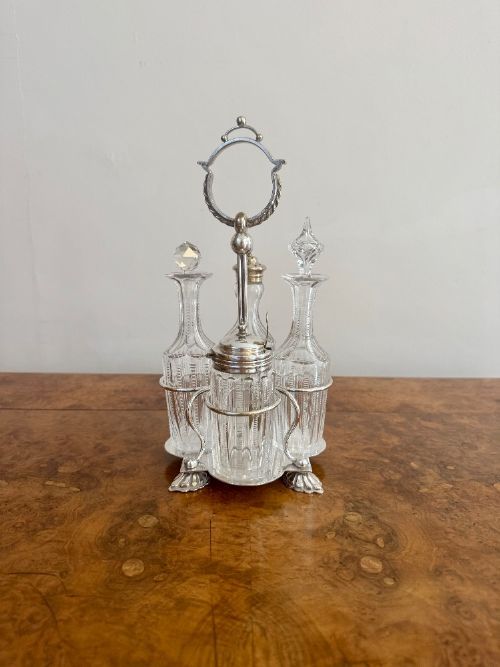
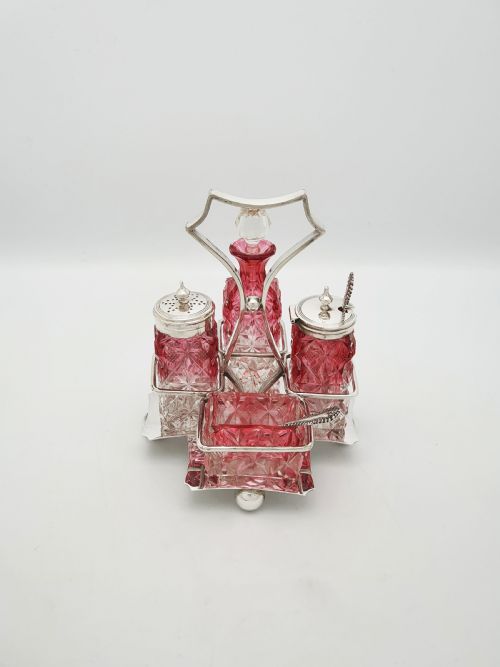
When you search for a cut glass mustard pot, you are looking at small dining table vessels designed to hold prepared mustard, usually paired with a matched spoon and a hinged metal lid. These items appear across multiple periods, including the Georgian, Regency, Victorian, and Edwardian eras, often as part of larger condiment or cruet sets rather than standalone pieces.
The versions you are most likely to meet on this page span the nineteenth and early twentieth centuries, constructed from clear or cranberry flashed glass fitted with silver plate or sterling silver mounts. Forms range from simple cylindrical jars to novelty carriage designs and cruet stands containing multiple bottles.
How they were made
Makers produced the glass bodies using lead crystal, flint glass, or coloured glass, shaping them through blowing or pressing before cutting deep facets into the exterior to catch the light. The metal components, whether sterling silver or silver plate on a base metal, were cast or stamped and then soldered to form collars, hinged lids, and handles.
Artisans combined the glass and metal parts securely, often mounting silver rims around the top edge of the glass jar to support the hinged lid and thumbpiece. Some examples incorporate star-cut bases on the glass vessels and engraved decorative bands on the silver mounts.
Cut Glass Mustard Pot Retail Price Guide 2026
Typical asking prices for cut glass mustard pot among the pieces listed under this phrase on Sellingantiques today, from the lower quarter to the upper quarter. They describe what is for sale here now, not the wider market.
Listings feature cut glass and silver plate across Victorian, Edwardian, and eighteenth-century periods.
What varies in quality
The distinction between ordinary and superior pieces rests on the crispness of the glass cutting and the weight of the metal mounts. Deeper, sharper facet cuts and heavier gauge silver plate or sterling silver indicate more substantial manufacturing effort.
Design ambition also separates the range, moving from standard cylindrical condiment jars to complex novelty forms such as carriage cruets or matched sets housed in fitted cases. The presence of identifiable maker marks on the silver provides further differentiation.
Mappin Brothers·William Hutton & Sons·George Fox
The Cut Glass Mustard Pot Glossary
- Cut glass
- Glass decorated by grinding facets or patterns into the surface with a wheel. This technique creates reflective edges that enhance the brilliance of the material.
- Silver plate
- A layer of silver fused or electroplated onto a base metal such as copper or Britannia metal. This process provided the appearance of solid silver at a lower cost.
- Cruet set
- A matched collection of bottles, jars, or pots held in a stand for condiments such as oil, vinegar, mustard, and pepper. These sets sat at the centre of the dining table.
- Cranberry glass
- A transparent red glass coloured with gold chloride during production. It appears frequently in nineteenth-century tableware and decorative items.
- Sterling silver
- An alloy consisting of pure silver and other metals, typically copper, standardised for purity. Items made from this material often carry hallmark stamps.
Cut Glass Mustard Pot: Frequently Asked Questions
What is a cut glass mustard pot used for?
These pots served dining tables as receptacles for prepared mustard, keeping the condiment covered until required for meals. They sat either individually or as part of larger cruet stands.
They were accompanied by small spoons for serving the mustard onto individual plates alongside meat or other dishes.
How do I date a cut glass mustard pot?
Dating relies on stylistic clues, the type of glass, and any hallmarks found on the silver mounts or lids. Victorian and Edwardian pieces often show distinct cutting styles and mount designs.
Earlier Georgian and Regency examples tend to feature heavier lead crystal and simpler, hand-finished silver or Old Sheffield Plate fittings.
How do I clean the silver and glass?
Maintenance requires washing the glass gently in warm soapy water to remove residues without scratching the surface. Silver mounts should be polished with a soft cloth and dedicated silver cleaner.
Avoid submerging cemented mounts in water for extended periods to protect the adhesive or lining holding the glass and metal together.
Are these pots part of larger sets?
Many pots survive as individual items, but a significant number originated within larger cruet sets or condiment stands. These larger frames held multiple bottles for oil, vinegar, and sauces alongside the mustard pot.
Complete sets often include fitted wooden or silver-plated trays designed to keep the collection together on the dining table.