


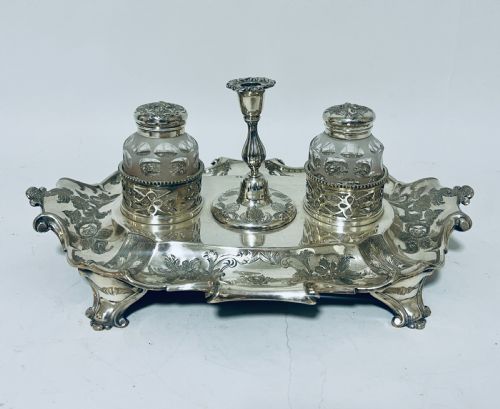


Cut Glass Inkwell Stand
A cut glass inkwell stand sits ready on the desk, holding heavy glass bottles within a fitted frame of silver, brass, or fine timber.
Cut Glass Inkwell Stand
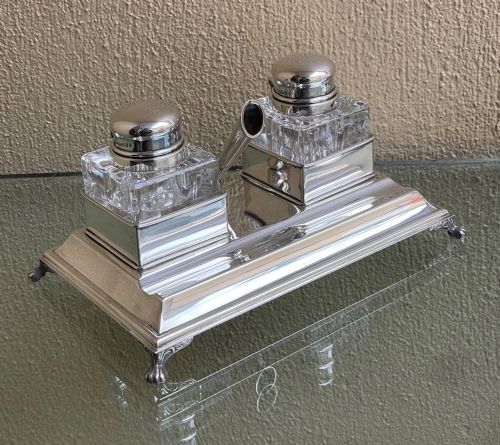
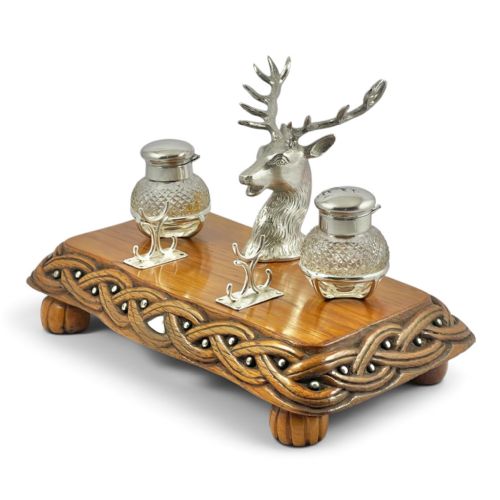
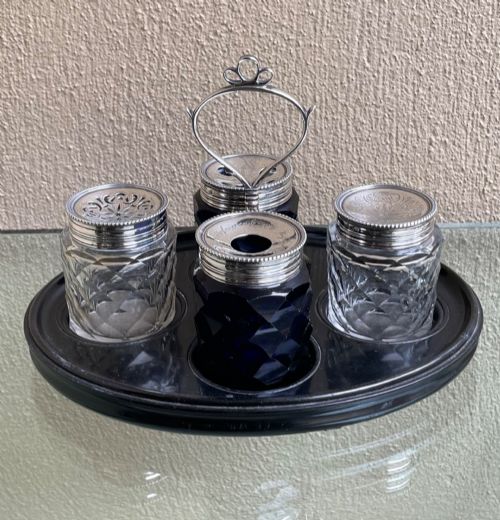
A cut glass inkwell stand brings together heavy glass vessels and a fitted base to keep writing materials orderly on a desk. The examples found here range from modest oak trays to grand silver and coromandel setups designed for Victorian and Regency writing tables.
Most pieces date from the nineteenth century, spanning Victorian, Edwardian, and Regency periods. They appear as single inkwells, double inkwells on trays, or larger desk sets incorporating pen rests and stamp boxes.
The materials used for the stands vary widely, combining cut glass bottles with sterling silver, brass, plated metals, oak, walnut, coromandel, and mahogany.
How they were made
Makers cut the glass bottles by hand, pressing or grinding deep geometric patterns into the thick walls to catch the light on the desktop. These heavy glass vessels sat securely inside fitted trays fashioned from hardwoods like oak and coromandel, or cast in brass and silver.
Metal components involved silver-smithing, electroplating, and brass casting, often embellished with chased mounts or inset mother of pearl. Wood bases relied on fine cabinet-making techniques, incorporating brass inlay, satinwood stringing, and silver feet.
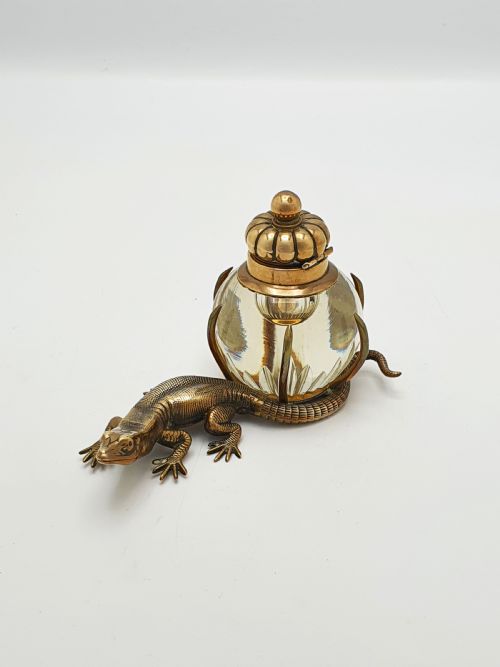
A brass lizard occasionally guards the ink.
What varies in quality
Quality rests in the weight and clarity of the cut glass and the substance of the mounting base. Thick, heavy glass with crisp, deep cutting sits at the upper end, paired with solid sterling silver or dense exotic timbers rather than plated base metals and lighter veneers.
The level of detail in the metal mounts and the precision of the fitted wooden compartments separate standard desk accessories from finer pieces. Fully hallmarked silver mounts and maker attribution indicate higher workshop standards.
James Cartland and Sons·Rupert Favell·W M F·William Hutton·Frederik Haberling
The Cut Glass Inkwell Stand Glossary
- Cut Glass
- Glass shaped and patterned by holding it against a rotating abrasive wheel. This technique creates deep, sharp facets that refract light.
- Inkstand
- A fitted tray or stand holding one or more inkwells alongside space for pens. These pieces formed a permanent centrepiece on a writing desk.
- Coromandel
- A dense, dark exotic timber with contrasting light streaks imported from Asia. Cabinet-makers utilised it for high-end nineteenth-century desk stands.
- Sheffield Plate
- An early composite material made by fusing a thin sheet of silver to a copper base. Makers used it before electroplating became common.
- Hallmark
- A series of official stamps marked on precious metal items indicating the assay office, metal purity, and date. They provide a reliable guide to a piece's origin.
Cut Glass Inkwell Stand: Frequently Asked Questions
What is a cut glass inkwell stand?
A cut glass inkwell stand is a desk accessory comprising one or more heavy glass ink bottles set into a matching tray or base.
The base provides a stable platform and often includes pen trays, stamp compartments, or mounts made from silver, brass, or wood.
How do I date a cut glass inkwell stand?
Dating relies on hallmarks on silver mounts, the style of the woodwork, and the manufacturing techniques used for the glass and metal.
Victorian and Edwardian pieces show distinct decorative motifs, while Georgian and Regency examples tend toward heavier classical proportions.
Were these stands used for daily writing?
Yes, they served as the primary desk furniture for holding liquid ink and dip pens in homes and offices before the invention of the fountain pen.
The heavy glass bottles prevented tipping while writers dipped their nibs.
How should I clean a cut glass inkwell stand?
Glass components benefit from gentle washing in warm soapy water, taking care to avoid harsh abrasives on old crystal or cut facets.
Metal mounts and wooden bases require appropriate dry dusting or specialist polishing suited to silver, brass, or polished timber.