

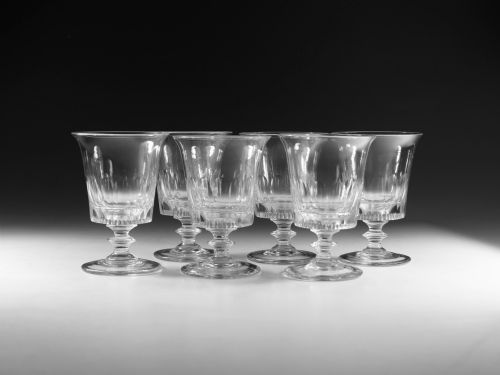
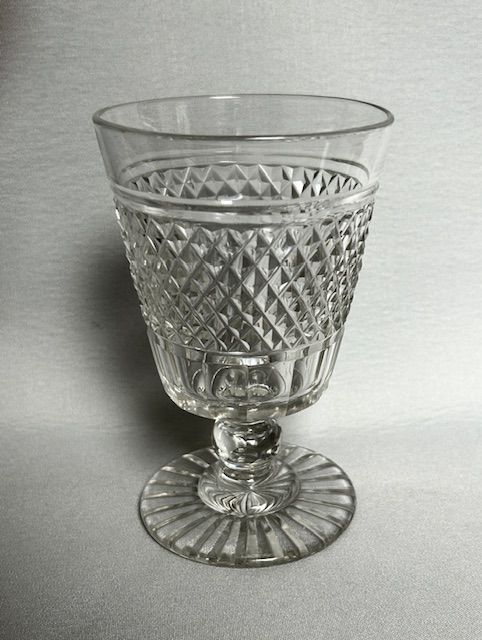


Cut Glass Drinking Goblets
Cut glass drinking goblets bring weight and sharp brilliance to the table, spanning Georgian rummers to Victorian services.
Cut Glass Drinking Goblets
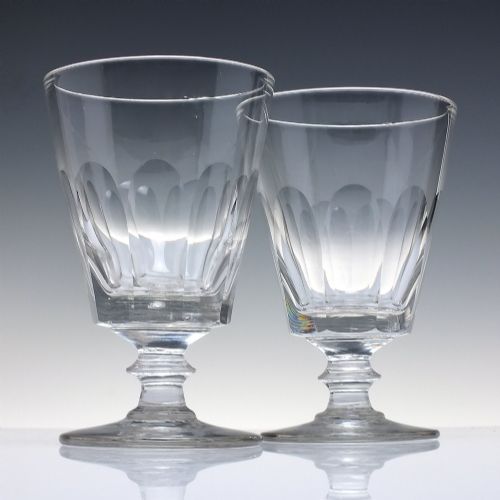
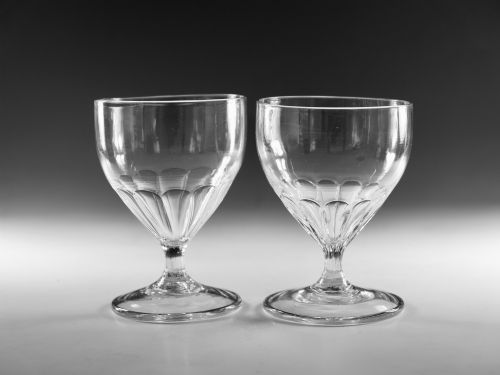
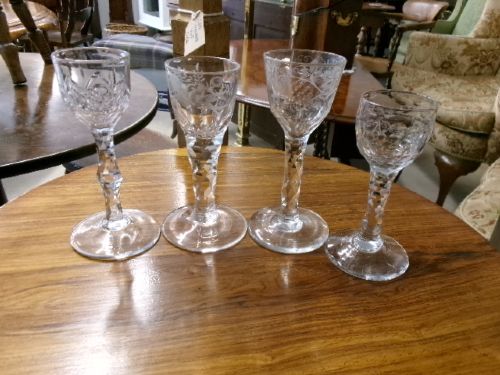
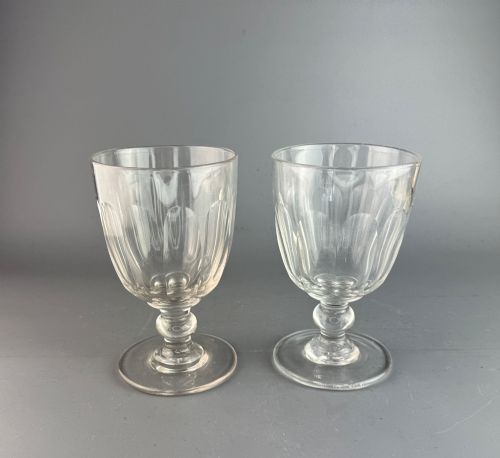
Cut glass drinking goblets comprise heavyweight rummers, faceted wine glasses, and large decorative table goblets originating from Georgian, Victorian, and Edwardian periods.
The buyer meets many rummers and stemmed wine glasses dating from eighteen hundred through the late nineteenth century, often found in matched pairs or larger sets.
Forms range from heavy square lemon squeezer feet on early English rummers to delicate coloured Bohemian and Biedermeier vessels with wheel cut or engraved bowls.
What varies in quality
Depth and crispness of the wheel cutting dictate the upper tier, where facets remain sharp to the touch and catch light evenly across the bowl.
Proportion and metal weight set the finest vessels apart, visible in thick baluster stems, stable square feet, and clear resonant crystal without excessive clouding.
Listings feature lead crystal, coloured vaseline glass, and gold leaf decoration across Georgian, Victorian, and Edwardian periods.
James Giles·Webb Corbett·Stevens and Williams·Otto Prutscher·Meyr’s Neffe
The Cut Glass Drinking Goblets Glossary
- Rummer
- A large, sturdy drinking glass popular in the Georgian and Victorian eras, typically used for ale or wine.
- Lemon squeezer foot
- A square, pressed glass base with sloping sides resembling a kitchen juicer, found on Georgian and Regency rummers.
- Facet cut
- Geometric planes ground and polished onto the stem or bowl of glassware to refract light.
- Intaglio
- A technique where designs are carved into the glass surface by a small rotating wheel, creating a sunken relief.
- Vaseline glass
- Yellow-green glass containing uranium dioxide that glows under ultraviolet light, seen in Victorian tableware.
Cut Glass Drinking Goblets: Frequently Asked Questions
What is a rummer?
A rummer is a substantial glass designed for heavy table use, often featuring a short stem and a wide bowl.
These pieces emerged in the eighteenth century and remained popular through the Victorian period for serving wine and ale.
How do I date a cut glass goblet?
Dating relies on combining the bowl form, stem construction, and the style of the wheel cutting.
Early Georgian pieces often display heavy metal and facet stems, while Victorian examples introduce coloured glass and chemical etching techniques.
Can I use antique goblets daily?
Lead crystal and flint glass withstand careful hand washing, though antique stems require gentle handling.
Many collectors use their rummers and wine glasses for special dinners rather than routine daily dining.
What is an Anglo-Irish glass?
Anglo-Irish glass refers to heavy lead crystal manufactured in Ireland during a period of tax exemptions in the late eighteenth and early nineteenth centuries.
These items are known for deep diamond cutting and brilliant clarity.