




Cut Glass Candelabra
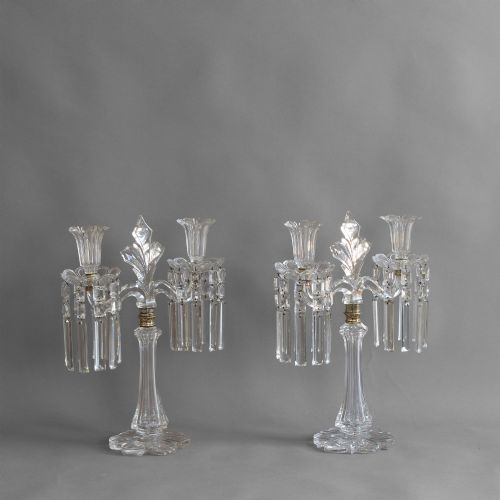
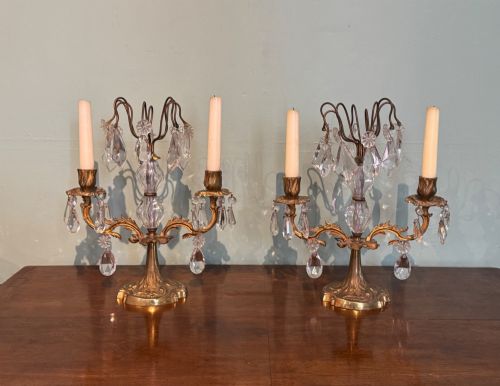
These cut glass candelabra catch the candlelight in every cut and drop, bringing undeniable sparkle and period weight to a dining table.
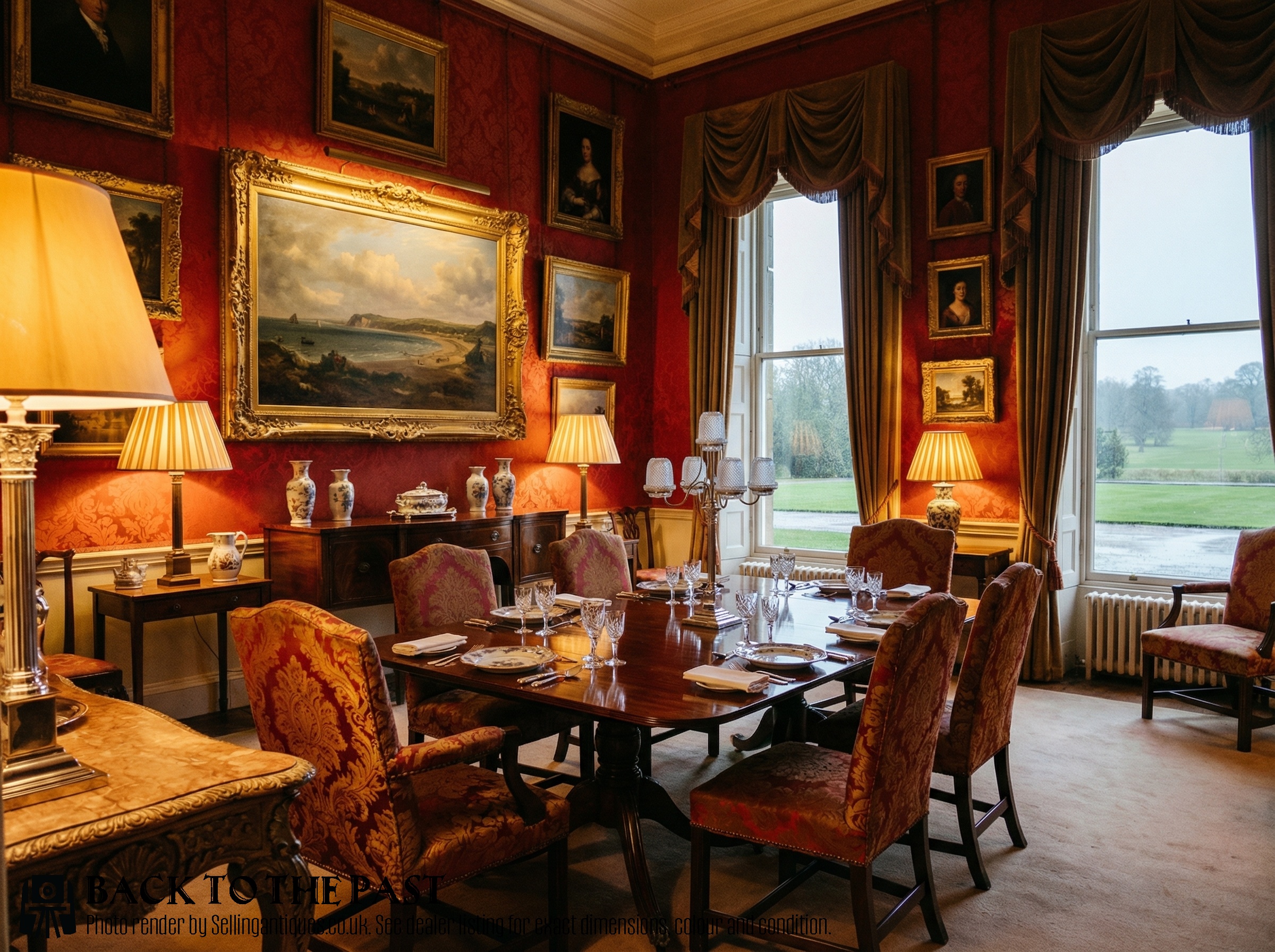
Cut Glass Candelabra
Cut glass candelabra combine heavy crystal or glass branches with metal mounts in brass, gilt-brass, bronze, or ormolu. You will frequently encounter pairs from the nineteenth century alongside Edwardian and later twentieth-century examples designed to hold multiple candles.
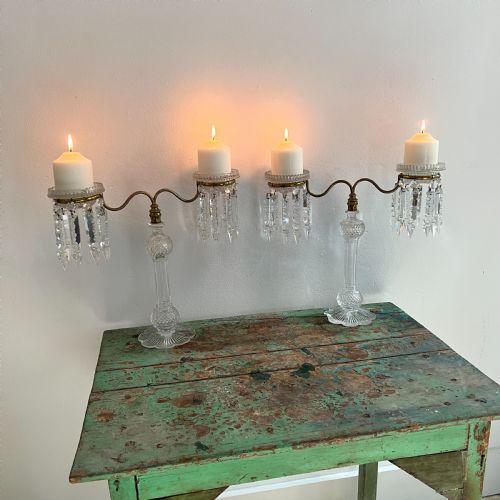
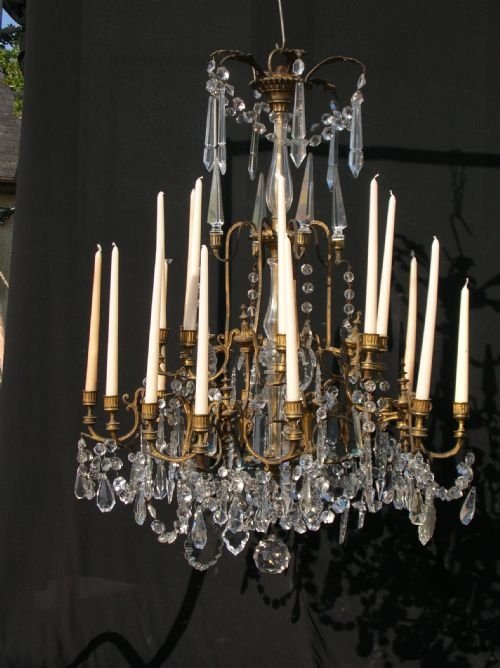
The forms span simple two-branch table pieces to large French chateau styles hung with prism-cut drops and lustres. Some variations function simultaneously as candlesticks, table lamps, or centrepieces.
Originating across English and French workshops, these items reflect distinct periods from Regency elegance to Victorian ornamentation and Louis XVI revival. Their primary purpose is to elevate interior lighting through reflective glass surfaces.
How they were made
Maker's hands shaped crystal and glass through wheel-cutting, creating sharp facets that maximise the refraction of light. These glass components are secured to metal frames cast in brass, gilt-bronze, or ormolu.
Prism-cut drops and lustres dangle from wire loops attached to the arms, chiming softly and dispersing light across the room. Silver plating and gilding finish the metal elements, anchoring the brilliance of the glass.
Some nineteenth-century pieces doubled as portable indoor suns, designed to make a modest parlour gleam like Versailles.
What varies in quality
The clarity and weight of the glass dictate the primary tier of quality, with deep, crisp facet-cutting separating finer items from softer, mould-pressed alternatives. Superior pieces feature heavier crystal components that remain clear and bright.
Metalwork execution defines the secondary distinction, where finely chased ormolu and heavy cast brass outclass simpler plated mounts. The presence of matching, original prism-cut drops without chips completes the higher standard.
The Cut Glass Candelabra Glossary
- Lustre
- A glass candlestick or candelabra hung with cut glass pendants designed to reflect candlelight. These drops swing gently from the upper bobeche.
- Ormolu
- Gilded bronze used for decorative metal mounts on nineteenth-century pieces. This technique imparts a rich, golden tone to the brassy framework.
- Bobeche
- The small drip pan fitted beneath the candle nozzle to catch melting wax. It often secures the wire hooks holding crystal drops.
- Cricklite
- A proprietary brand of night-light and candelabra popular in the Victorian era. These typically utilise specialised glass shades and bases.
- Prism cut
- A geometric cutting style applied to glass drops and columns to split light into spectral colours. This technique enhances the overall sparkle of the object.
Cut Glass Candelabra: Frequently Asked Questions
How do I clean cut glass candelabra?
Wash the glass elements gently in warm soapy water using a soft cloth, removing each drop if necessary to clean it individually. Dry every piece thoroughly before reassembly to maintain maximum sparkle.
Keep abrasive cleaners away from any gilt brass or ormolu mounts to preserve the historic metal finish. A soft dry brush works best for dusting intricate metal joints.
How do I date a cut glass candelabra?
Examine the metal casting style, the depth of the glass cutting, and the method used to join the arms to the central stem. Regency and early nineteenth-century pieces often feature heavier bronze mounts and hand-polished facets.
Later Victorian and Edwardian examples show machine-assisted cutting and brighter brass finishes. Maker names or patent marks on bases can also narrow down the production era.
Can missing glass drops be replaced?
Replacement prism cuts and crystal drops can be sourced to match older configurations. Look for vintage drops that match the approximate weight, colour, and cutting style of the originals.
Matching the exact nineteenth-century glass tint requires patience, but substitute drops restore the visual balance of a multi-branch lustre.