
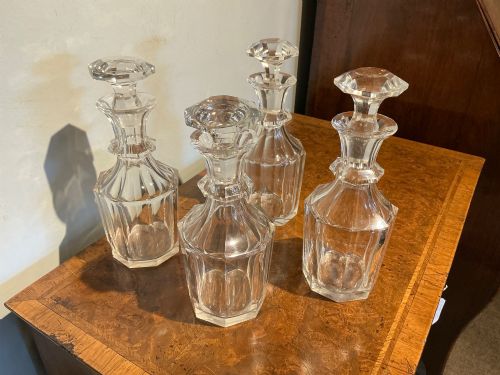
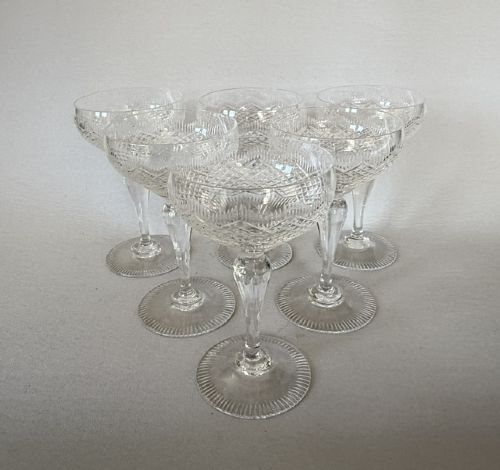
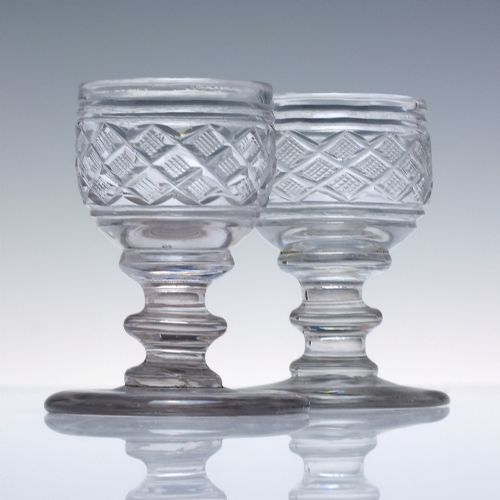
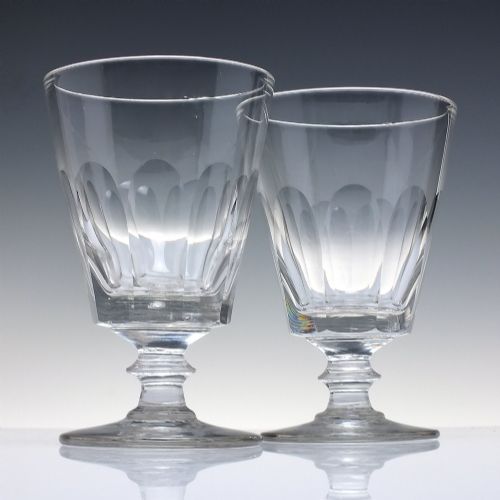
Cut Crystal Glasses
These cut crystal glasses carry the weight of past dining rooms, catching candle and electric light alike through centuries of pattern.
Cut Crystal Glasses
When you search for cut crystal glasses, you encounter drinkware, decanters, and table accessories spanning the nineteenth and twentieth centuries.
The items most frequently met here include Georgian rummers, Edwardian champagne bowls, and mid-century hock glasses shaped by hand.
Makers from Bohemia, France, and Britain produced these heavy vessels for formal dining and entertaining.
Materials and construction
Craftsmen shaped lead crystal and cut glass while hot, or ground patterns into cooled blanks using abrasive wheels.
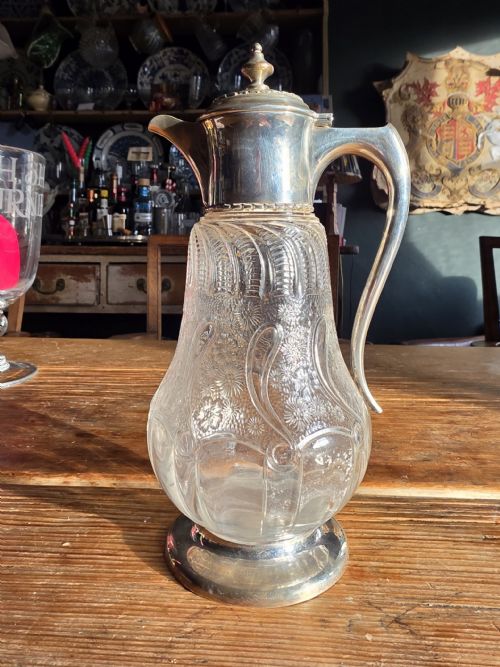
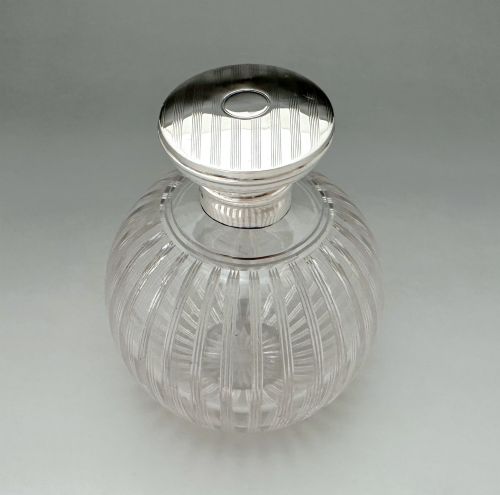
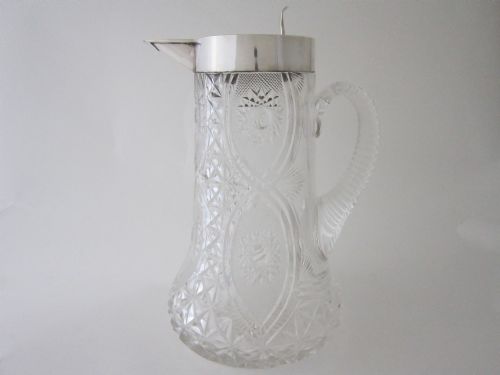
Mounts in sterling silver, brass, and gilt bronze often secured rims, necks, and bases on jugs, decanters, and scent bottles.
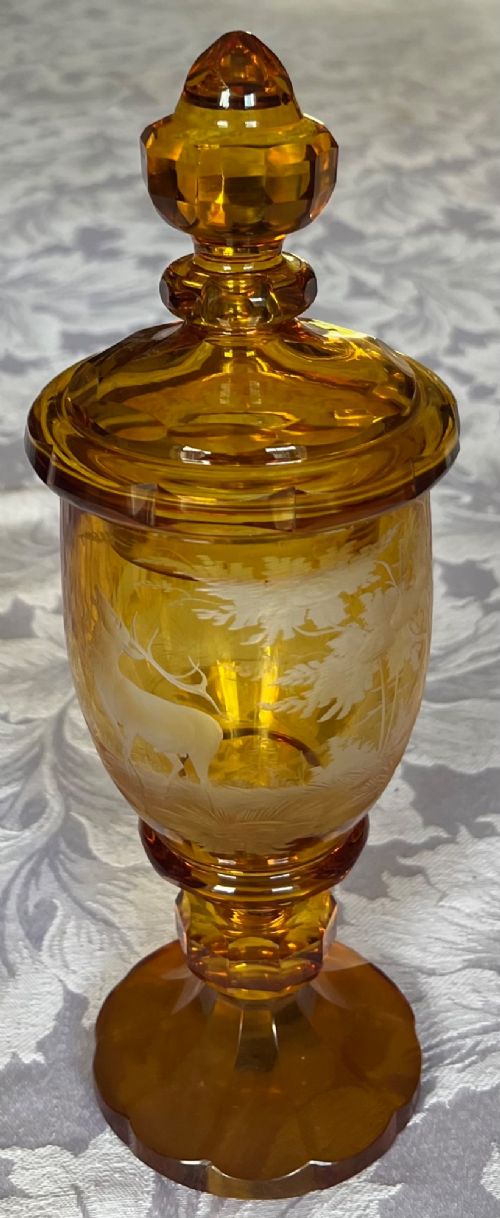
Engraving, gilding, and overlay techniques added colour and surface detail to clear glass bodies.
Listings feature lead crystal, sterling silver, and gilt bronze combined across nineteenth and twentieth-century tableware.
Judgments of quality
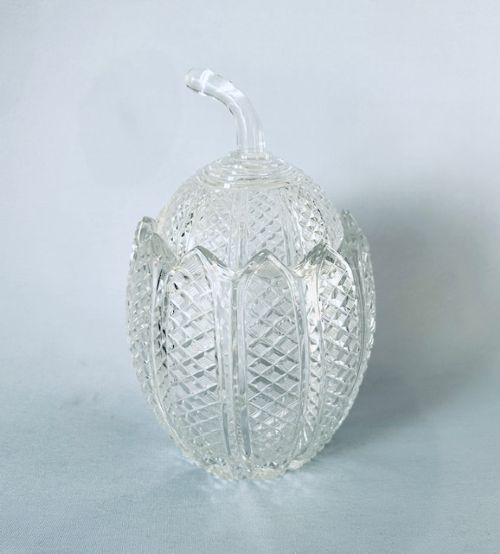
The clarity and weight of the metal distinguish superior glass, along with the crispness and depth of the wheel-cut facets.
Subtleties in hand-cutting mean individual pieces within a set show slight variations that reveal human labour rather than machine output.
Integrity of silver mounts and the absence of chips along sharp cut rims determine the survival state of older service pieces.
The Boots Company·Stevens and Williams·Moser·Val Saint Lambert·Webb·Waterford
The Cut Crystal Glasses Glossary
- Rummer
- A large, heavy drinking glass popular in the eighteenth and nineteenth centuries for ale or wine. These sturdy vessels often sat on short stems with thick feet.
- Hock glass
- A tall stemmed vessel designed for hock or white wine, frequently featuring coloured glass cut through to clear layers. They brought vibrant hues to Victorian and Edwardian tables.
- Tantulus
- A wooden cabinet holding decanters securely behind a locked bar, preventing access while displaying the cut glass vessels within. The frame exposed the stoppers while locking them in place.
- Pillar and prism cut
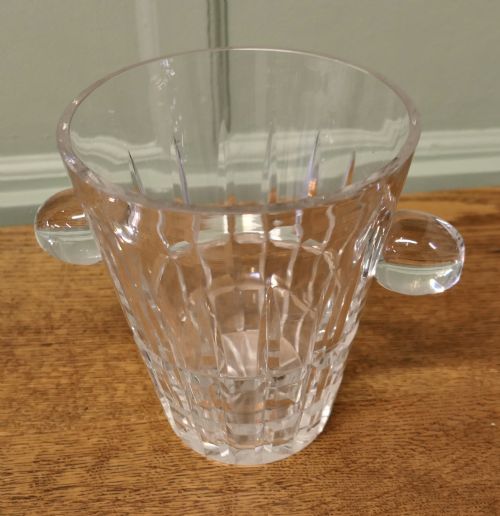
- A style of linear facet cutting that directs light through thick vertical planes. This technique creates strong geometric reflections along the sides of jugs and decanters.
- Intaglio
- A method of wheel engraving where the design is sunk beneath the surface of the glass rather than left in relief. It produces subtle, concave motifs of fruit, flowers, or crests.
Cut Crystal Glasses: Frequently Asked Questions
Can I use these glasses daily?
Many people enjoy using antique stemware for special dinners, provided they handle the heavy lead crystal with care. Hand-washing prevents the accidental knocks that modern dishwashers cause.
Keep in mind that older glasses often have smaller capacities than contemporary equivalents, reflecting historical tastes in pouring portions.
How can I date cut crystal glasses?
Examine the base for a polished pontil mark, which indicates the piece was blown and finished by hand rather than moulded in a factory. Pontil scars are more common on items from the Georgian and Victorian eras.
Style, weight, and the presence of sterling silver hallmarks or specific maker signatures help narrow down the decade of production.
Why do some glasses change colour?
Cranberry, amethyst, and amber pieces achieve their hues through metallic oxides added to the molten batch during manufacture. Overlay glasses combine a coloured outer layer with clear crystal beneath.
When artisans cut through the coloured layer, the clear glass shows underneath, creating striking contrast in patterns like zip cuts and flutes.