




Cut Crystal Decanter Caddy
These cut crystal decanter caddy pieces house your favourite spirits securely while showing off brilliant Victorian and Edwardian craftsmanship.
Cut Crystal Decanter Caddy
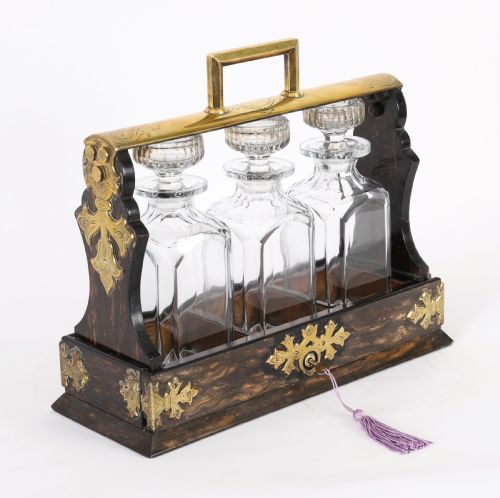
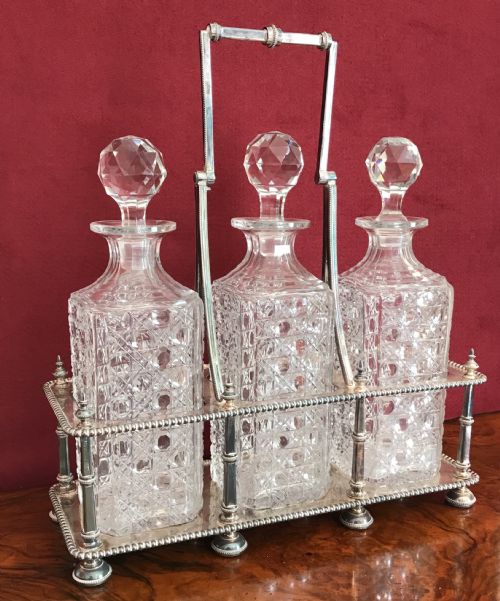
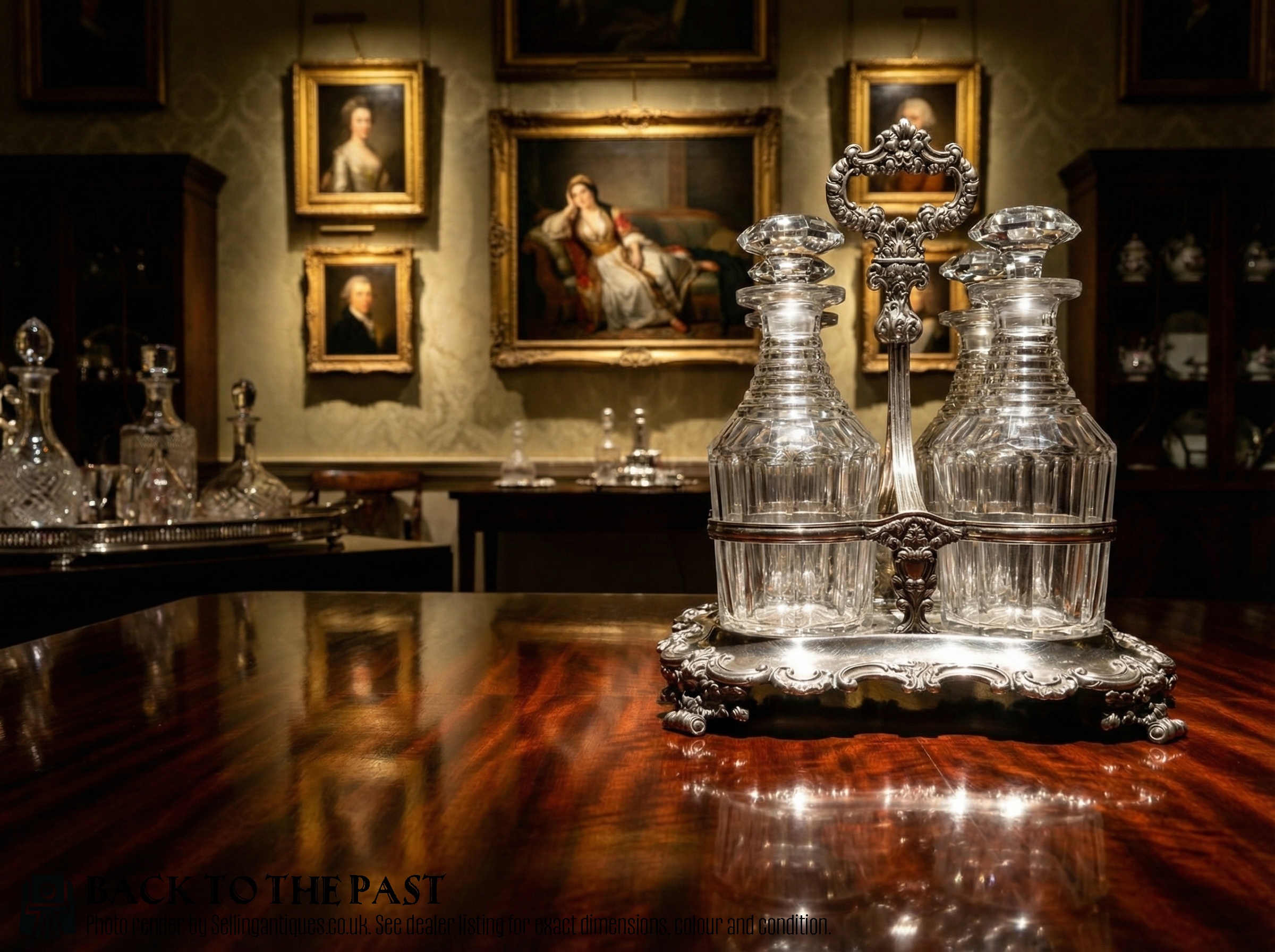
A cut crystal decanter caddy, often known as a tantalus, provides a secure housing for drinks decanters using a clever locking mechanism. You will frequently encounter sturdy oak, rich coromandel wood, and gleaming silver plate across Victorian and Edwardian examples on this page.
The form ranges from simple two-bottle stands to elaborate three-bottle tantalus sets, sometimes incorporating games compartments. French cave a liqueur variants also appear, showcasing ornate brass mounting, ormolu, and fine glass.
Most pieces date from the late nineteenth century through to the early twentieth century, spanning the Victorian, Edwardian, and Art Deco periods. These drinking cabinets and frames sit on sideboards and dining tables, designed for both display and security.
What varies in quality
The choice of cabinet wood and the intricacy of the glass cutting set superior examples apart from standard ones. Dense exotic timbers like coromandel and heavy cast silver plate indicate a higher grade of production than plain oak with light metal plating.
The sophistication of the locking mechanism and the inclusion of original, matching cut crystal decanters influence the overall standard. Pieces that retain their working keys and integrated accessories like games boxes demonstrate superior original completeness.
Named after the mythological figure Tantalus, these frames cruelly keep your favourite whisky visible yet perpetually out of reach.
The Cut Crystal Decanter Caddy Glossary
- Tantalus
- A locking drinks cabinet or frame designed to display decanters while preventing unauthorised access to the contents. The locking bar secures the stoppers in place until a key is turned.
- Cave a liqueur
- A French travelling liquor chest or tantalus, typically lined with velvet and fitted with glass decanters and matching glasses. These often feature decorative ormolu mounts and fine wood veneers.
- Coromandel wood
- A dense, heavy timber from Asia with contrasting dark brown and black grain patterns. Cabinetmakers utilised it for luxury Victorian tantalus frames.
- Silver plate
- A thin layer of silver fused to a base metal like copper or nickel silver. Makers applied this technique to mounts, handles, and bottle frames to give the appearance of solid silver.
- Ormolu
- Gilt bronze ornamentation applied to French furniture and glass caddies. This decorative technique involves mercury gilding cast bronze.
Cut Crystal Decanter Caddy: Frequently Asked Questions
How does a tantalus lock work?
A metal bar runs across the glass stoppers of the decanters, held in place by an upright locking mechanism at the end of the frame. Turning a key releases the bar, allowing the bottles to be lifted free from their fitted compartments.
Without the key, the stoppers cannot be removed, which originally prevented household staff from sampling the contents while keeping the bottles proudly on display.
What is the difference between a decanter stand and a tantalus?
A decanter stand holds bottles openly in a metal or wooden frame without any locking mechanism or security bar. It allows direct access to the drinks from any angle.
A tantalus specifically incorporates a locking bar that traps the decanter stoppers, restricting access to the spirits inside until the owner unlocks the mechanism.
How do I date an oak tantalus?
Victorian examples often feature robust oak frames with heavy silver plating, deep hand-cut crystal, and sometimes Gothic or Renaissance revival brass mounts. Edwardian pieces tend to show slightly lighter proportions while maintaining solid construction.
Later versions from the 1930s adopt simpler geometric lines and minimal ornamentation, reflecting shifting interior design tastes of the interwar period.
Where were these decanter caddies used?
Victorian and Edwardian households placed these frames on dining room sideboards, in smoking rooms, or upon library tables for evening hospitality. They served as both functional drinks storage and decorative status objects.
Today, they function well on modern sideboards or home bar areas, continuing their traditional role of holding spirits securely.