


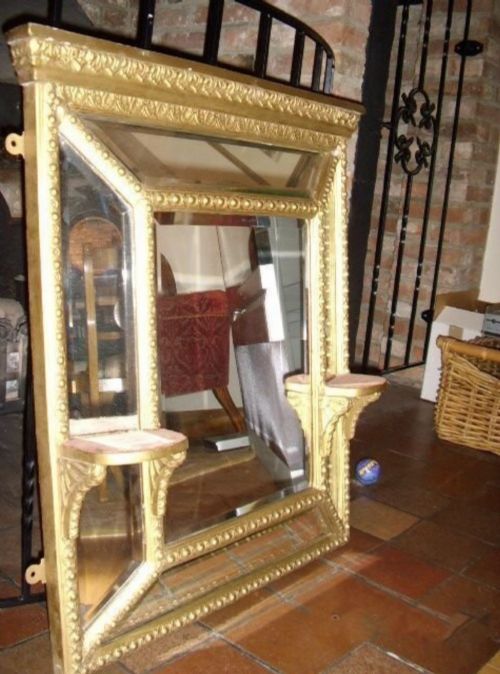
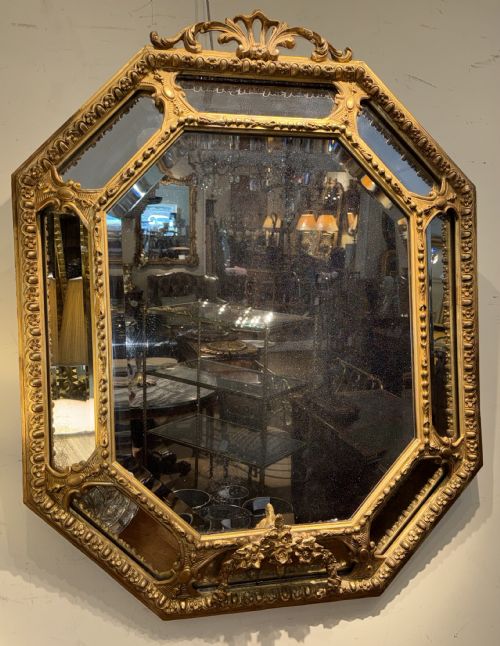
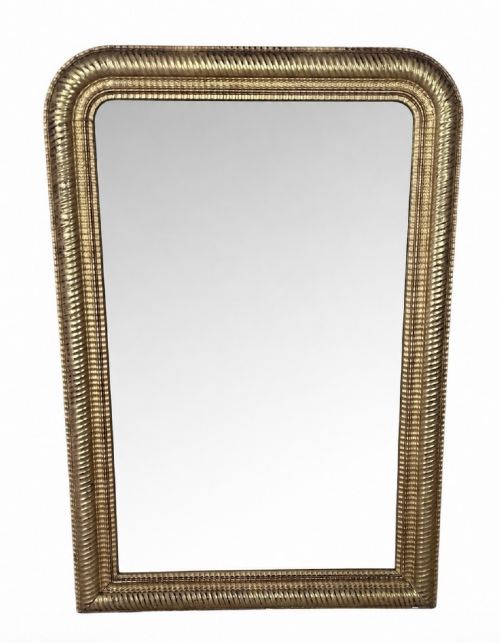
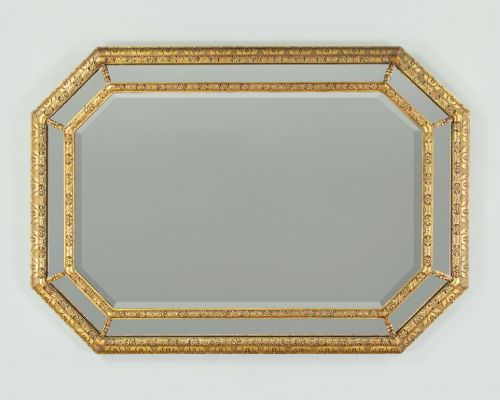


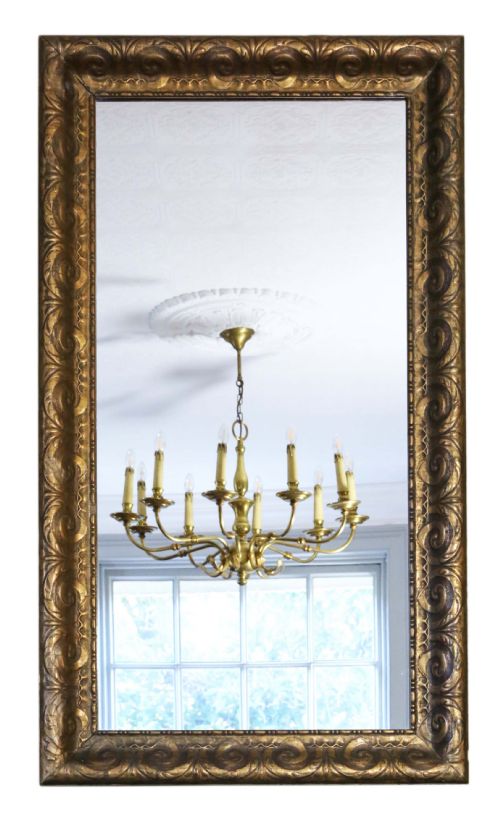
Cushion Framed Gilt Mirror
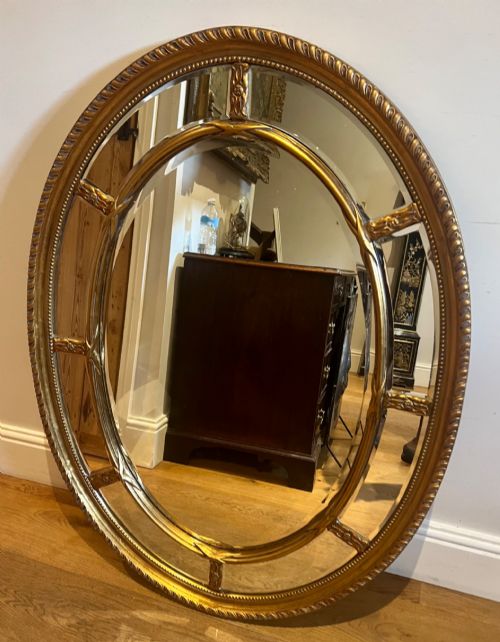
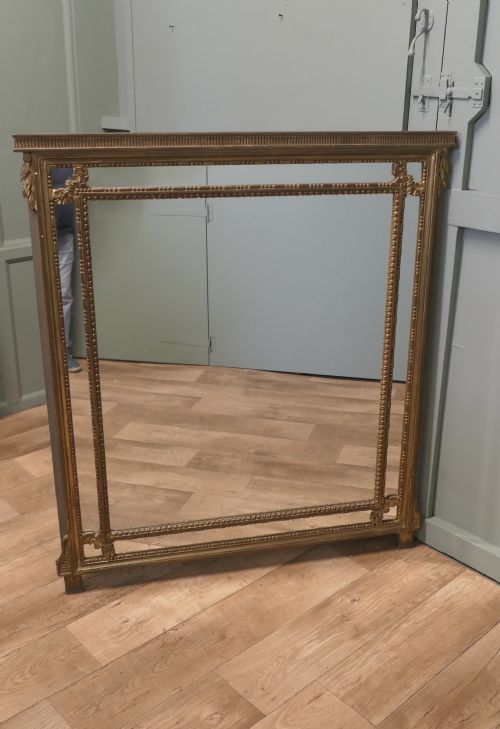
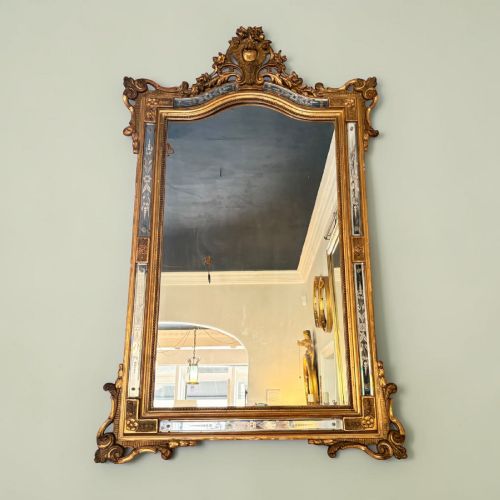
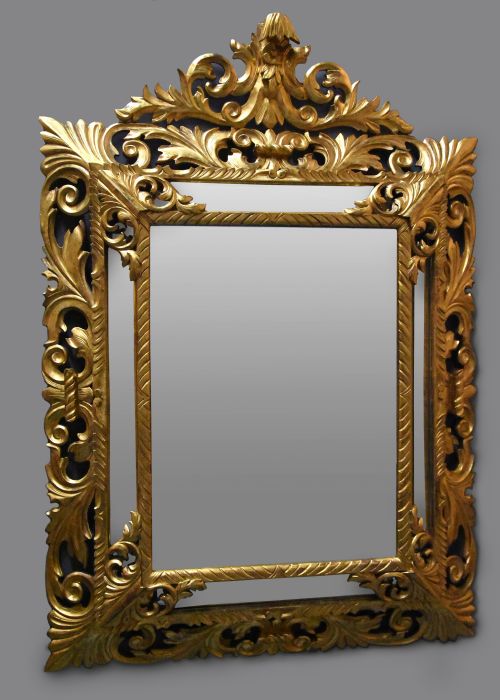
These cushion framed gilt mirror examples deliver deep bevels and luminous frames that bounce interior light into dark corners.
Cushion Framed Gilt Mirror
A cushion framed gilt mirror brings a convex, padded profile that projects forward from the wall, drawing the eye directly to the central glass. Buyers searching for a cushion framed gilt mirror frequently encounter nineteenth-century French Louis Philippe designs alongside grander Victorian and Italian revival interpretations.
The profile curves outward in a gentle sweep, often finished with ripple mouldings, rope twists or deep gesso carvings. Surviving pieces span from Georgian walnut examples to early twentieth-century baroque-influenced wall mirrors and large overmantels.
French and Italian origins dominate the selection, bringing substantial proportions, crest details and original mercury glass plates. Buyers find both neat wall formats and monumental overmantel pieces suited to principal reception rooms.
Construction and gilding techniques
Makers built the deep-set frames from solid wood substrates, applying thick layers of gesso to build up the rounded cushion profile before applying gold leaf or paint finishes. Carved rope twists, ripple patterns and crests were shaped directly into the gesso or carved into the wood beneath.
Original mirror plates include heavy mercury glass and bevel-cut glass secured within the rebated frame. Joinery relies on traditional corner blocks and pegged joints to support the considerable weight of the projecting wooden construction.
Cushion Framed Gilt Mirror Retail Price Guide 2026
Typical asking prices for cushion framed gilt mirror among the pieces listed under this phrase on Sellingantiques today, from the lower quarter to the upper quarter. They describe what is for sale here now, not the wider market.
Some frames include hidden wooden pegs that whisper of nineteenth-century workshops where makers tested joinery by hand before the gold leaf touched the gesso.
Assessing quality in cushion frames
Quality rests in the crispness of the gesso carving and the depth of the gold leaf application over the wooden cushion profile. Superior examples retain their original parcel-gilt surfaces and heavy bevelled glass plates without modern replacement mercury.
The integrity of the structural joinery determines longevity, particularly where heavy frames meet the wall. Finer pieces demonstrate hand-carved rope twists and detailed crests rather than cast composition ornament.
The Cushion Framed Gilt Mirror Glossary
- Cushion frame
- A mirror frame with a convex, rounded profile that swells outward toward the outer edge. This curved section catches light from multiple angles.
- Gesso
- A plaster-like mixture applied to wood frames to create a smooth surface for gilding or carving. It allows artisans to shape intricate relief ornament.
- Mercury glass
- An early type of silvered glass produced by pouring a liquid mercury and tin amalgam between double-walled glass or onto the rear plate. It creates a dark, mottled reflection.
- Ripple moulding
- A wavy, undulating wooden profile produced on a rose engine lathe. It adds linear texture to the inner or outer borders of the frame.
- Overmantel mirror
- A large wall mirror specifically designed to hang above a fireplace mantel. These pieces often feature extended horizontal proportions.
Cushion Framed Gilt Mirror: Frequently Asked Questions
How do I hang a heavy cushion mirror safely?
These frames carry significant weight due to their solid wood and gesso construction. Secure heavy-duty mirror brackets directly into wall studs.
Avoid relying solely on decorative picture wire for large nineteenth-century overmantel versions.
What causes dark spots in antique mirror glass?
Oxidation of the backing material over decades creates characteristic dark patches and foxing. This natural ageing process proves the glass is original.
Many collectors prize this mottled appearance for the authentic period character it provides.
Are French and English cushion mirrors different?
French Louis Philippe and Italian baroque pieces often feature bolder convex profiles and elaborate crests. Victorian and Georgian English examples tend toward more restrained mouldings.
Both traditions utilise carved wood and gesso over sturdy pine or walnut carcasses.