



Curved Writing Table
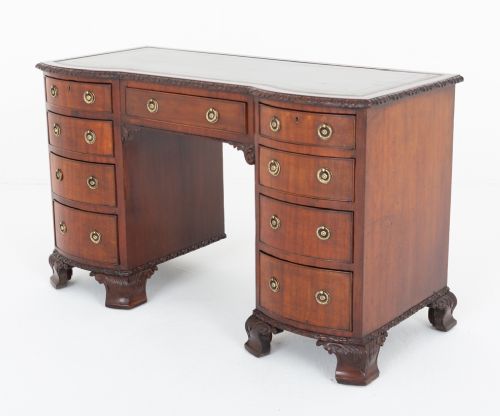
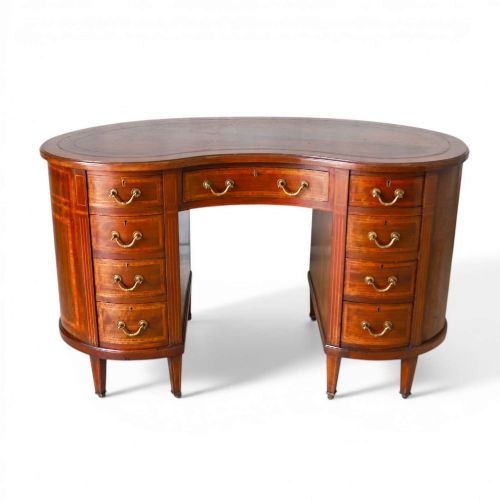
A curved writing table offers a graceful sweep of timber and a fitted leather top, designed to sit comfortably within a room while providing a generous workspace.
Curved Writing Table
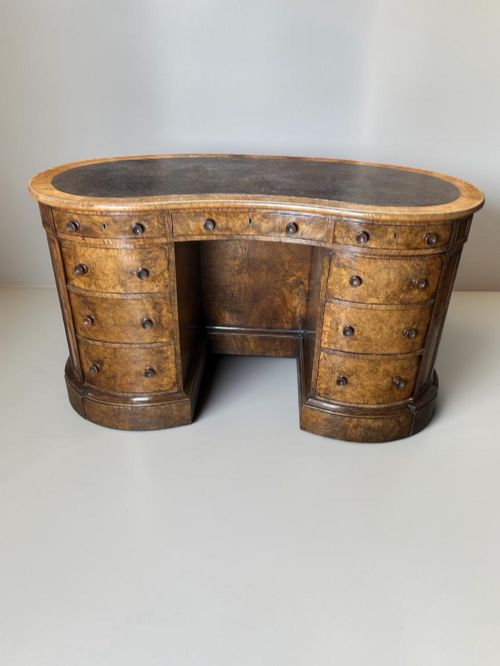
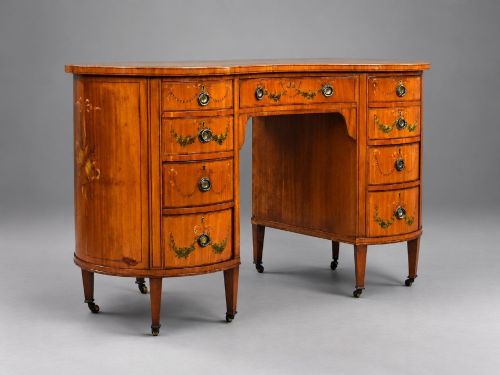
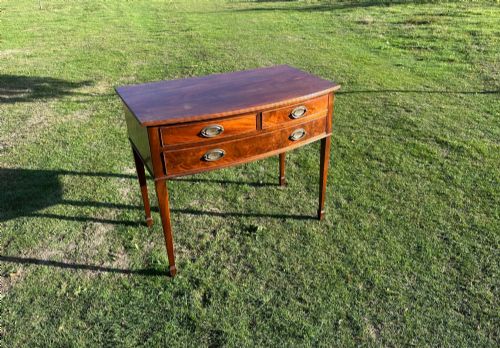
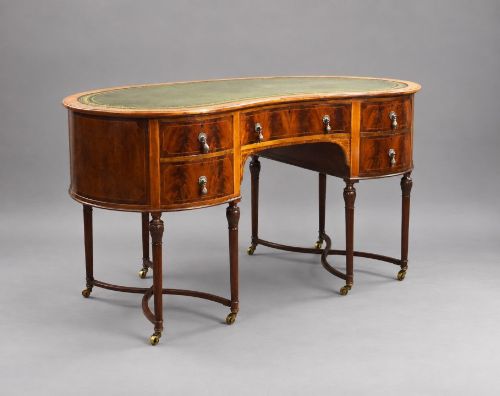
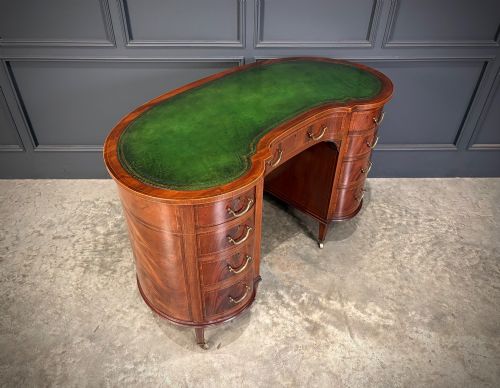
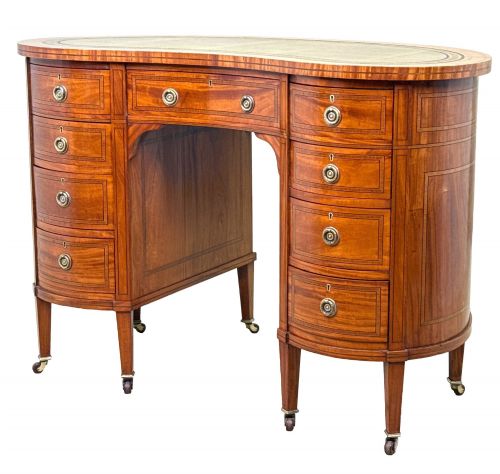
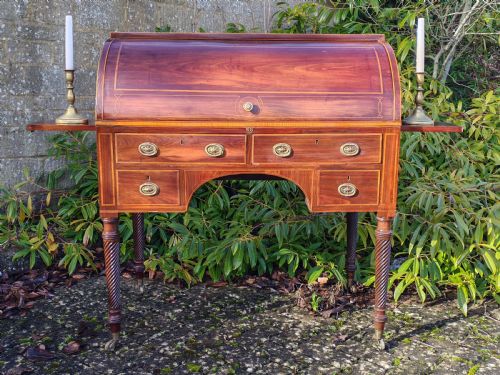
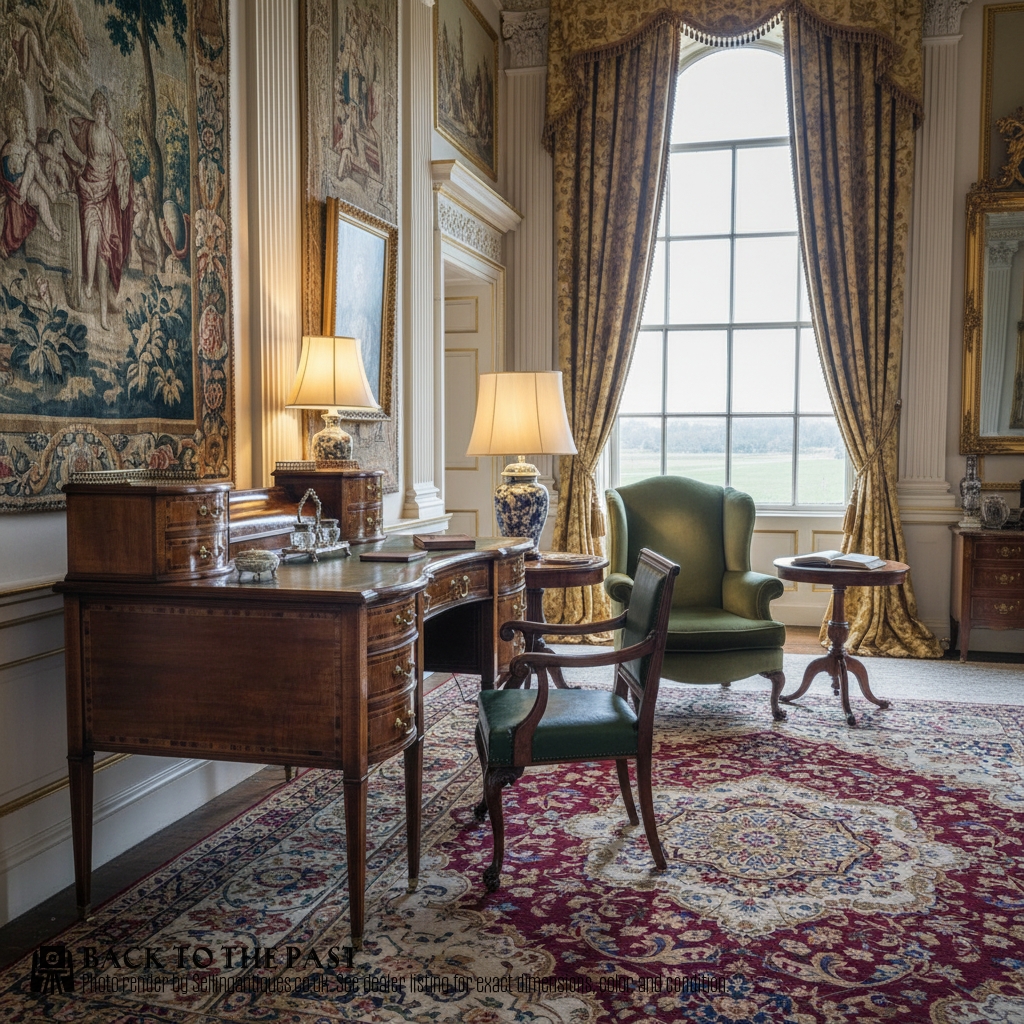
A curved writing table most frequently appears as a kidney-shaped desk or a serpentine side table, spanning periods from the Georgian era through to the Edwardian years and the 1930s. These pieces take their shape from the natural arc of the sitter, allowing comfortable access to drawers and writing surfaces alike.
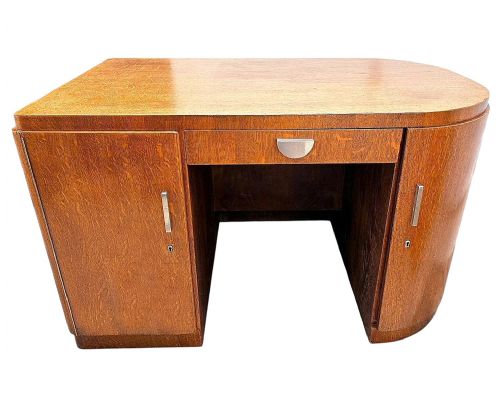
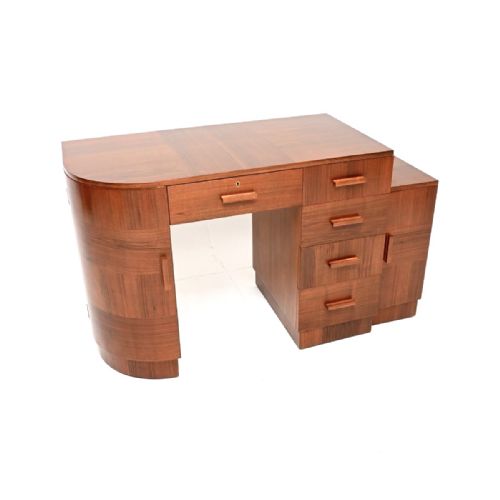
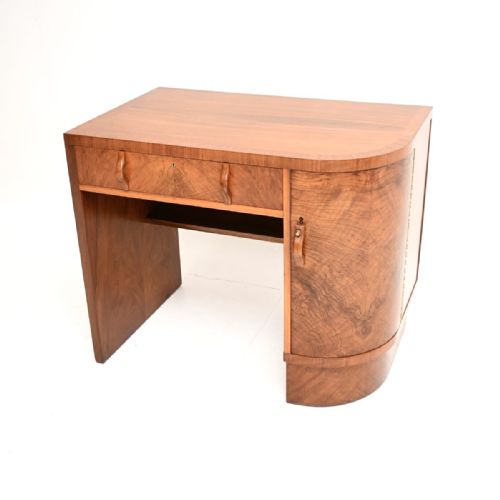
The Edwardian iterations often showcase delicate satinwood or inlaid mahogany, whilst Georgian and Victorian examples tend to rely on heavier timbers like solid mahogany or walnut. Alongside traditional forms, Art Deco interpretations bring figured walnut and modernist lines into the selection.
Materials and Construction
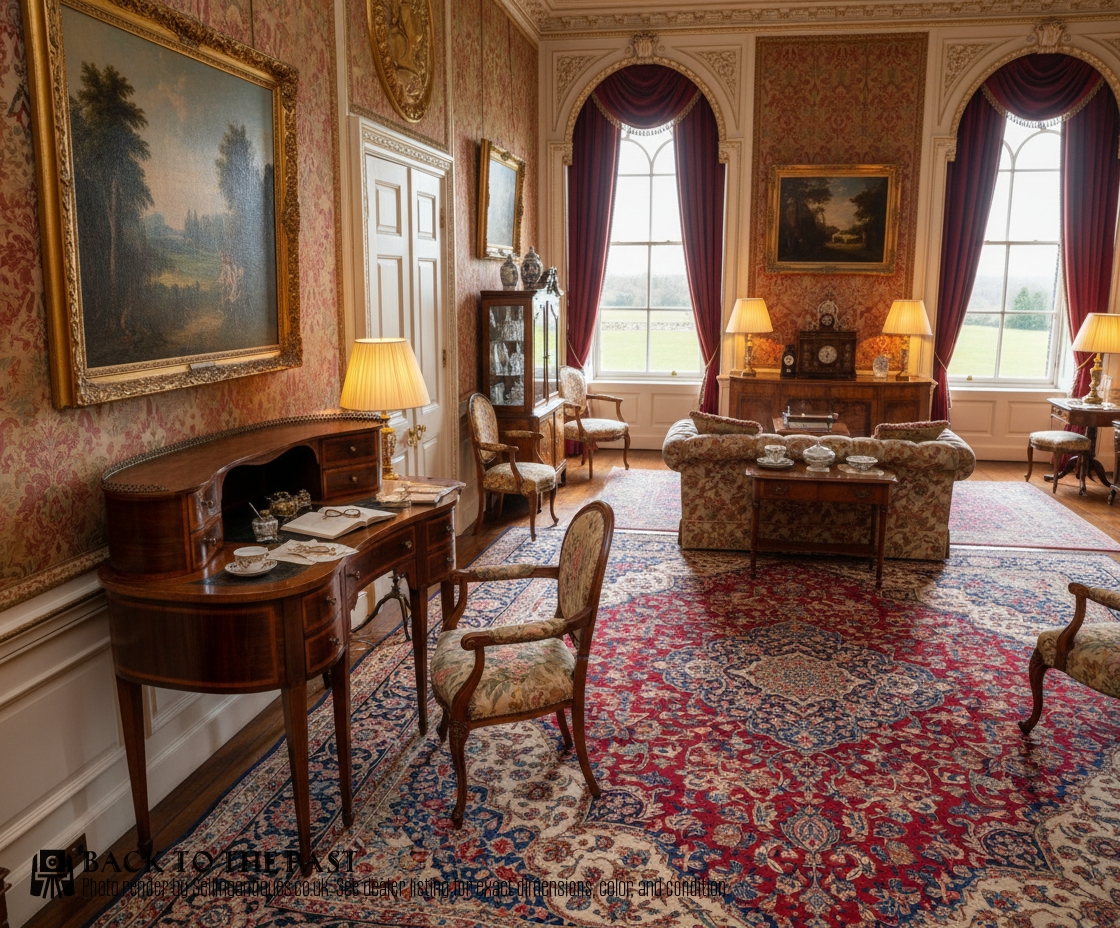
Cabinetmakers constructed these tables using a carcase of mahogany, walnut, or satinwood, frequently applying veneers such as burr walnut or flame mahogany to curved surfaces. Brass handles, castors, and gallery rails provide functional metalwork accents across the various styles.
Leather writing surfaces, often tooled with gilt borders, were traditionally inset into the upper surface to create a durable writing plane. Marquetry and stringing in contrasting timbers further decorate the borders and drawer fronts of Sheraton revival and Edwardian pieces.
Curved Writing Table Retail Price Guide 2026
Typical asking prices for curved writing table among the pieces listed under this phrase on Sellingantiques today, from the lower quarter to the upper quarter. They describe what is for sale here now, not the wider market.
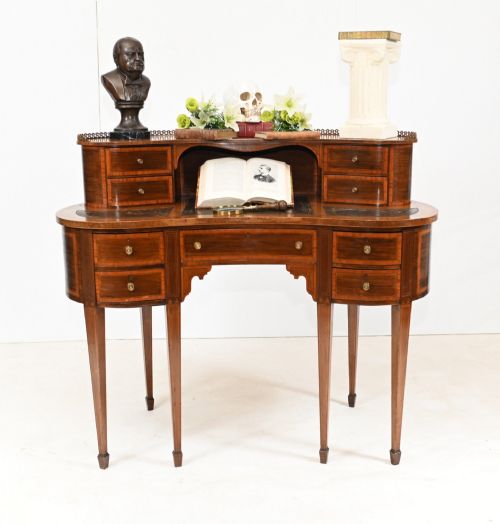
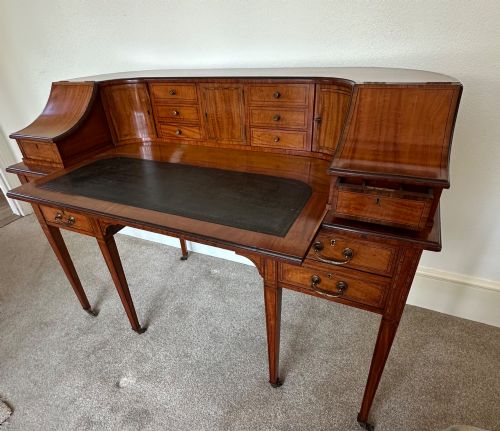
Carlton house desks wrap around the writer like a tiny architectural courtyard made entirely of miniature mahogany drawers.
Defining Quality in Craftsmanship
The standard of timber selection and veneer matching governs the visual appeal of a curved writing table, separating simple workshop pieces from master cabinetmaker productions. Finely figured grains that follow the sweeping contours require patience and skill to apply without distortion.
The integrity of the internal drawer construction, the crispness of any inlaid marquetry, and the retention of original leather insets contribute significantly to the standing of an individual table.
Wolfe and Hollander·Maurice Adams·Edwards and Roberts
The Curved Writing Table Glossary
- Kidney-shaped
- Describing a desk or table with a concave front curve designed to fit around the user. This outline requires specialised curved drawer construction.
- Serpentine
- A curved outline that curves outward at the centre and inward at the sides, or vice versa, creating a flowing wave effect.
- Carlton House desk
- A distinctive desk featuring a raised superstructure of small drawers and compartments curving around the back and sides of the writing surface.
- Marquetry
- Decorative patterns formed by inserting pieces of contrasting veneer into a wood foundation to create pictorial or geometric designs.
- Stringing
- Thin lines of contrasting wood inlaid into the surface of a piece to outline drawers, borders, or legs.
Curved Writing Table: Frequently Asked Questions
Where should a freestanding curved table sit?
A curved writing table is often finished on all sides, allowing it to stand proudly in the centre of a study or library rather than pushed against a wall.
Its finished back makes it suitable for viewing from any angle within an open room plan.
How do I care for the leather top?
The leather inset requires occasional treatment with specialised leather balm or wax to maintain suppleness and prevent cracking over time.
Avoid placing damp items directly onto the leather surface to protect the underlying gold tooling and hide.
What is the difference between Georgian and Edwardian desks?
Georgian desks typically rely on solid mahogany construction with restrained proportions and functional elegance. Edwardian revivals often introduce lighter satinwood, delicate stringing, and elaborate marquetry.
Edwardian makers also produced a higher proportion of distinct kidney-shaped writing tables compared to earlier periods.
Can these tables be used for daily work?
Many of these pieces provide ample surface area and practical drawer space for modern writing and laptop use.
Care should be taken to protect antique wood and leather finishes from heavy wear and moisture.