
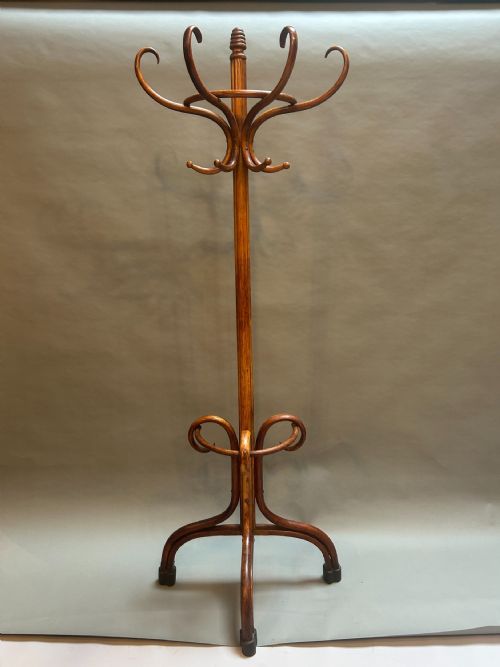


Curved Wood Hall Stand
These curved wood hall stand pieces bring practical daily utility and fluid nineteenth and twentieth-century design directly into your hallway.
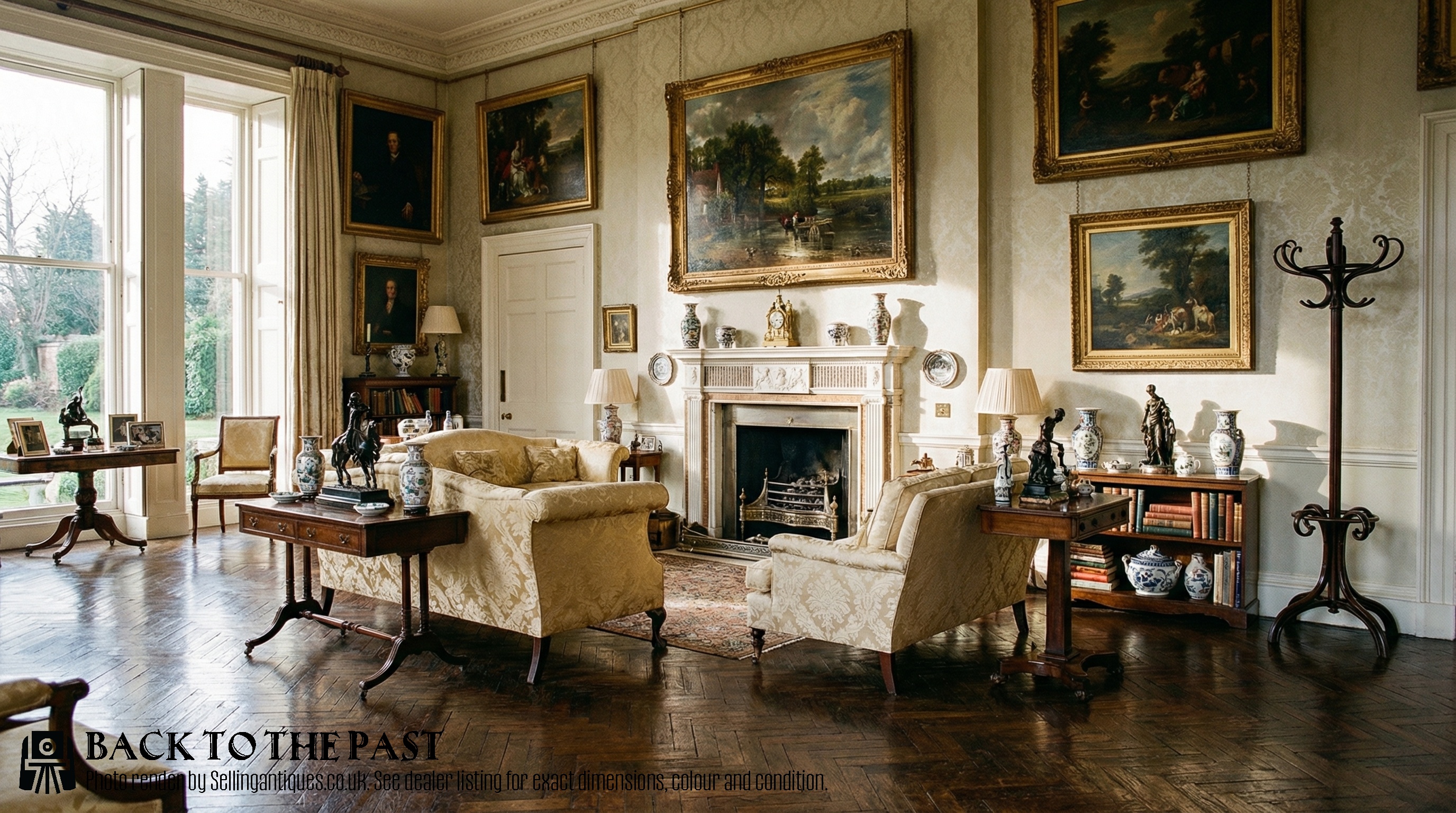
Curved Wood Hall Stand
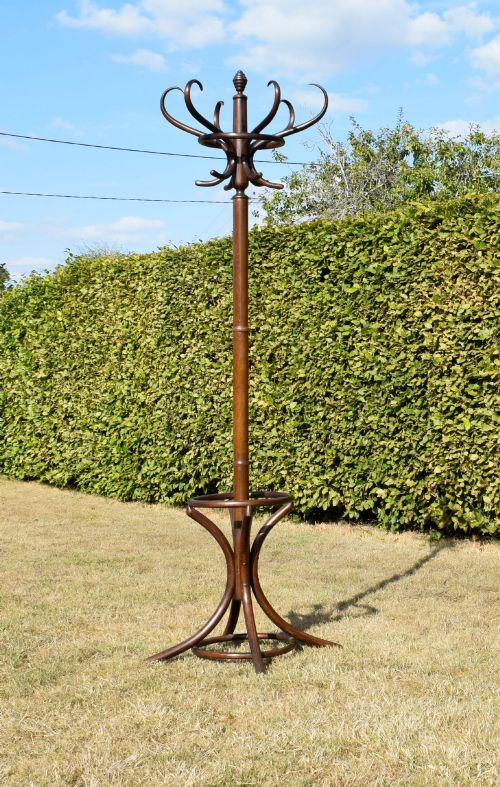
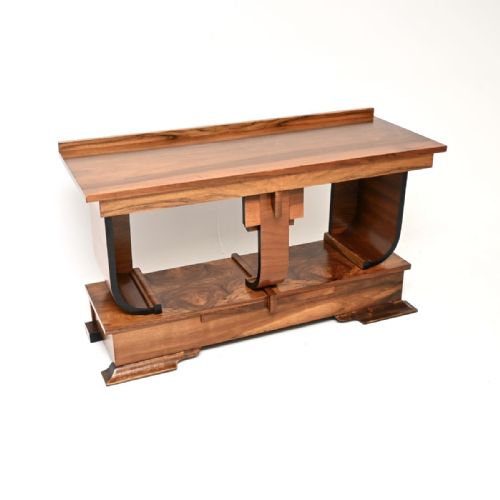
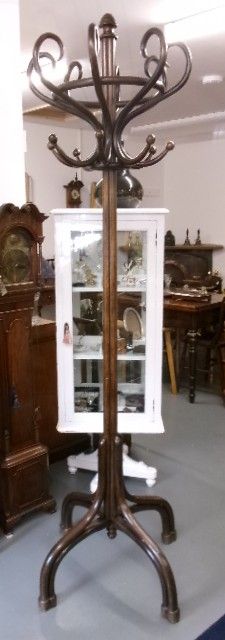
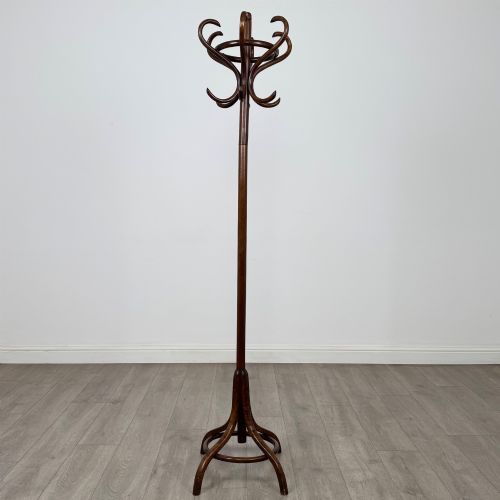
When you search for a curved wood hall stand, you enter a category defined by clever steam-bent timber, upright umbrella rings, and arched coat hooks designed for the entranceway. The selection draws together tall coat stands, hat stands, and occasional console tables spanning the Victorian, Edwardian, Art Nouveau, and Art Deco periods.
You are most likely to meet tall upright hat and coat stands constructed with steam-bent framework, alongside occasional side tables and console tables from the nineteen-hundreds and nineteen-thirties. These pieces utilise distinctive circular footprints and curving stretcher rails to support outerwear in domestic halls.
How they were made
The makers of these items relied heavily on beech and beechwood, utilising steam-bent techniques to soften the timber and force it into permanent, graceful curves without snapping the grain. This process allowed workshops to produce strong, lightweight structural uprights and scrolling hook assemblies.
Surfaces appear in plain wood, stained finishes, ebonised wood, or richly figured walnut veneers on console tables. Joinery is often reinforced with concentric wooden rings and screwed internal brackets to handle the heavy daily load of hats and coats.
Listings feature items spanning from the nineteenth century through the nineteen-thirties, incorporating Beech, Walnut, and Ebonised Wood.
What varies in quality
Quality in these items rests upon the tightness and symmetry of the steam bends, the choice of prime beech or figured walnut timber, and the overall rigidity of the tall upright frame. Substantial weight at the base indicates a sturdier piece that will not wobble under heavy garments.
Finishing touches such as integrated drip pans, turned wooden finials, and crisp moulding details distinguish standard utility items from the finer productions of the Thonet style and Art Nouveau periods.
Fischel
The Curved Wood Hall Stand Glossary
- Bentwood
- Wood that has been shaped by heating it in steam and bending it into curves. This technique creates lightweight yet remarkably durable furniture frames.
- Demi-lune
- Half-moon shaped furniture designed to sit flat against a hallway wall. Console tables and hall stands often utilise this footprint to save floor space.
- Ebonised
- Wood finished with a dark stain or lacquer to imitate ebony. This treatment was popular for achieving a formal, dramatic appearance.
- Figured walnut
- Walnut timber possessing an attractive, natural grain pattern such as burl or fiddleback. It is typically showcased on table tops and decorative panels.
- Console table
- A table supported against a wall by decorative brackets or legs. These items provide a surface for keys and small items in an entrance hall.
Curved Wood Hall Stand: Frequently Asked Questions
What is a curved wood hall stand?
It is a tall freestanding piece of furniture designed for entranceways to hold hats, coats, and sometimes walking sticks or umbrellas. The frame uses curved wooden components to maximise strength while maintaining a slender profile.
Most examples rely on steam-bent beech and date from the Victorian era through the early twentieth century, serving as both functional storage and decorative hall furniture.
How do I date a bentwood stand?
Dating relies on examining construction methods, material choices, and stylistic details such as Art Nouveau curves or Art Deco symmetry. Pieces from the nineteenth century often feature heavier internal iron brackets and simpler turning.
Later pieces from the nineteen-thirties may show cleaner geometric lines or utilise figured walnut on associated console tables rather than purely bent beech framing.
Are these stands sturdy enough for daily use?
Yes, the original steam-bending technique distributes weight effectively through the curved frame, making these pieces surprisingly resilient. They are engineered to bear the weight of multiple heavy winter coats.
Positioning the stand on a flat surface and ensuring the base assembly remains tight will keep the tall structure stable during everyday use.
What wood types should I expect?
Beech and bentwood dominate the upright coat and hat stand categories due to their exceptional flexibility under steam treatment. Some pieces also feature stained wood or ebonised finishes.
Console tables within the selection frequently showcase figured walnut veneers, offering a contrasting surface texture for hallway placement.