
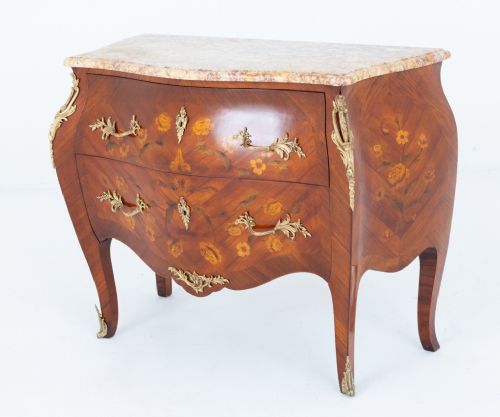


Curved Walnut Drawers
Curved walnut drawers bring sculptural warmth and flowing grain to a room, offering practical storage disguised as architectural movement.
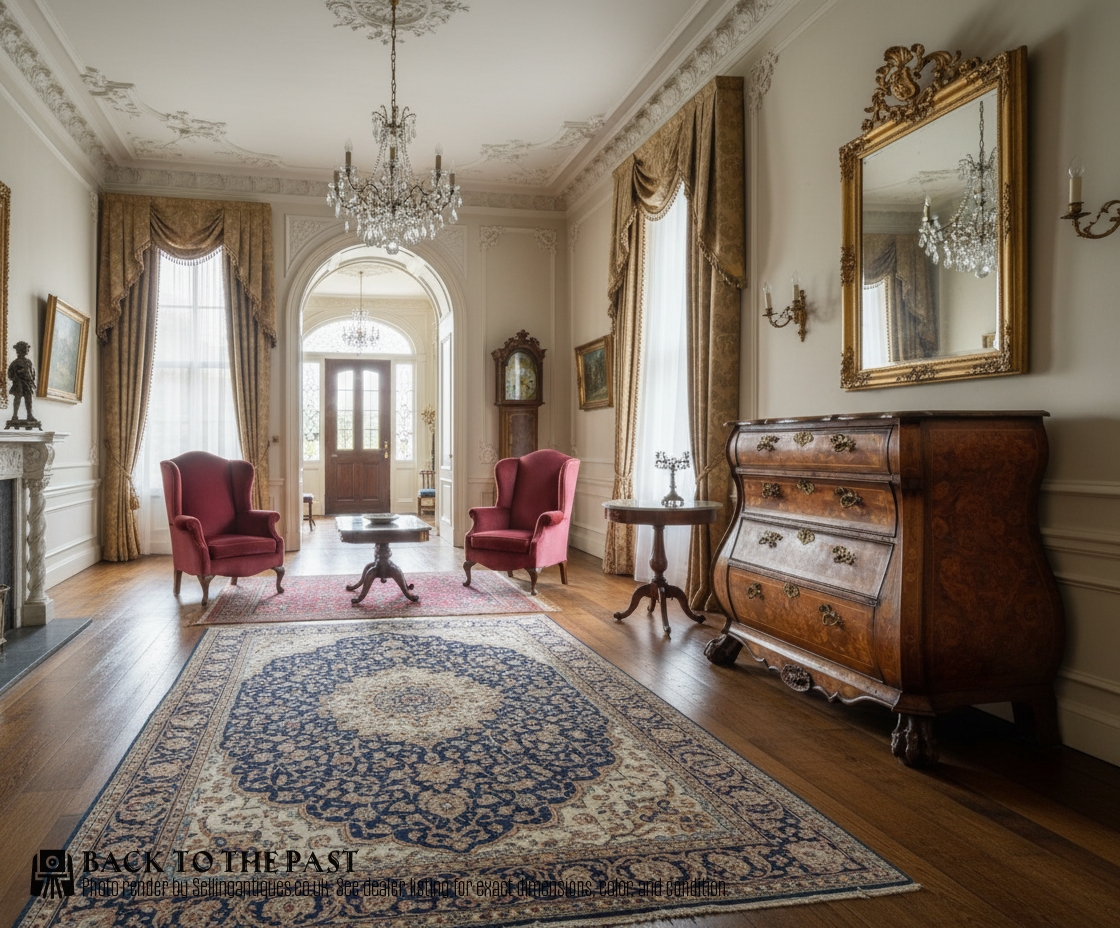
Curved Walnut Drawers
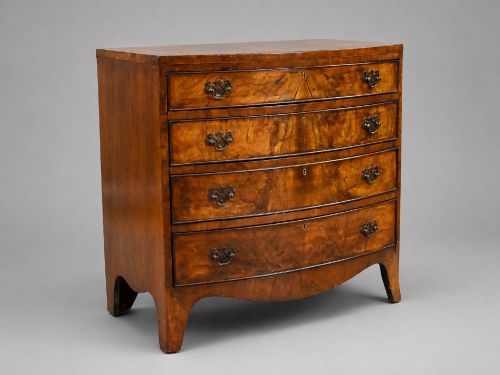
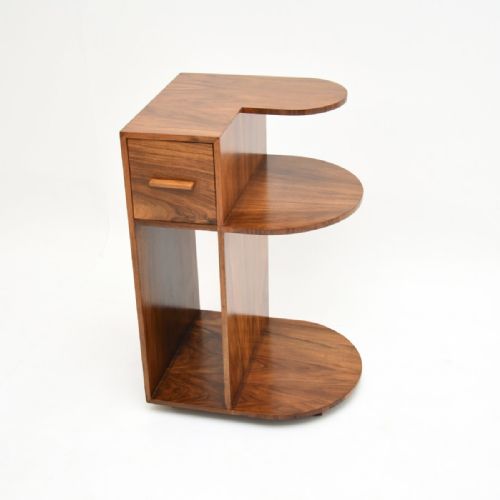
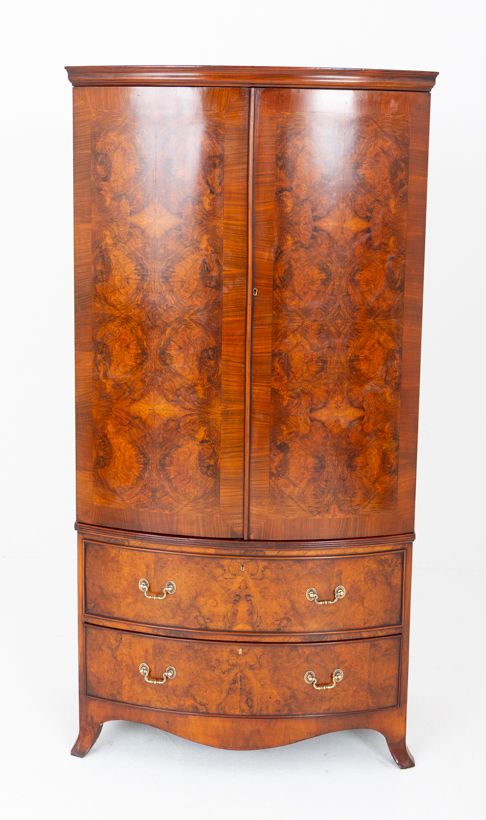
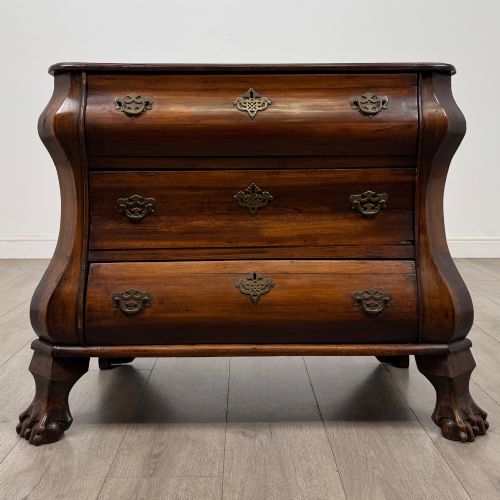
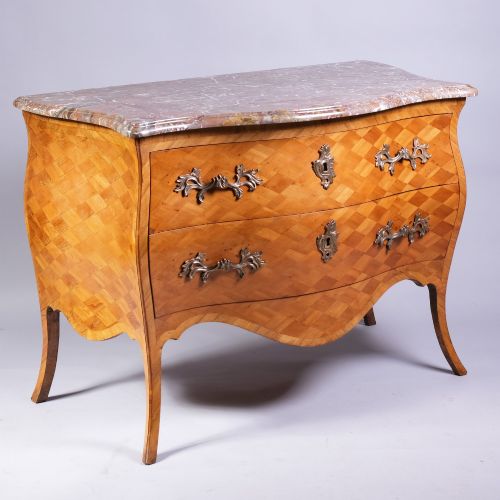
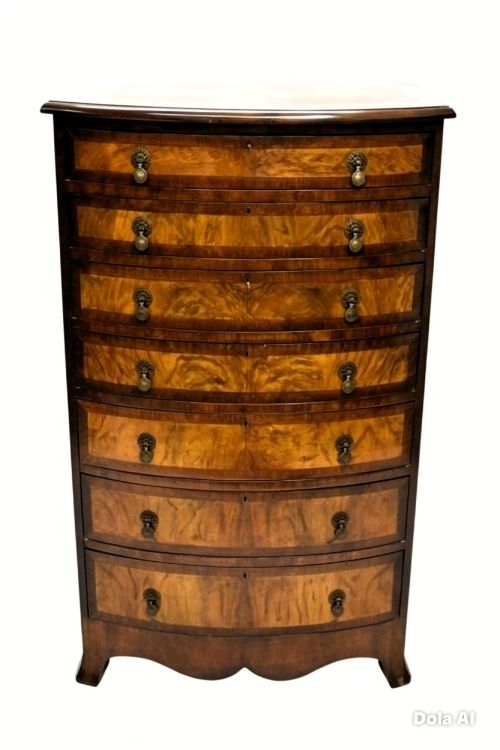
Curved walnut drawers encompass chests, commodes, and desks designed with bowed, serpentine, or bombé fronts that showcase the rich timber. These pieces span from eighteenth-century continental workshops to twentieth-century Art Deco studios, with bow-front chests and French commodes appearing most frequently on this page.
Makers across periods utilised the natural plasticity of walnut and its burr variants to soften domestic interiors. Whether shaped as a Georgian-inspired bow front or an expansive Louis XV commode, the common thread is the convex sweep across the drawer tiers.
Examples range from early eighteenth-century baroque styles to twentieth-century revival pieces. Buyers encounter both restrained British proportion and ornate continental swells topped with marble or edged with ormolu.
How they were made
Craftsmen built these curved forms by applying finely figured walnut veneers over robust underlying carcasses of oak or secondary timbers. Shaping a bow front or bombé swell required meticulous sawing and steaming to coax the timber into fluid radii without splitting the grain.
Surface decoration frequently relied on crossbanding, marquetry inlay, and the natural vortex patterns of burr walnut. Ormolu mounts and marble tops were added to continental commodes to protect vulnerable edges and elevate the visual weight of the piece.
Some nineteenth-century drawers curve so persuasively they seem to lean forward to greet you as you enter the room.
What varies in quality
The sophistication of the timber selection dictates the visual impact of each piece. Finer examples display symmetrical, book-matched burr walnut veneers that wrap seamlessly around the curves of the drawers, while lesser pieces rely on plain timber with disjointed grain patterns.
Construction methods also separate standard production from master craftsmanship. Superior execution is visible in the precision of the drawer linings, the tightness of the dovetailing, and the harmonious integration of brass hardware or ormolu mounts into the structural curves.
Maurice Adams·The Bowman Brothers·Heal's·Gillows
The Curved Walnut Drawers Glossary
- Bombé
- A strongly convex, bulging shape swelling outward on the front and sides. This form demands advanced joinery to achieve its dramatic profile.
- Bow front
- A convex, outwardly curved front facade typical of chests and sideboards. It softens the rectangular geometry of traditional furniture.
- Burr walnut
- Wood taken from a tree growth or knot featuring swirling, erratic grain patterns. Highly prized for decorative veneering.
- Crossbanding
- A narrow strip of veneer laid around the border of a drawer or top with the grain running perpendicular to the main panel. This frames the primary timber.
- Ormolu
- Gilded bronze mounts applied to furniture for decorative accent and edge protection. Common on nineteenth-century continental commodes.
- Serpentine
- A line or surface that curves inward centrally and outward at the ends, resembling a gentle 'S' shape. It provides a more complex silhouette than a simple bow.
Curved Walnut Drawers: Frequently Asked Questions
How do I style a curved chest?
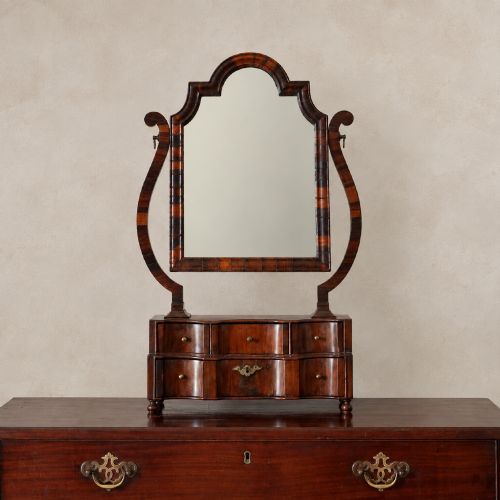
Curved chests serve as focal points in hallways, living rooms, or bedrooms due to their sculptural facades. Placing a lamp or a mirror above them enhances the reflective qualities of the walnut grain.
Because the front pushes outward into the room, ensure sufficient clearance around the piece. They pair effectively with both traditional antiques and clean, modern interiors.
What distinguishes a bow front?
A bow front curves outward in a smooth, convex arc from corner to corner. This design softens the rigid corners of standard rectangular chests.
It became a staple of eighteenth and nineteenth-century cabinetmaking, offering a gentler alternative to the exaggerated swell of bombé furniture.
How do I care for walnut veneer?
Walnut veneer benefits from stable room temperatures and protection from direct sunlight to prevent fading and drying. Regular dusting with a soft, dry cloth preserves the polished surface.
Avoid excessive moisture or chemical polishes. Waxing occasionally helps maintain the depth and lustre of the timber.