
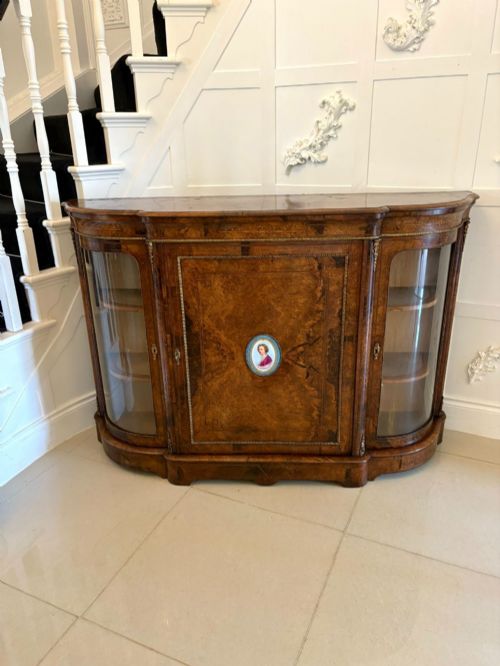


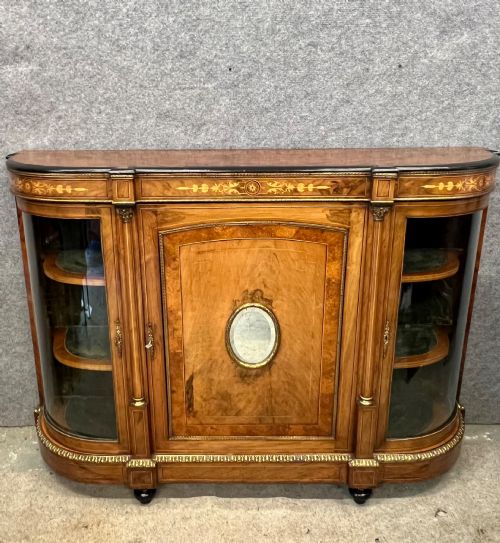
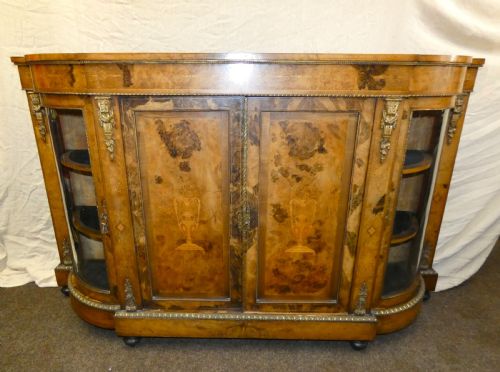
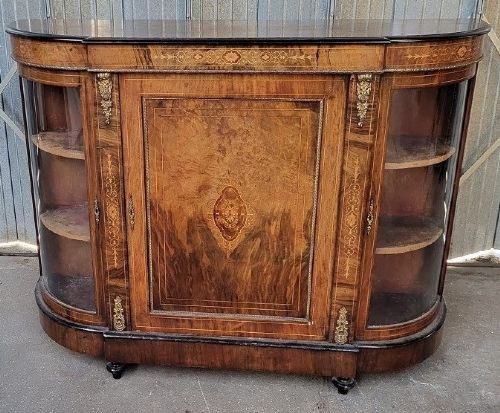


Curved Side Walnut Credenza
A curved side walnut credenza is a sophisticated cabinet designed to anchor a principal room, bringing rich grain patterns and classical presence into the home.
Curved Side Walnut Credenza
When searching for a curved side walnut credenza, collectors encounter substantial nineteenth-century Victorian designs alongside twentieth-century Art Deco interpretations. These low-profile pieces typically serve as display cabinets or sideboards, combining enclosed storage with prominent glazed or open central sections.
The nineteenth-century examples frequently emerge from the Victorian era, showcasing intricate marquetry and figured veneers. Meanwhile, twentieth-century pieces lean towards cleaner lines and streamlined silhouettes associated with the Art Deco period.
The primary forms found here include dedicated credenzas, side cabinets, and console tables, often featuring distinct curved or bow fronts. Walnut remains the unifying material across these diverse nineteenth and twentieth-century iterations.
What varies in quality
The selection of the walnut veneer dictates much of the visual impact, with tightly figured burr timber commanding greater attention than plain grain. Finer examples display meticulous symmetry in their marquetry and inlay work.
The standard of metalwork, from cast ormolu mounts to finely chased brass accents, distinguishes workshop output. Structural execution, particularly the seamless curving of bow fronts and the neat integration of glazed doors, separates standard production from exhibition-grade pieces.
Materials appearing across the inventory include burr walnut, ormolu, porcelain, boxwood inlay, and gilt bronze.
Hille·Harry And Lou Epstein
The Curved Side Walnut Credenza Glossary
- Burr walnut
- A highly prized wood featuring swirling, knotty grain patterns harvested from tree growths. It provides a decorative surface veneer on finer cabinetry.
- Ormolu
- Gilded bronze mounts cast and applied to furniture corners and panels. It adds ornamental metallic contrast to dark timber surfaces.
- Marquetry
- The art of applying thin wood veneers of different colours to form decorative patterns and pictures. It appears extensively on Victorian cabinet doors.
- Credenza
- A low dining or drawing-room cabinet used for serving or display. It usually combines central cupboards with curved glass side compartments.
Curved Side Walnut Credenza: Frequently Asked Questions
What is a curved side walnut credenza used for?
These cabinets function as decorative storage and display surfaces within principal rooms.
Their glazed compartments and shelving house porcelain, silver, and decorative objects while anchoring the wall space.
How do I identify a Victorian piece?
Victorian examples typically exhibit rich burr walnut veneers combined with intricate marquetry and boxwood inlay.
They frequently incorporate ormolu mounts and curved glass doors reflecting nineteenth-century revival styles.
Are Art Deco models different?
Twentieth-century Art Deco versions feature more streamlined silhouettes and simplified geometric surfaces.
They rely heavily on the natural figuring of walnut rather than heavy marquetry or classical revival mounts.
How should I care for walnut furniture?
Keep wooden surfaces away from direct sunlight and excessive heat fluctuations to protect the veneer.
Apply suitable wax polish sparingly to maintain the natural lustre of the burr walnut grain.