


Curved Mahogany Side Table
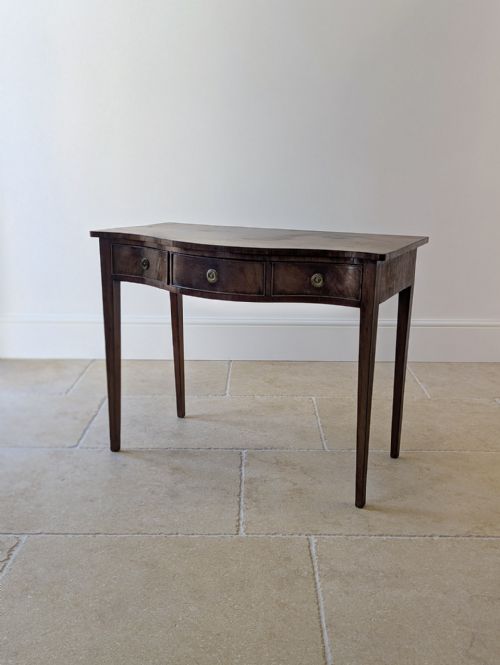
A curved mahogany side table brings architectural grace to a room through sweeping serpentine fronts, bow fronts and demi-lune shapes.
Curved Mahogany Side Table
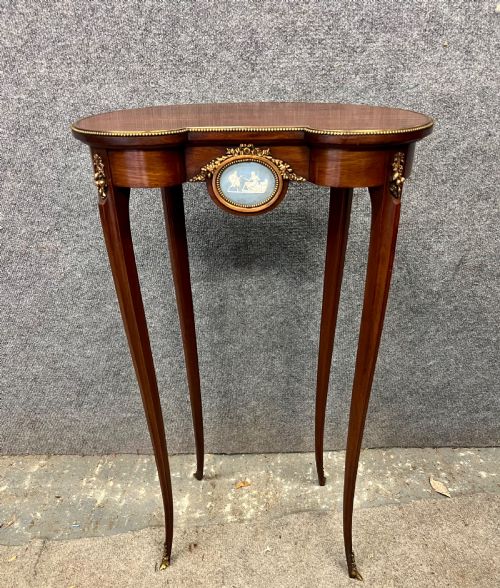
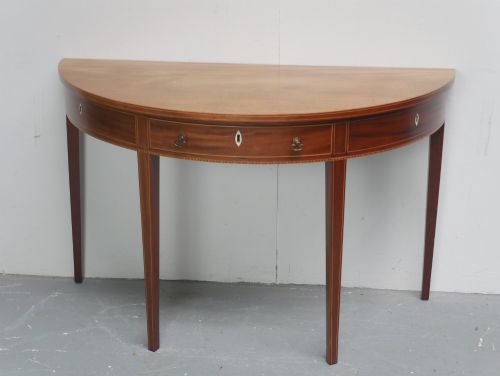
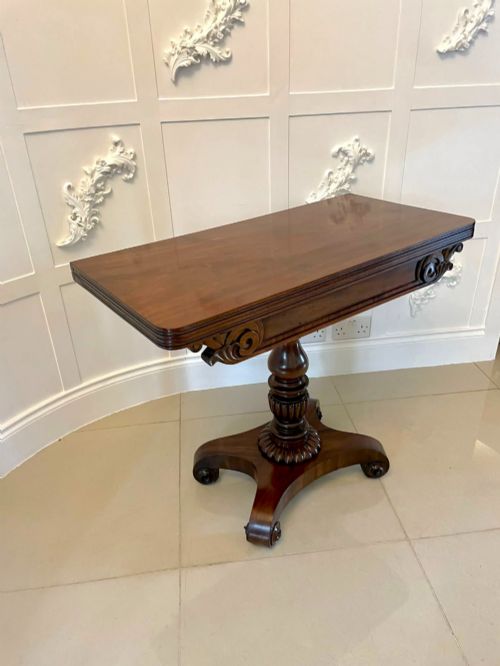
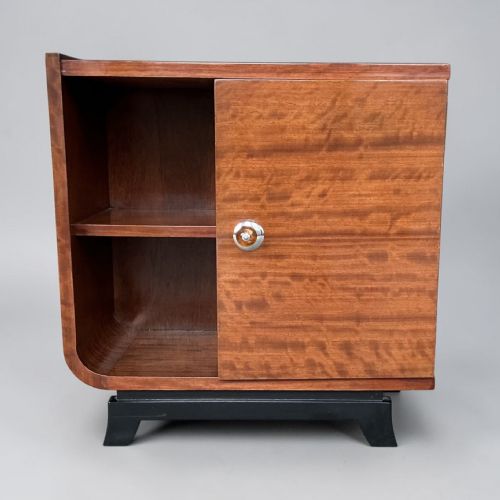
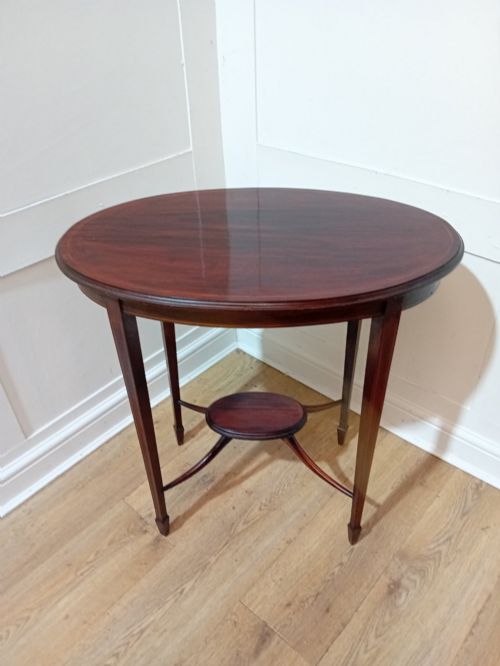
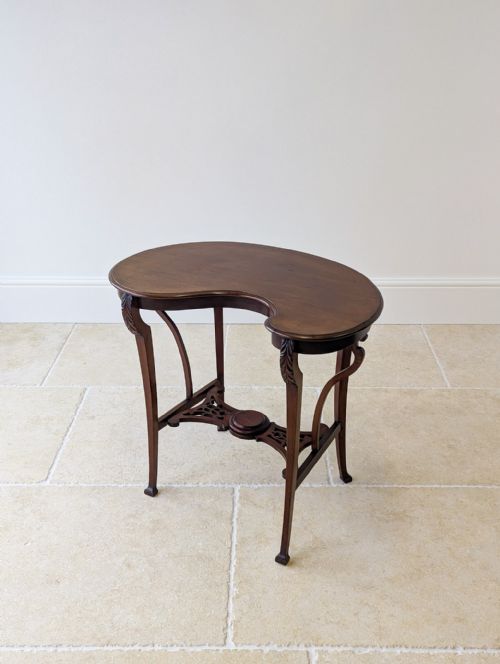
A curved mahogany side table takes many forms across this selection, appearing as demi-lune consoles, bow-front serving tables, serpentine pieces and kidney-shaped writing desks. These tables bridge functional surface space and refined cabinet work, designed to fit snugly against walls or float in the centre of a room.
The pieces span distinct historical periods, with Georgian and Regency examples sitting alongside Victorian interpretations, Edwardian Sheraton Revival revivals and early twentieth-century creations. The most common iteration met here relies on the gentle sweep of a bow front or the dramatic half-circle of a demi-lune profile.
How they were made
Cabinet makers built these tables primarily using solid mahogany and figured mahogany veneers, often selecting timber with rich grain patterns for prominent top surfaces. To achieve the signature curves, workshops employed specialised bending and laminating techniques or carefully shaped solid timber frames.
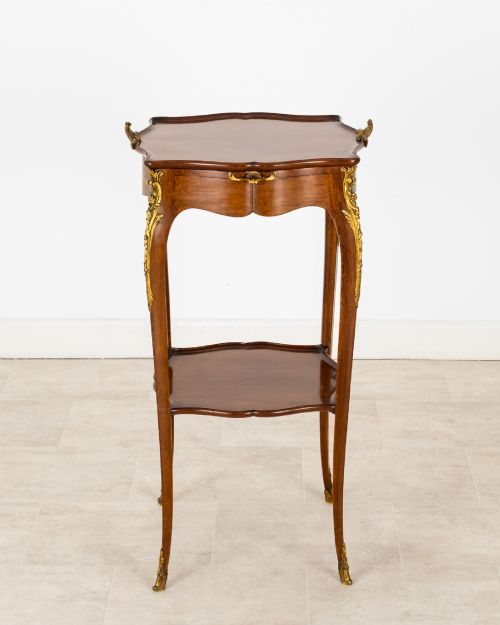
Many examples incorporate contrasting decorative details, utilising boxwood inlay, satinwood inlay, brass mounts and leather inserts to accentuate the natural warmth of the dark wood. Joinery relied on traditional methods, ensuring structural stability along complex radiused edges.
Some tables curve inward to greet you while others sweep outward, proving that eighteenth-century carpenters understood the dramatic power of a well-turned corner.
What varies in quality
The standard of timber selection separates simpler utility pieces from high-end cabinet work, particularly in the choice of highly figured mahogany and the precision of contrasting satinwood or boxwood inlay. Superior examples display seamless grain matching across curved drawer fronts and tops.
Execution of the curved joinery and the finesse of secondary decorative elements, such as ormolu mounts or delicate stringing, dictate the overall refinement of the piece. Tables that maintain structural integrity along their radiused frames without warping demonstrate superior original construction.
François Linke
The Curved Mahogany Side Table Glossary
- Demi-lune
- A half-moon shape used for console and side tables designed to stand flat against a wall. This profile became particularly popular during the Georgian and Regency periods.
- Serpentine
- A furniture front or edge shaped with a concave central section flanked by two convex curves, or the reverse. This contour requires advanced carpentry skills to execute cleanly in mahogany.
- Bow front
- A convex, outward-curving front profile commonly found on side tables and chests from the Georgian era onwards. It softens the visual impact of heavy timber furniture.
- Sheraton Revival
- A late nineteenth and early twentieth-century style inspired by the classical designs of Thomas Sheraton. Pieces from this movement often feature elegant mahogany frames with refined satinwood inlay.
- Kidney shaped
- An asymmetrical curved tabletop resembling a kidney bean, frequently utilised for writing tables and small occasional desks during the Edwardian period.
Curved Mahogany Side Table: Frequently Asked Questions
Where should I place a curved mahogany side table?
These pieces suit narrow hallways, living room perimeters or entrance spaces where a straight-edged table might obstruct movement. Demi-lune and bow-front variants hug walls effectively while offering useful display space.
In larger rooms, freestanding centre tables with curved profiles function as focal points. Their finished backs allow them to sit away from walls entirely.
How do I identify a Georgian table from a later revival?
Examine the secondary timbers on the underside and drawer interiors, as Georgian pieces often utilise oak or pine internals specific to their regional workshops. Construction methods also reveal age through hand-cut dovetails and older fastening techniques.
Revival pieces, such as those from the Sheraton Revival period, frequently display machine-processed consistency and brighter inlay contrasts. Stylistic cues often blend earlier classical motifs with late-nineteenth-century manufacturing standards.
How do I care for mahogany surfaces?
Protect the wood from direct sunlight to prevent fading and maintain the deep reddish-brown tone characteristic of aged mahogany. Regular dusting with a soft, dry cloth preserves the polished finish.
Avoid placing damp items directly on the timber to prevent water rings on polished tops. Occasional application of appropriate wax feeds the grain without building up heavy residues.
What is the difference between a side table and a console table?
Traditional side tables were built as general-purpose furniture items designed to stand against walls or beside seating. Console tables historically relied on wall brackets or specific legs for support, often serving decorative display functions.
In modern usage, the terms frequently overlap, particularly among curved and demi-lune designs. Both provide surface area without the bulk of larger dining or writing furniture.