


Curved Leg Stool
A curved leg stool brings distinctive grace to a room, offering both versatile seating and a sculptural silhouette shaped by history.
Curved Leg Stool
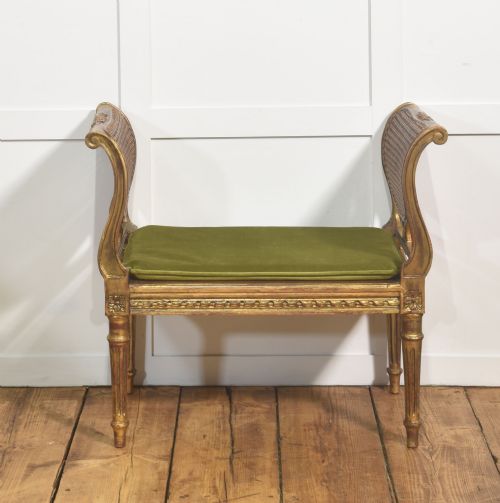
A curved leg stool encompasses various seating forms, including footstools, window seats, and dressing stools, designed with distinctive sweeping supports. Buyers searching for a curved leg stool encounter pieces spanning the nineteenth and twentieth centuries, featuring distinct influences from Georgian elegance to Art Deco modernism. These items function equally as practical seating and decorative accents within traditional or contemporary interiors.
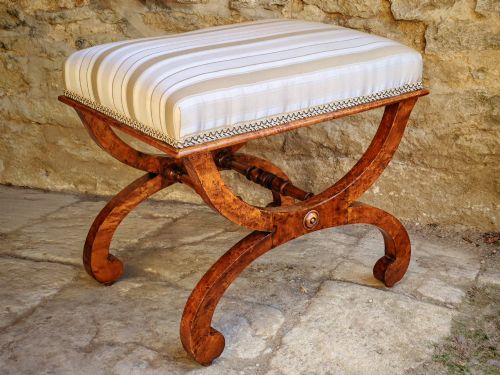
The selection ranges from elaborate giltwood and cane window seats to robust mahogany frames and bentwood designs. Forms such as the X-framed Regency stool and the iconic work of twentieth-century makers demonstrate how varied these supports can be. Each period brings its own interpretation of the curved leg, balancing structural integrity with aesthetic movement.
How they were made
Traditional woodworking techniques underpin these pieces, utilising durable timbers such as mahogany, oak, and rosewood alongside luxurious finishes like giltwood and burr maple veneers. Skilled makers shaped solid hardwoods to create flowing cabriole or X-shaped supports that could bear weight while maintaining a delicate profile.
Upholstery and woven elements complete many of these pieces, employing traditional textiles like velvet and natural materials such as cane and bergere. These surfaces are integrated directly into the wooden frames, requiring precise joinery to ensure lasting stability.
Some nineteenth-century examples were specifically built as rocking gout stools to soothe tired feet.
What varies in quality
Quality in these items is defined by the crispness of the carving, the selection of figured timbers like burr maple, and the integrity of the frame construction. Superior examples display harmonious proportions and seamless joinery that conceal the underlying structure.
The sophistication of the design execution and the retention of original materials, such as canework or specific upholstery fabrics, distinguish finer pieces from simpler utilitarian versions.
Harry & Lou Epstein·Thonet
The Curved Leg Stool Glossary
- Giltwood
- Wood that has been coated with gold leaf or a gold-coloured finish. This technique was frequently utilised on decorative seating intended for formal reception rooms.
- Cane
- Woven rattan or other plant material used to create light, resilient panels for seats and backs. It requires considerable skill to weave tightly within a wooden frame.
- Cabriole leg
- A furniture leg that curves outward and then tapers inward, echoing the graceful joints of an animal's leg. It is a defining feature of many classical seating styles.
- Bergere
- An enclosed upholstered armchair or stool featuring woven cane sides or backs. The technique provides a lighter alternative to solid wood panels.
- X-frame
- A structural design where two curved or straight supports cross to form an X shape beneath the seat. This ancient form provides robust support with visual lightness.
Curved Leg Stool: Frequently Asked Questions
Where should I place a curved leg stool?
These stools sit comfortably at the end of a bed, beneath a dressing table, or paired beside a fireplace as flexible seating. Their compact footprint allows them to move easily between rooms as needed.
Consider the height and style of surrounding furniture to ensure the stool complements the space without disrupting room flow.
How do I care for wooden frames and cane?
Dust wood surfaces regularly with a soft, dry cloth and avoid placing pieces in direct sunlight or near heat sources to prevent timber cracking. Cane requires gentle cleaning and occasional light moisture to remain supple.
Harsh chemical cleaners should be avoided entirely to preserve the original finishes and patinas developed over decades.
What defines a Regency style stool?
Regency seating often draws inspiration from classical antiquity, featuring clean lines, dark mahogany timbers, and distinctive X-shaped or sabre legs. These pieces prioritize structural clarity and classical proportion.
They reflect an era of refined British design that favored restraint and architectural influence over heavy ornamentation.
How can I tell a Victorian bentwood stool apart?
Victorian bentwood pieces utilise steam-bent solid wood to create smooth, continuous curves without traditional joinery. This innovative technique produced lightweight yet remarkably strong frames.
Such stools often display a distinctively organic silhouette that contrasts sharply with the rectilinear furniture of earlier decades.