




Curved Leg Console
A curved leg console table brings architectural grace to a hallway, drawing the eye with sweeping woodwork and elegant stance.
Curved Leg Console
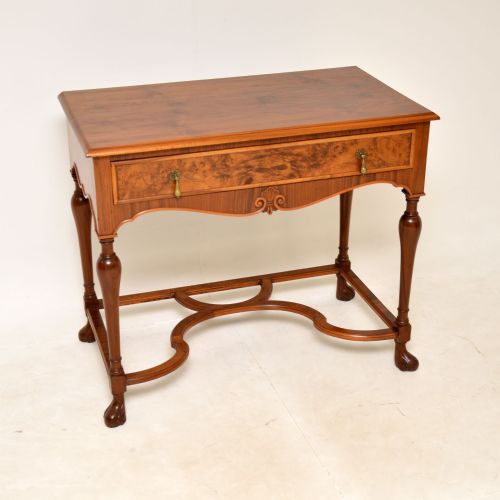
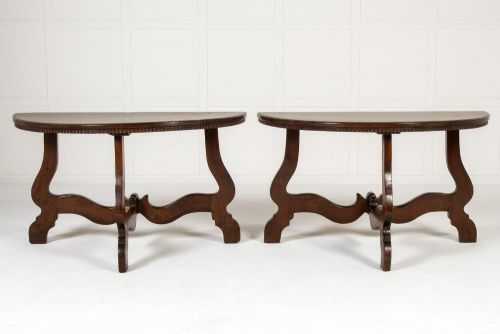
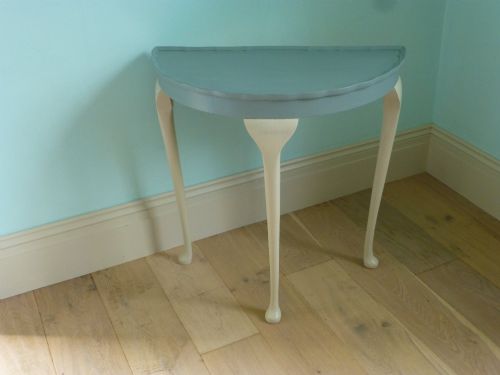
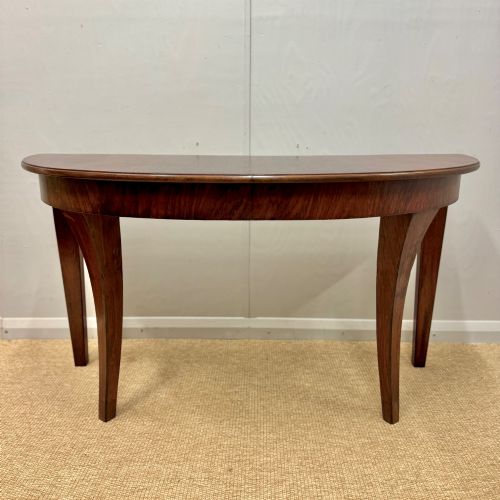
A curved leg console table is primarily designed to stand flush against a wall in a hallway, drawing focus with its shaped silhouette. The pieces available here span several centuries and styles, ranging from Georgian and Victorian designs to later twentieth century interpretations.
The form encompasses various table types, including demilune shapes, serpentine fronts, and side tables with sweeping supports. Makers across different periods adapted these tables to suit domestic interiors, utilising specific stylistic revivals like Queen Anne and Sheraton.
Originating in diverse regions, these tables appear in walnut, mahogany, and rosewood, often featuring distinctive top surfaces such as marble or figured wood veneers. Buyers frequently encounter walnut and mahogany variants alongside painted or polished surfaces from the nineteenth and twentieth centuries.
Materials and construction
Cabinetmakers constructed these tables using dense timbers such as mahogany, walnut, and oak, often applying burr walnut or birds eye maple veneers to create richly figured surfaces. These woods provided the structural stability required for slender, curving supports.
Surface details frequently include marble tops supported by wooden frames or iron frameworks, alongside hand-painted finishes on wooden structures. Joinery techniques varied according to the period, supporting curved legs, bow fronts, and serpentine profiles.
Current listings feature walnut, mahogany, oak, rosewood, and elm alongside marble and iron materials across multiple centuries.
Distinctions in quality
The calibre of a piece rests heavily on the selection of timber veneers and the precision of the carved or shaped woodwork. Superior examples display seamless integration of curved legs with the apron and top surface, showing considered proportion rather than rigid symmetry.
Materials like high-grade marble or finely figured burr walnut elevate a piece beyond standard utilitarian tables. The handling of secondary woods and the crispness of the curved profile distinguish workshop output across different eras.
Hille
The Curved Leg Console Glossary
- Console table
- A table designed to stand against a wall, traditionally supported by brackets or console legs. These pieces often feature shallow depths to fit narrow spaces.
- Demilune
- A half-moon shape used for table tops and furniture plans. This form allows the table to sit compactly against a wall.
- Serpentine
- A furniture front or edge shaped with a central convex curve flanked by two concave curves. It adds fluidity and visual movement to the piece.
- Veneer
- A thin layer of figured wood applied to a primary timber base. This technique highlights decorative grain patterns like burr walnut.
Curved Leg Console: Frequently Asked Questions
Where should I place a console table?
These tables suit narrow circulation spaces, entrance halls, or living rooms where floor space is limited. Their shallow profiles allow them to sit neatly against walls without obstructing pathways.
They also function effectively beneath mirrors or artwork, providing a surface for decorative objects or lighting while anchoring the wall space visually.
How do I identify a Georgian console?
Georgian pieces typically feature dense mahogany timbers, restrained proportions, and classic design motifs associated with eighteenth-century cabinetmaking. Look for traditional joinery methods and patination acquired over centuries of use.
Later revivals from the nineteenth and twentieth centuries often emulate these forms, so examine the secondary woods and construction marks to determine exact periods.
Are marble topped tables heavy?
Marble topped tables possess substantial weight due to the stone slab resting on the wooden or metal base. This heaviness contributes to their stability when positioned against a wall.
Care should be taken when moving these items to separate the top from the base if construction permits, protecting both the stone and the supporting frame.
What maintenance do wood surfaces need?
Polished wood and veneered surfaces benefit from regular dusting with a soft cloth and occasional application of appropriate wax polish. Avoid placing them in direct sunlight or near heat sources to prevent timber movement.
Marble surfaces require mild cleaning agents that do not etch the polished stone, keeping the mineral patterns clear and protected.