




Curved Glass Display Credenza
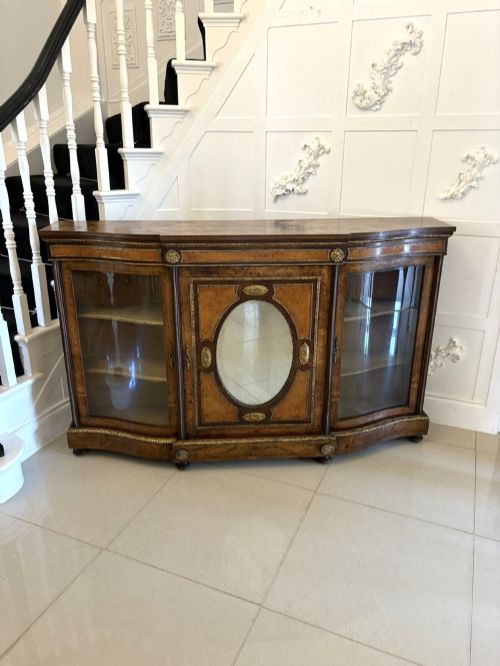
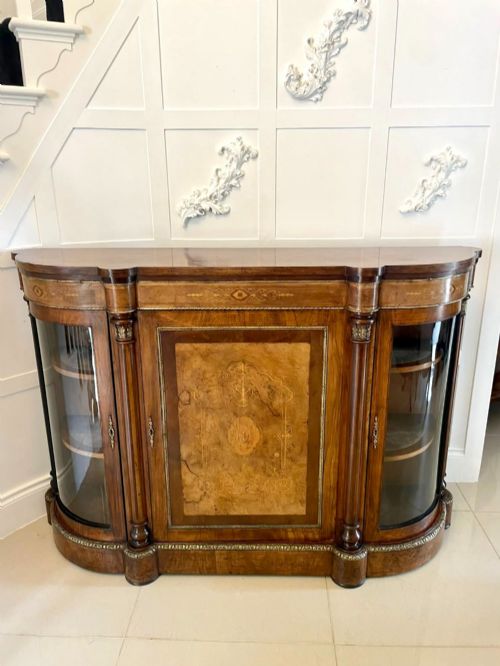
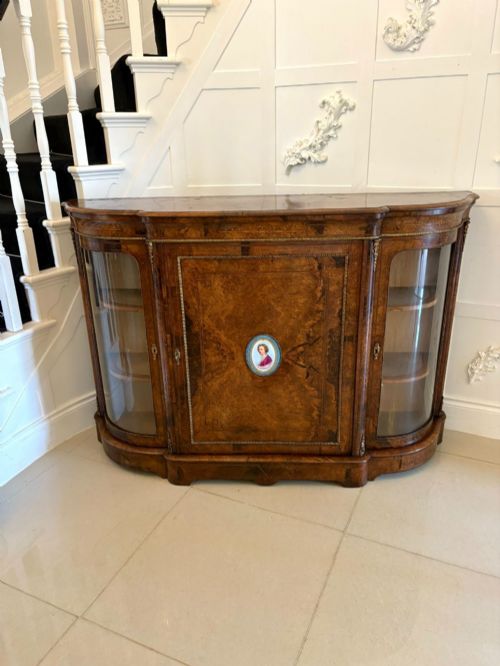
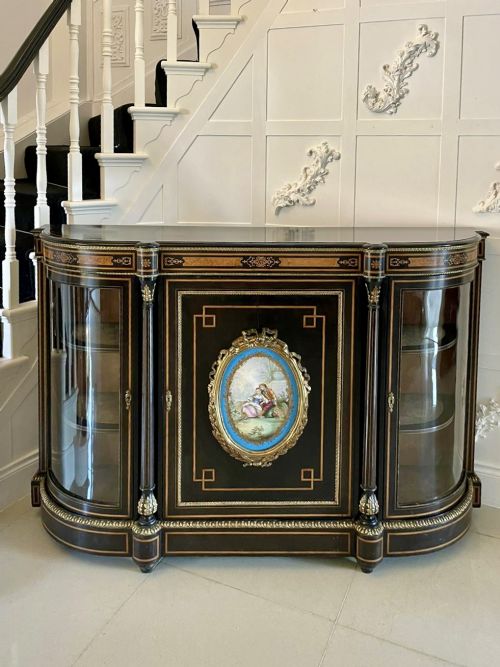
A curved glass display credenza brings nineteenth-century presence and refined storage into a room through figured woods and gilt mounts.
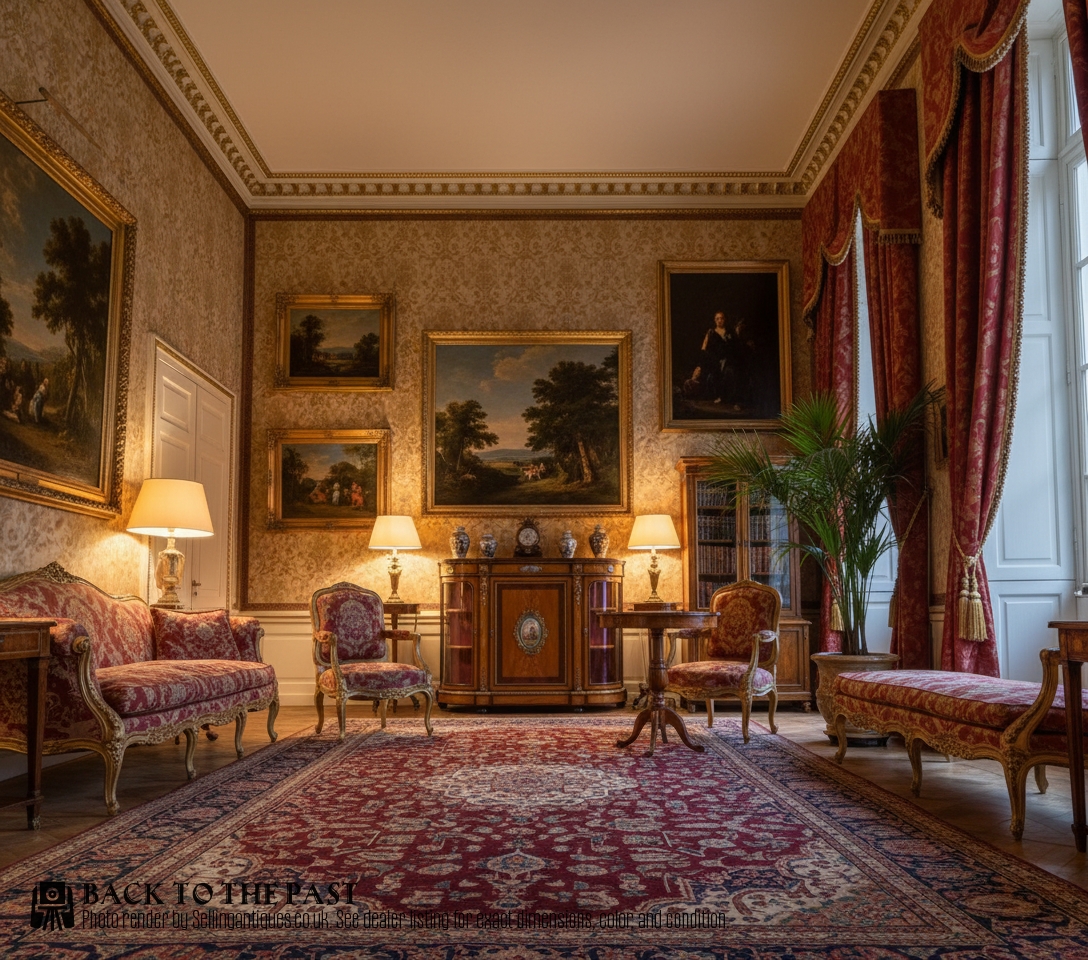
Curved Glass Display Credenza
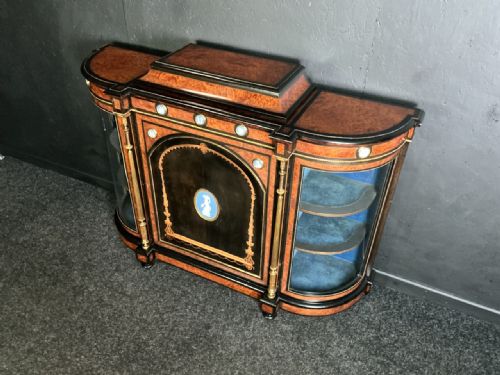
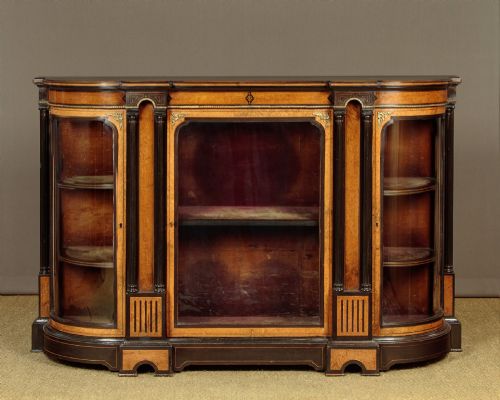
A curved glass display credenza is a nineteenth-century storage cabinet built to showcase decorative objects while anchoring a formal interior. You meet these pieces primarily in Victorian and Napoleon III styles, dating from the mid-nineteenth century through the turn of the twentieth.
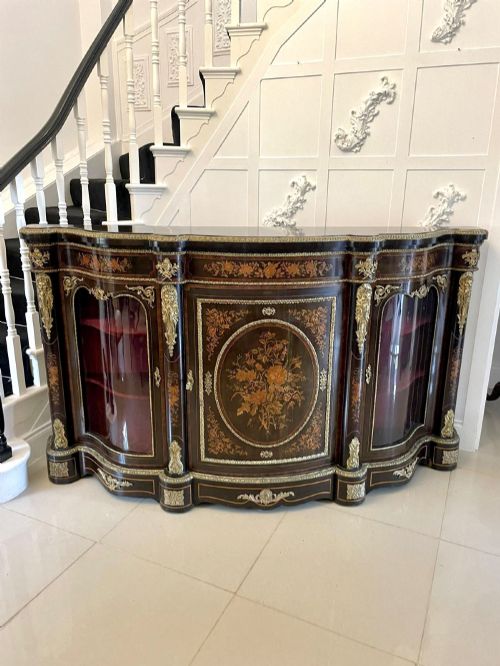
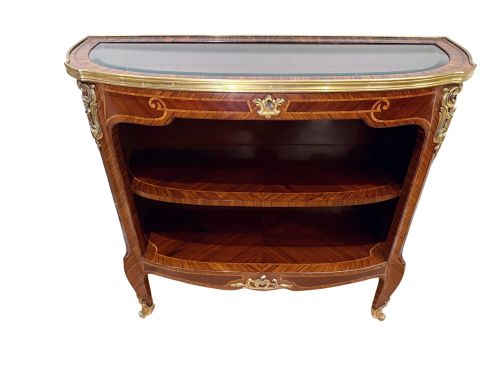
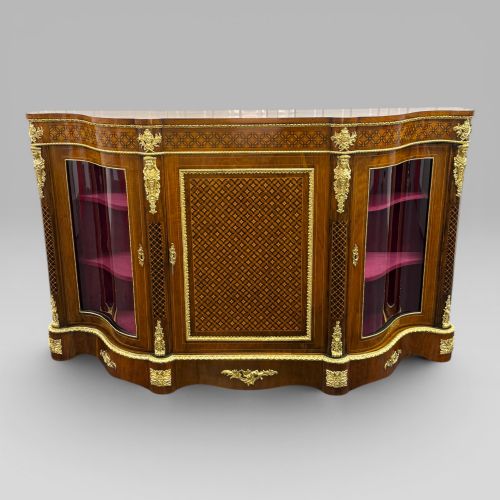
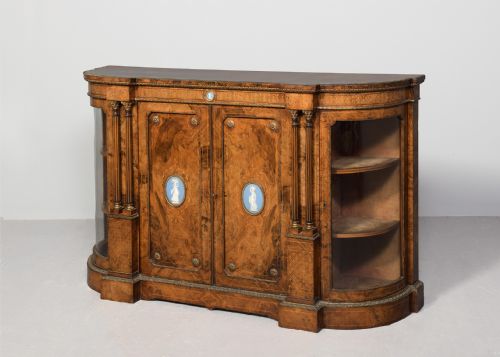
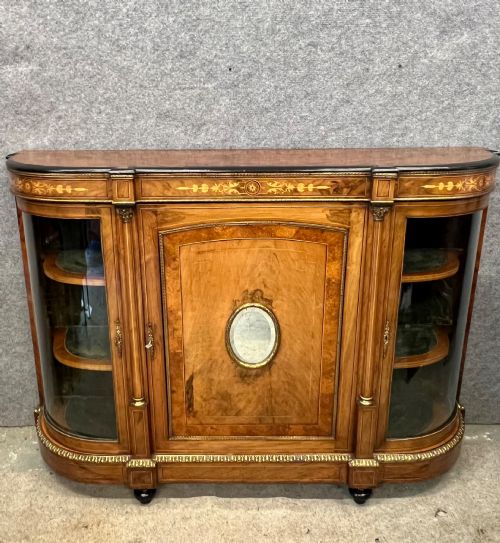
The form combines central glazed display sections with flanking cabinet doors, often shaped in serpentine outlines. Walnut, burr walnut, ebonised wood, and amboyna form the primary bodies, echoing French Revival and Aesthetic Movement aesthetics.
Makers and cabinetmakers of the period utilised rich timber veneers and glazed side cabinets to create functional focal points for drawing rooms and parlours. These items survive as representative examples of Victorian and continental revival cabinet-making.
How they were made
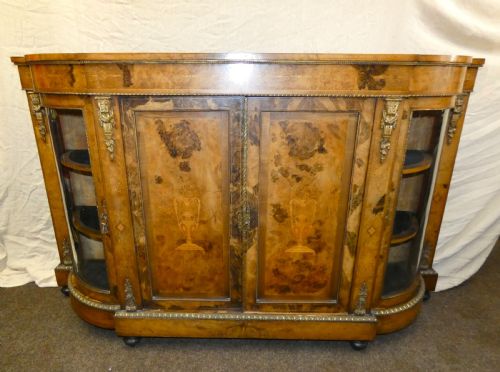
Cabinetmakers constructed these pieces using solid timber carcases faced with highly figured veneers such as burr walnut, amboyna, and kingwood. Marquetry inlays of boxwood and floral motifs decorate the surfaces, accompanied by boxwood stringing.
Gilt bronze and ormolu mounts accentuate the structural lines, corners, and door frames, while porcelain plaques sometimes provide additional panel decoration. Curved glass panes sit within glazed doors, supported by brass fittings and interior velvet-lined shelving.
Several credenzas conceal secret compartments behind their ormolu mounts, designed for hiding love letters from prying Victorian eyes.
What varies in quality
The choice and execution of timber veneer set pieces apart, with dense burr walnut and balanced marquetry indicating superior workshops. The precision of the ormolu casting and the integration of porcelain plaques reveal the depth of craftsmanship invested in the cabinet.
Structural complexity, such as true serpentine shaping and curved glass framing, demands advanced joinery that distinguishes master makers from standard production pieces.
Maison Gagneau·James Hicks·Gillow
The Curved Glass Display Credenza Glossary
- Ormolu
- Gilded bronze mounts applied to furniture for decorative accent. This technique was widely utilised during the Victorian and French Revival periods.
- Marquetry
- Elaborate patterns formed by the insertion of different coloured veneers into a wood ground. Floral and geometric designs appear frequently across nineteenth-century cabinets.
- Burr walnut
- Timber taken from the growth excrescence of a walnut tree, yielding a swirling, highly figured grain pattern. It forms the primary surface veneer on many Victorian pieces.
- Boulle
- A style of marquetry using brass and tortoiseshell inlaid in intricate arabesque patterns. Named after the French cabinetmaker, it decorates select nineteenth-century display pieces.
Curved Glass Display Credenza: Frequently Asked Questions
What rooms suit a curved glass display credenza?
These cabinets suit formal reception spaces, drawing rooms, or dining rooms where their glazed compartments can hold ceramics, glass, or collected objects.
Their low profile allows them to sit beneath large paintings or mirrors without overwhelming the wall space.
How do I care for nineteenth-century wood?
Keep the wood away from direct sunlight and steady humidity levels to protect the delicate burr walnut and amboyna veneers from drying or splitting.
Apply a microcrystalline wax sparingly to nourish the finish without building up heavy residue.
How do I distinguish Victorian from French revival?
Victorian pieces often employ robust burr walnut with dense marquetry, reflecting English domestic tastes of the mid to late nineteenth century.
French revival examples tend to incorporate heavier ormolu mounts, amboyna, and Boulle work inspired by Parisian court furniture.
Are the shelves inside adjustable?
Most nineteenth-century interiors rely on fixed wooden or velvet-covered shelves supported on stationary wooden bearers rather than modern adjustable tracks.
Original velvet linings often show age, reflecting the domestic history of the cabinet.