
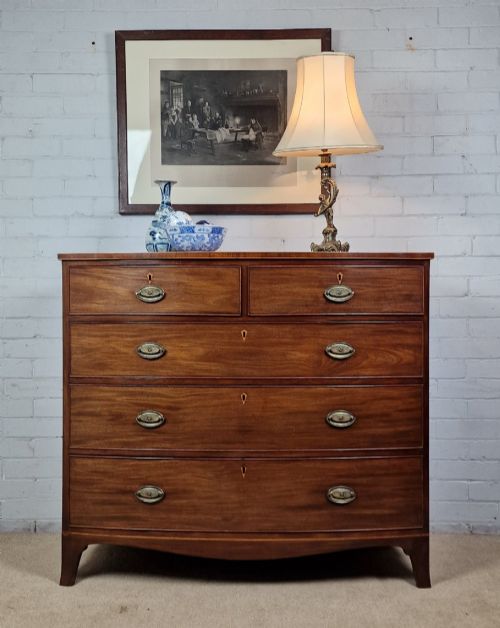
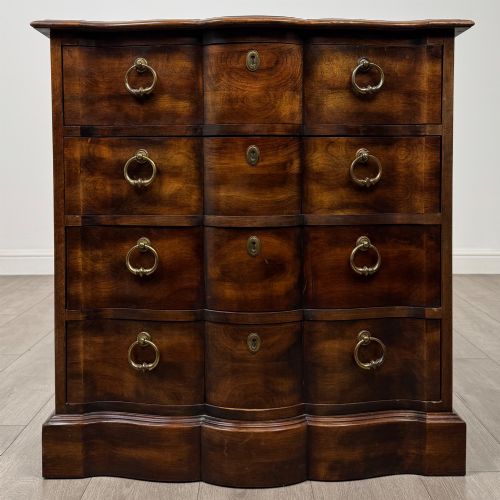
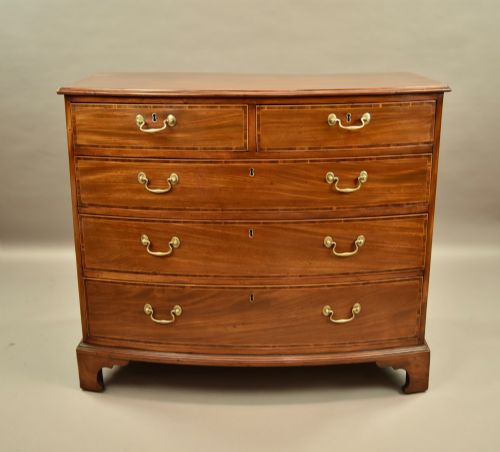
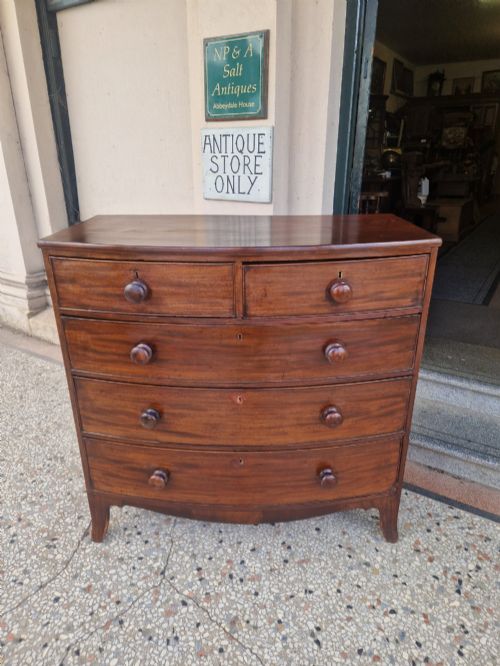
Curved Front Dresser
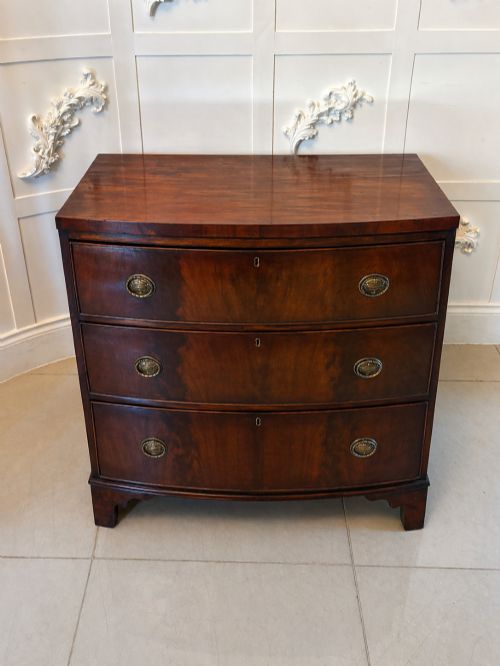
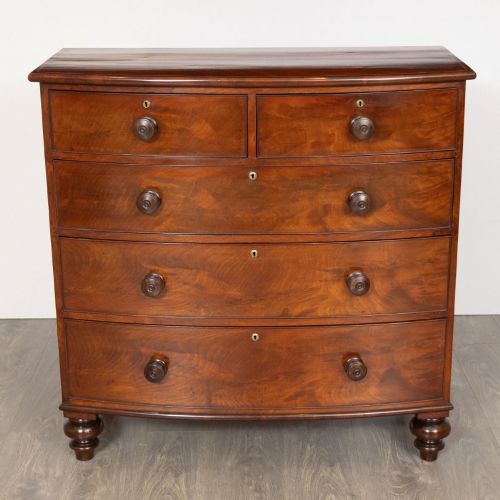
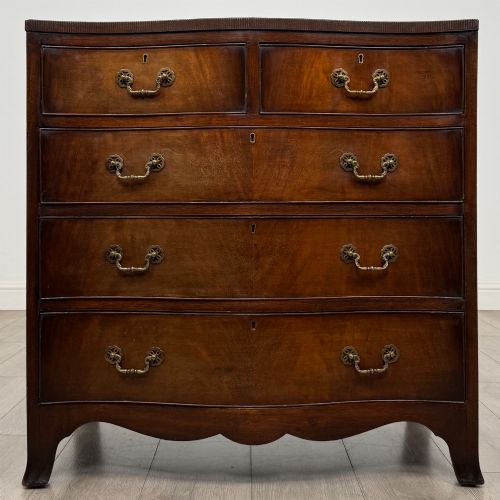
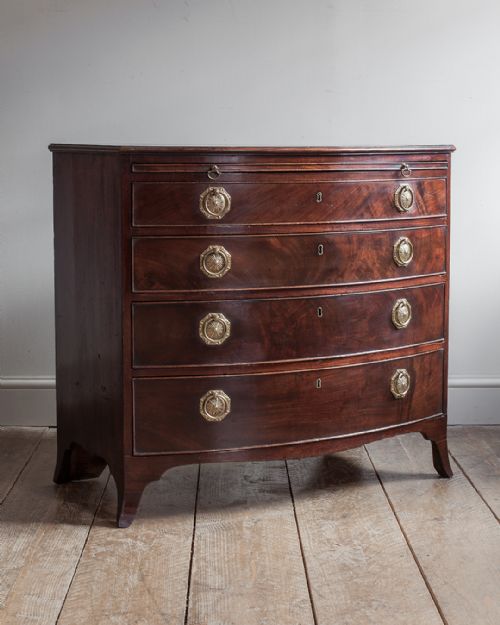
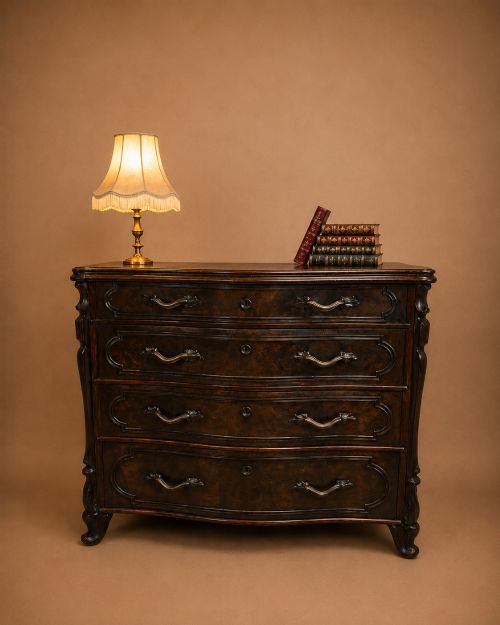
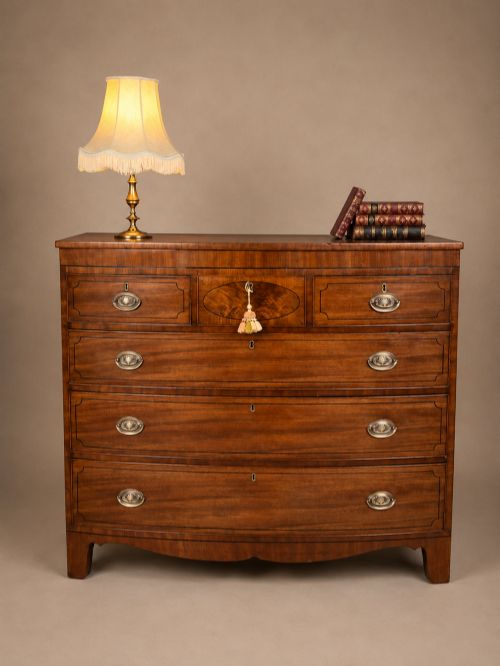
A curved front dresser brings soft lines to a room, offering generous storage through bow and serpentine forms.
Curved Front Dresser
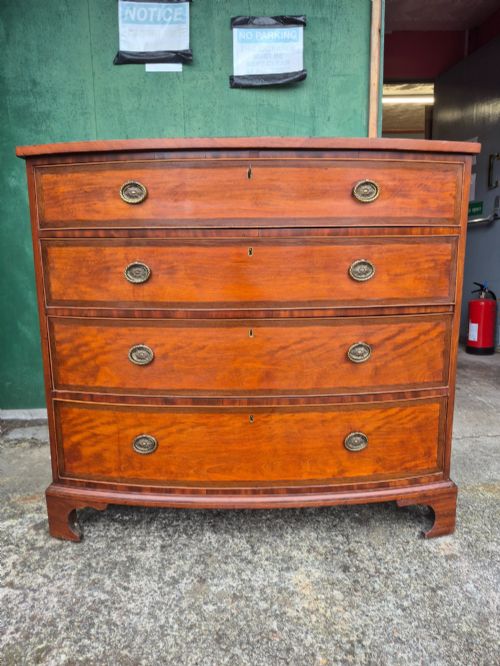
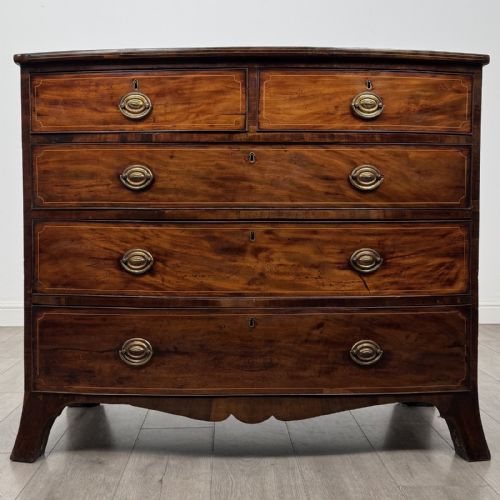
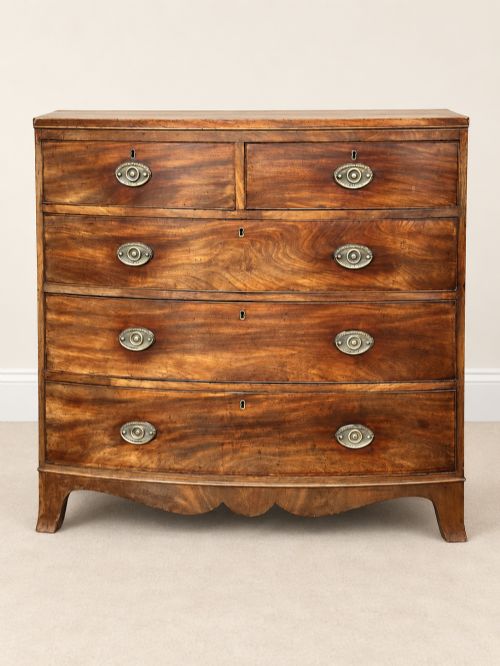
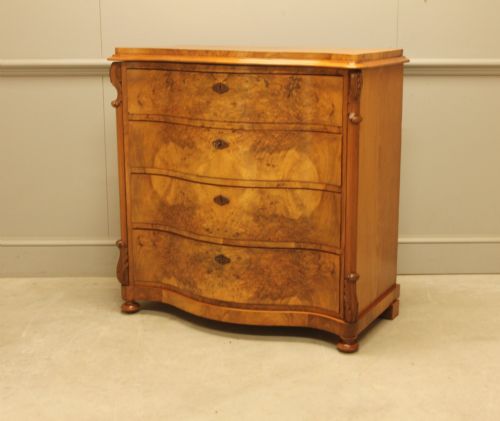
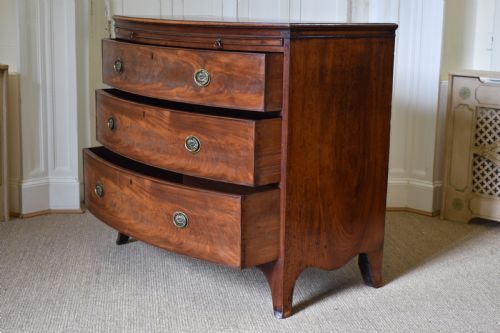
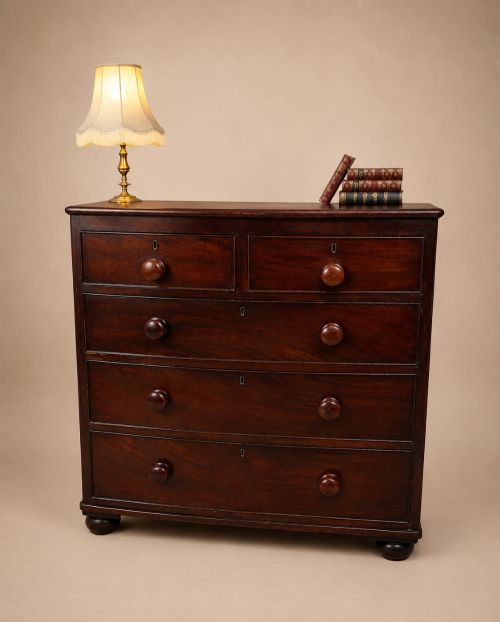
A curved front dresser most often appears here as a bow front or serpentine chest of drawers, spanning Georgian, Regency, and Victorian periods. These pieces serve primarily as bedroom storage or living space furniture, utilising their rounded profiles to break the rigidity of straight walls.
The selection ranges from George III mahogany examples to later walnut and oak pieces, alongside occasional continental commodes with marble tops. Buyers frequently encounter nineteenth-century mahogany versions, though Edwardian and later revivals also feature.
Materials and construction
Cabinet makers constructed these curved forms predominantly using solid timber frames paired with wood veneers, applying flame mahogany, satinwood, and burr walnut across the drawer fronts. Brass hardware frequently secures the drawers, while secondary timbers such as oak and pine form the internal linings and carcases.
Shaping the curved fronts required specialised joinery to bend or cut solid wood and veneer without splitting. French polishing and painted finishes completed the surfaces, protecting the timber while highlighting the grain.
Listings feature mahogany, walnut, oak, and pine materials across Georgian, Regency, and Victorian periods.
Design and execution
Quality in a curved front dresser rests on the handling of timber veneers and the crispness of the curved joinery. Superior pieces display carefully matched grain patterns across the drawer fronts and tight joints along the sweeping curves.
The Curved Front Dresser Glossary
- Bow front
- A cabinet front that curves outward in a convex arc. This shape gained popularity during the Georgian and Regency periods to soften room layouts.
- Serpentine
- A cabinet front featuring a convex centre flanked by concave curves, creating an undulating outline. It demands advanced woodworking skill to execute cleanly.
- Commode
- A low chest of drawers or cabinet, frequently of French or German origin. These pieces often incorporate marble tops and elaborate marquetry.
- Flame mahogany
- A veneer cut from the fork of a mahogany tree where the branches join the trunk. It creates a distinctive rippling, flame-like pattern across drawer fronts.
- Secret drawer
- A concealed compartment built into the frieze or interior of a chest. Makers hid these behind removable panels or false bottoms.
Curved Front Dresser: Frequently Asked Questions
Where should I place a curved front dresser?
These pieces suit hallways, bedrooms, or living rooms where a flat-fronted chest might appear too boxy. The rounded profile allows easier movement around the furniture in tighter spaces.
Position the piece away from direct heat sources to protect the wood veneers from drying and cracking over time.
How do I care for mahogany surfaces?
Dust the wood regularly with a soft, dry cloth to prevent particle buildup. Avoid silicone-based polishes that can degrade the traditional polish finish.
Maintain stable room humidity to prevent the timber from expanding or contracting, which stresses the curved joints.
Are these pieces suitable for daily use?
Most of these chests remain sturdy enough for regular storage of clothing or linens. The drawers run on traditional wooden runners that function smoothly when properly waxed.
Take care not to overload deep drawers, as historical joints respond best to balanced weight distribution.
How can I tell a Georgian piece from a later revival?
Examine the secondary timbers inside the drawers, such as oak or pine, and look at the hand-cut dovetail joints. Georgian pieces typically show specific construction marks and timber ageing consistent with the eighteenth century.
Revival pieces from the Edwardian era or later often utilise machine-cut elements and standardised internal fittings.