




Curved French Commode
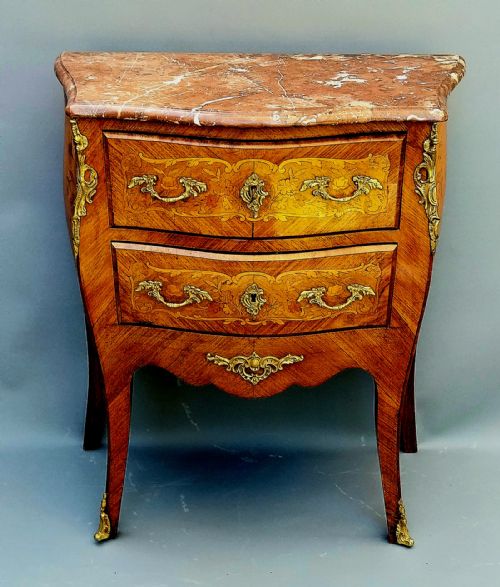
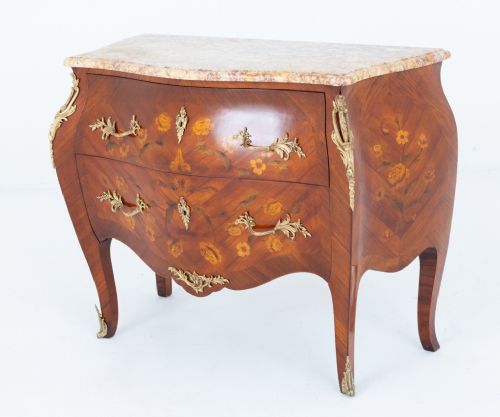
A curved french commode brings continental elegance to a room, offering serpentine or bombé storage topped with cool marble.
Curved French Commode
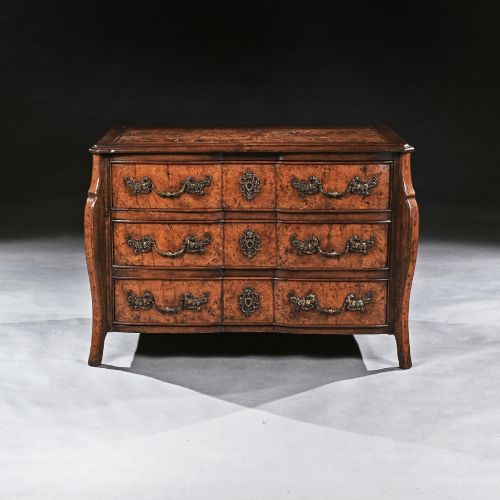
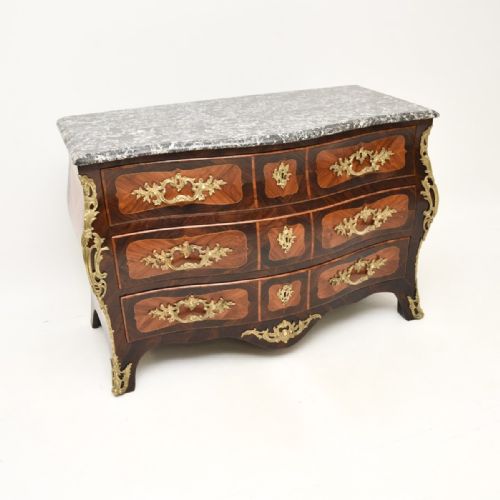
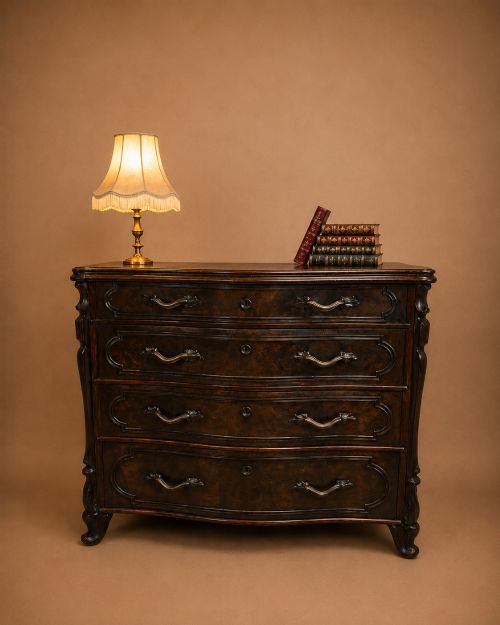
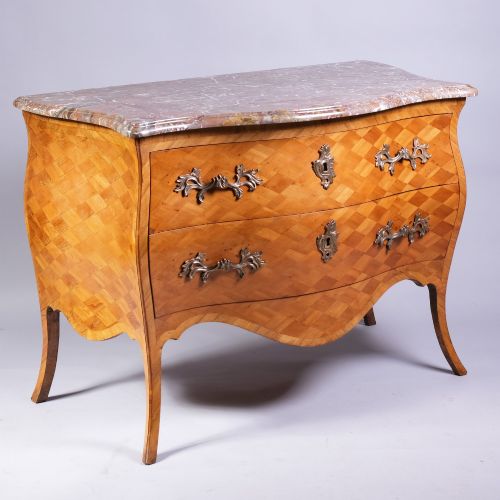
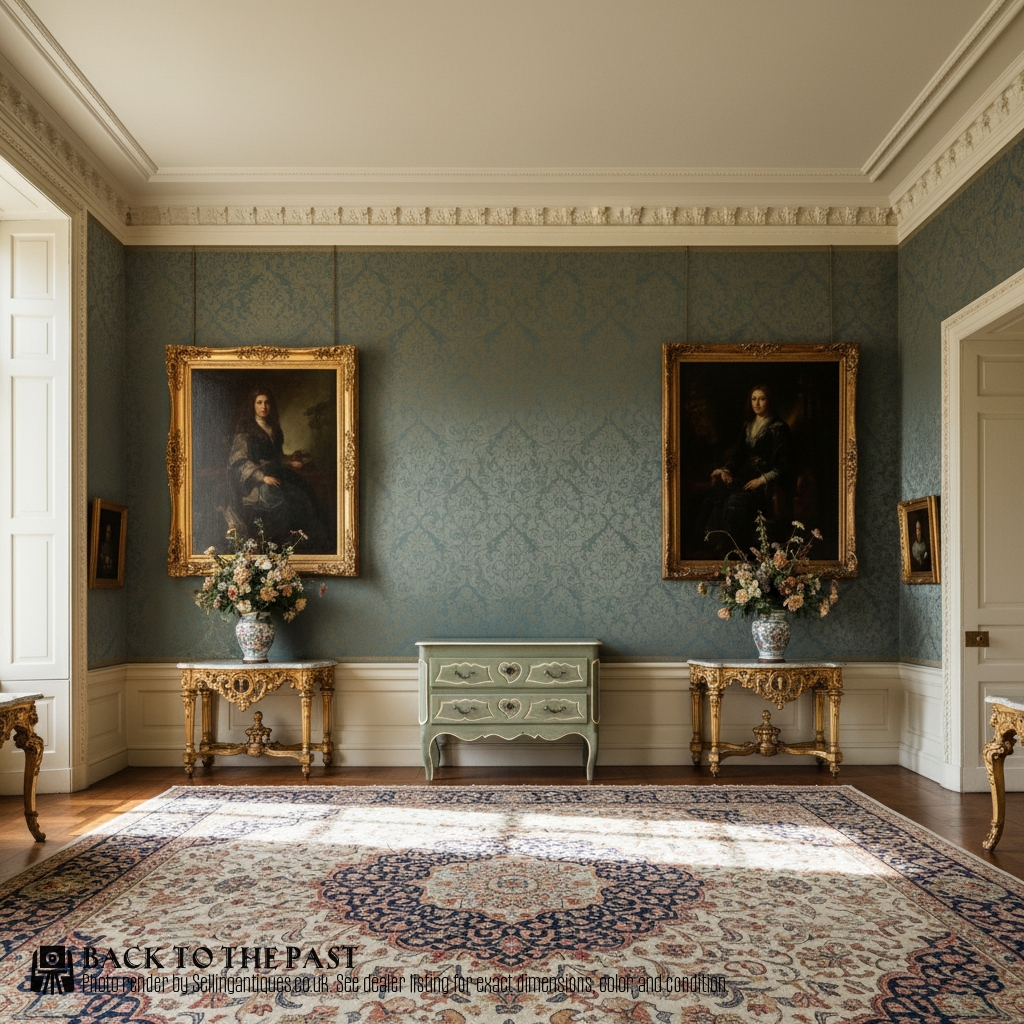
A curved french commode is a low storage chest designed with sweeping lines, swelling fronts, and substantial surface presence. These pieces emerge in styles ranging from Louis XV and Louis XV Revival to French Rococo and Provincial, reflecting centuries of continental cabinet-making.
Most examples found here date from the eighteenth and nineteenth centuries, alongside later twentieth-century iterations. They appear in forms such as bombes, serpentine chests of drawers, and side cabinets.
The standard configuration provides deep drawer storage beneath a fitted stone slab. Walnut, mahogany, and kingwood form the primary carcass woods, often shaped with pronounced curves.
Construction and Materials
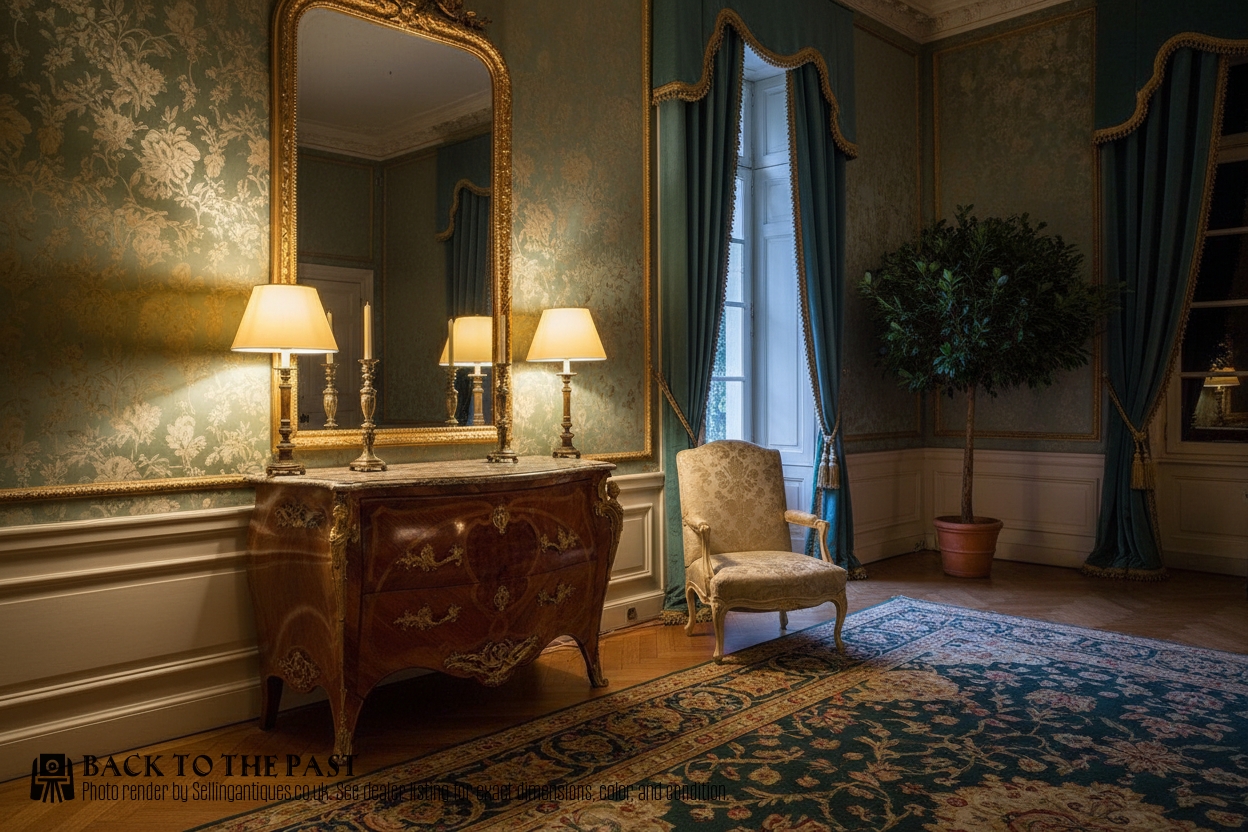
Cabinet-makers built these carcasses using native and exotic timbers like walnut, mahogany, fruitwood, and kingwood over robust pine or oak frames. Marquetry, parquetry, and painted finishes such as Vernis Martin decorate the curved surfaces.
Heavy marble tops, cut to follow the serpentine or bombé contours of the wood beneath, sit unattached upon the cabinet. Cast or chased ormolu mounts and brass handles accent the corners, apron, and key escutcheons.
Some music cabinets secretly double as sideboards, proving that nineteenth-century artisans loved hiding a tune inside a commode.
Judging Quality and Execution
The precision of the cabinet work dictates the standard of a commode, particularly how smoothly the drawers follow the complex swelling curves. Superior examples display tightly fitted marquetry patterns that wrap seamlessly across the joints.
The weight and detail of the cast ormolu mounts differentiate simpler provincial items from high-style workshop productions. Furthermore, the thickness and geological figuring of the fitted marble top signal the ambition of the original commission.
Jacques Bircklé·Mercier Frères
The Curved French Commode Glossary
- Bombé
- A swelling, outward-curving chest shape reminiscent of a bulging profile. This contour requires advanced woodworking skill to maintain structural integrity.
- Ormolu
- Gilded bronze mounts applied to furniture for decorative accent. These pieces are cast and hand-chased to highlight floral or scroll motifs.
- Marquetry
- The art of applying decorative veneer pieces in wood to form geometric or pictorial designs. Craftsmen use contrasting timbers to achieve tonal variation.
- Demi-lune
- A half-moon or semicircular shape used for the footprint of specific cabinets and commodes. This form allows the furniture to sit flush against a wall while projecting outward.
Curved French Commode: Frequently Asked Questions
What is a curved french commode?
A curved french commode is a decorative chest of drawers featuring sweeping serpentine or bombé lines. Originating in France, these pieces served as functional storage while displaying fine cabinet-making.
They typically feature wooden marquetry or painted finishes topped with shaped marble slabs. Their distinctive shape sets them apart from standard rectangular chests.
How do I date a commode?
Dating relies on examining the carcass timber, construction joints, and stylistic markers. Eighteenth-century pieces often display hand-cut dovetails and regional provincial traits.
Nineteenth-century revivals borrow earlier Louis XV motifs but use machine-sawn elements or different secondary woods. Ormolu casting styles and marble thickness also offer clues to the era of production.
Where should I place a commode?
These pieces work well in hallways, living rooms, or bedrooms as statement storage units. Their finished backs and sides allow them to anchor a wall or sit within a room.
Keep them away from direct heat sources and strong sunlight to protect the wood veneer and polished marble surface. The flat top accommodates lamps, mirrors, or decorative objects.
How do I care for the marble top?
Marble requires gentle cleaning with a damp cloth and mild soap to avoid dulling the polish. Acidic substances like wine or citrus should be wiped away immediately to prevent etching.
Lift the marble carefully if moving the cabinet, as these heavy stone slabs are usually loose-fitted to the wood frame. Avoid placing abrasive items directly onto the polished stone surface.