

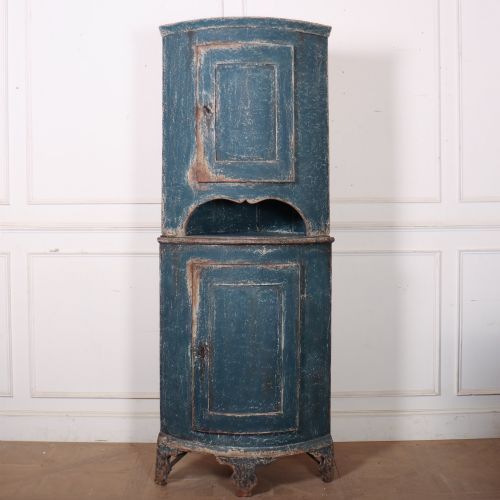
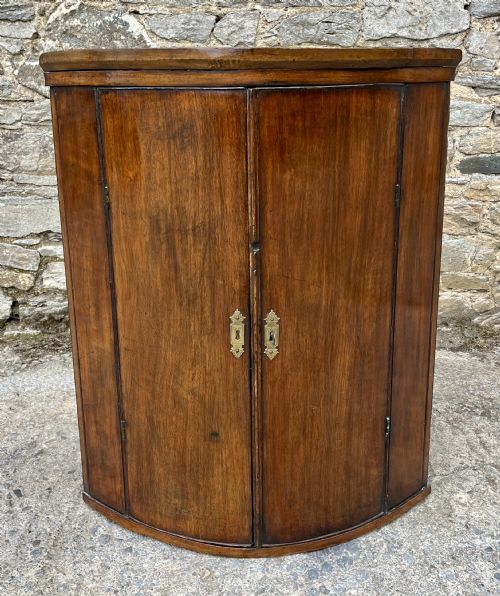
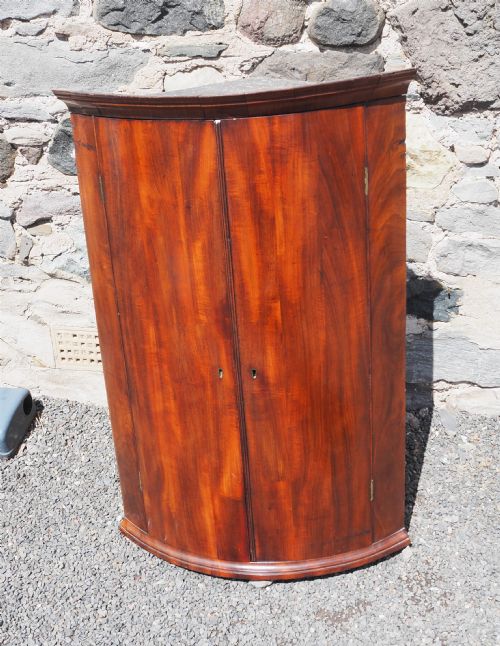

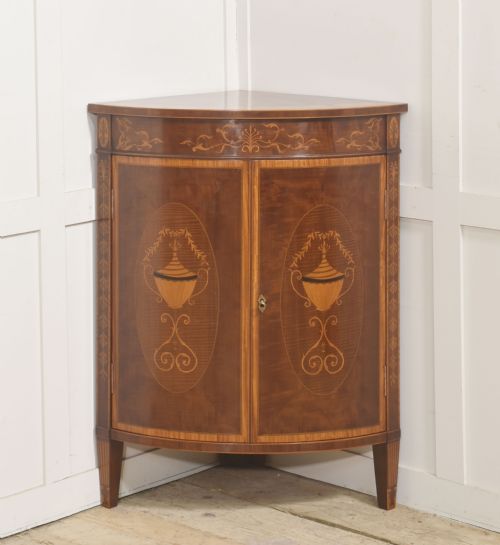
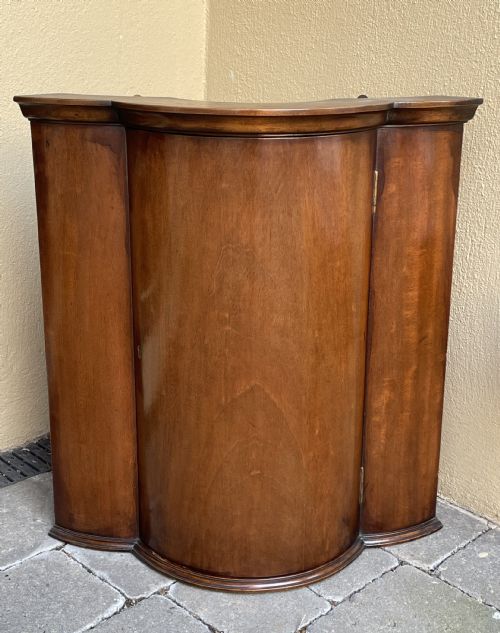


Curved Corner Cabinet
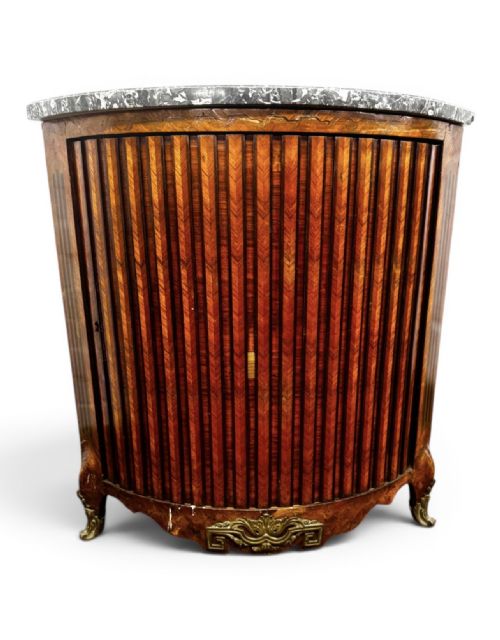
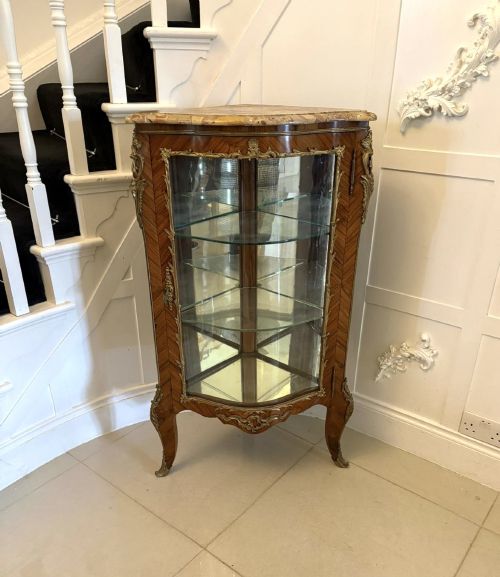
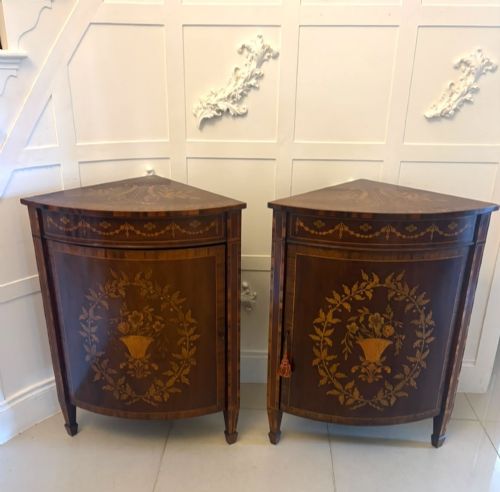
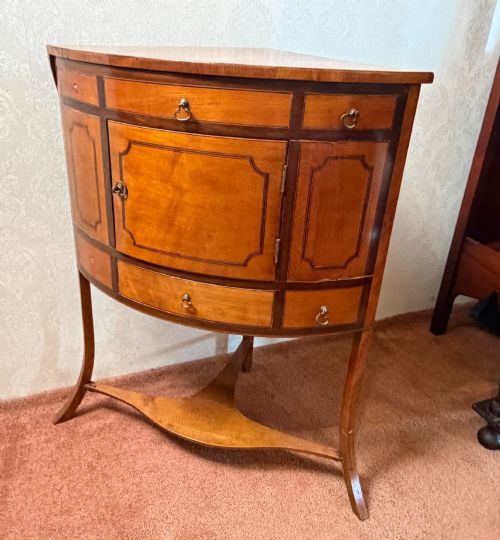
These curved corner cabinet examples turn awkward angles into useful display space using clever joinery and fine timbers.
Curved Corner Cabinet
Georgian and eighteenth-century pieces appear frequently alongside nineteenth-century and Victorian iterations. Woods range from oak and mahogany to walnut, kingwood, and satinwood.
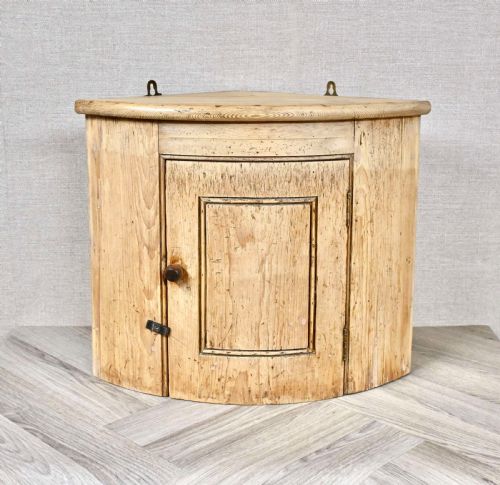
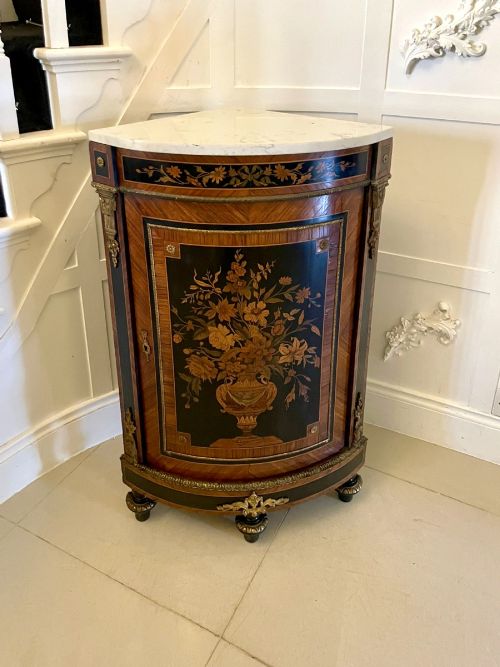
Styles span from plain rustic farmhouse cupboards to elaborate French Louis XVI and Sheraton Revival designs with marble tops and ormolu mounts.
Materials and construction methods
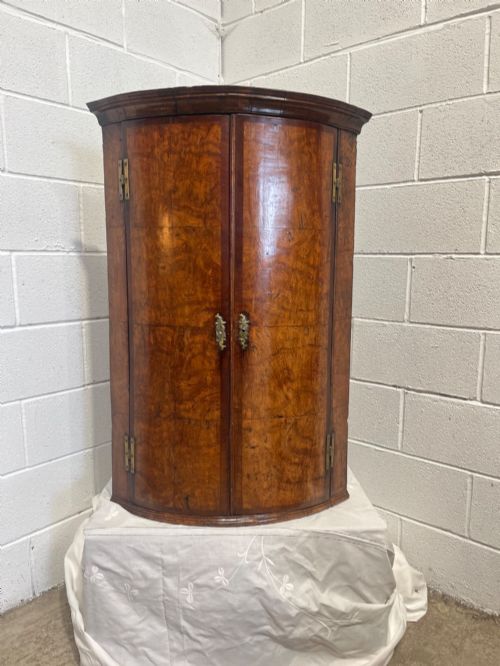
Cabinet makers built these pieces using solid timbers like oak and mahogany for structural stability while employing finer veneers such as burr oak, satinwood, and kingwood for visual impact.
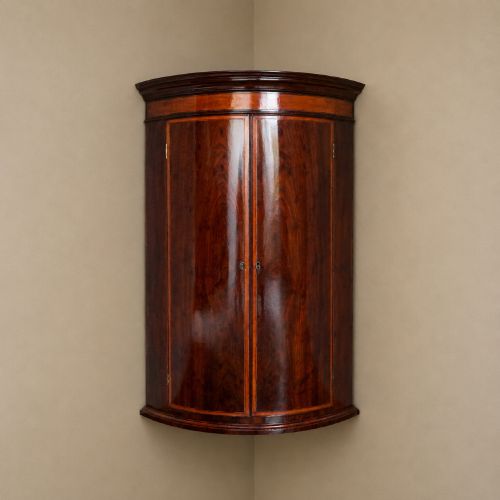
Curved and bow fronts required specialist steaming and shaping techniques to bend timber accurately. Details like brass hardware, glass panels, and marquetry inlay completed the construction.
Curved Corner Cabinet Retail Price Guide 2026
Typical asking prices for curved corner cabinet among the pieces listed under this phrase on Sellingantiques today, from the lower quarter to the upper quarter. They describe what is for sale here now, not the wider market.
The listings span multiple centuries, including eighteenth-century Georgian designs, nineteenth-century Victorian pieces, and twentieth-century Art Deco examples.
Evaluating craftsmanship and detail
Quality shows in the selection of timber, where plum pudding mahogany or figured burr walnut elevate a piece beyond standard oak or pine. The precision of the veneer work and inlay also marks out superior examples.
The integration of original brass mounts, glass panes, and marble tops distinguishes finer workshop production from simpler vernacular pieces.
Maurice Adams·Edwards And Roberts·Sage And Co
The Curved Corner Cabinet Glossary
- Bow front
- A convex curved front that projects outward from the corners of the cabinet. This shape softens the angular geometry of a room.
- Marquetry
- Decorative patterns created by fitting different woods and veneers onto a structural surface. Craftsmen used this technique for floral and geometric motifs.
- Ormolu
- Gilded bronze mounts applied to furniture for decoration. French makers utilised these metallic accents on high-status cabinets.
- Serpentine
- A curved line that dips inward in the centre and arches outward at the sides. It creates a flowing, undulating front profile.
Curved Corner Cabinet: Frequently Asked Questions
Where should I place a curved corner cabinet?
These cabinets work best in empty room junctions where standard rectangular furniture leaves dead space. Hanging versions suit smaller rooms while floor-standing variants anchor larger spaces.
Ensure the door swing has adequate clearance from nearby furniture or walls. The curved profile allows movement around the piece in tight hallways or dining rooms.
How do I identify a Georgian corner cabinet?
Georgian examples often feature solid mahogany or oak construction with panelled doors and brass H-hinges. Look for traditional proportions and hand-cut dovetails inside the drawers.
Later Victorian and Edwardian revivals tend to incorporate lighter satinwood veneers or elaborate marquetry. Eighteenth-century pieces generally rely on simpler timber grains and robust joinery.
Can I use these cabinets for modern display?
Glazed models provide dust-free storage for ceramics, glassware, and books while keeping items visible. Solid door versions hide household items out of sight.
Internal shelves often feature fixed wooden tiers designed for period tableware. Consider shelf depth before storing unusually large items.
What maintenance do antique timber cabinets need?
Keep wooden surfaces away from direct sunlight and strong heat sources to prevent timber splitting or veneer lifting. Regular dusting with a dry cloth maintains the finish.
Apply occasional appropriate wax polish to nourish older hardwoods. Avoid using liquid cleaners on antique polished surfaces.