

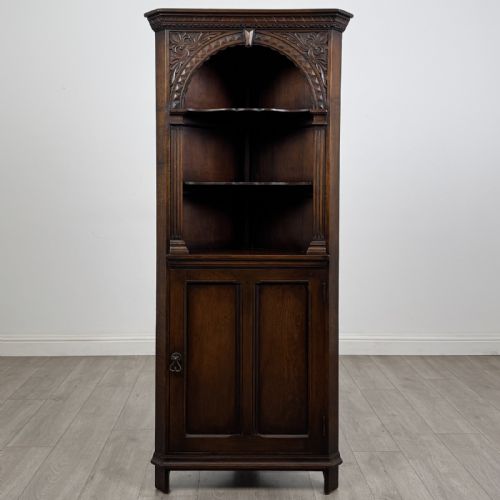
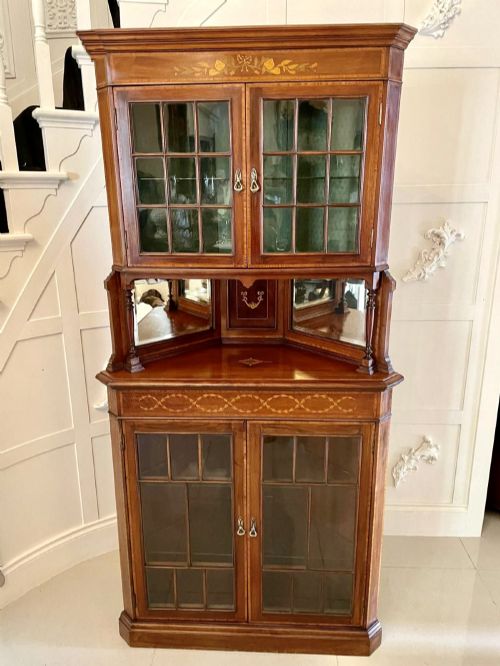
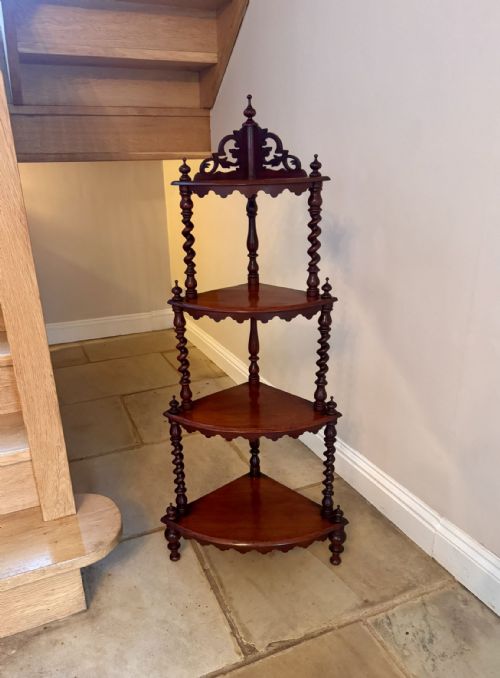
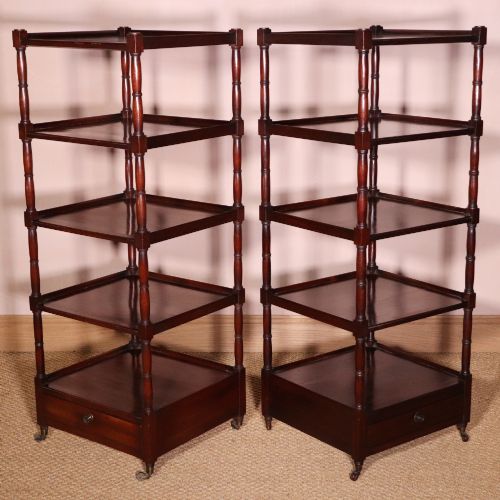

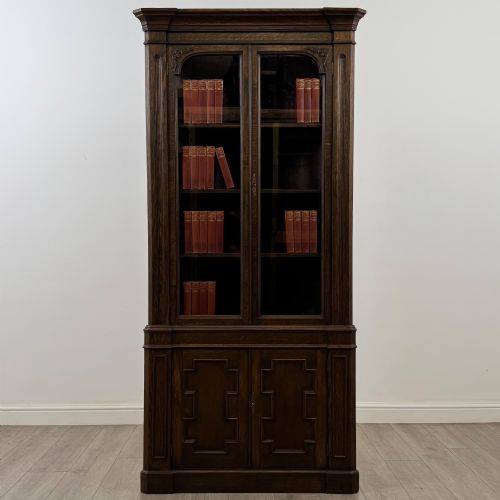
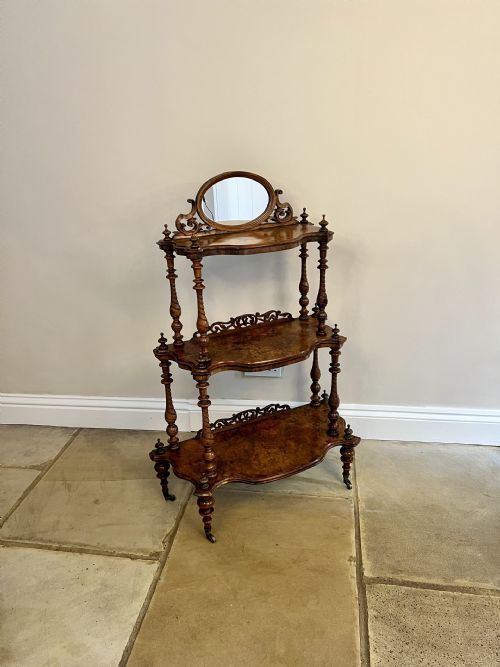
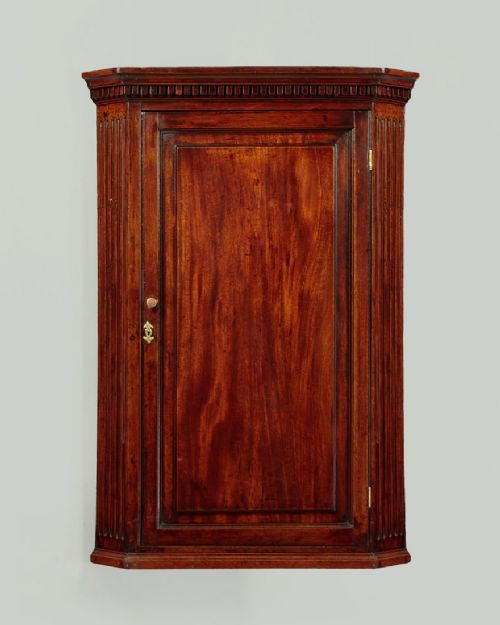
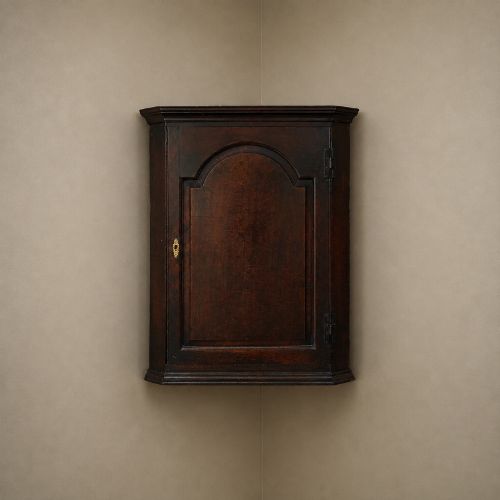
Antique Wood Corner Unit
An antique wood corner unit solves the eternal puzzle of dead space with timber fitted to angles.
Antique Wood Corner Unit
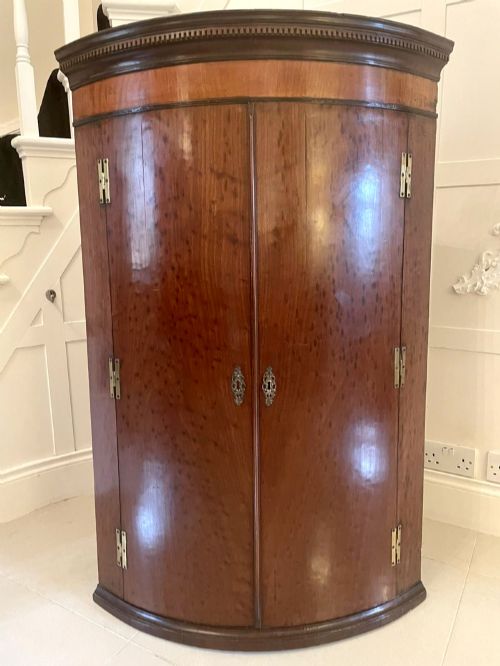
When you search for an antique wood corner unit, you encounter timber furniture built specifically to meet the internal right angles of a room, saving floor space while displaying or concealing belongings.
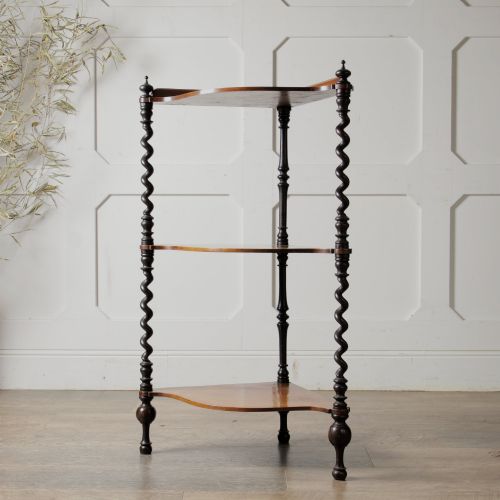
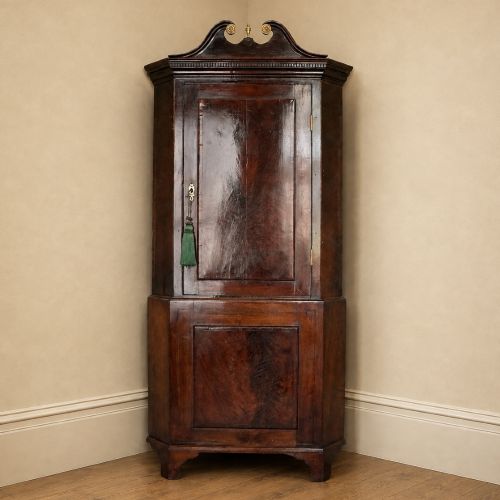
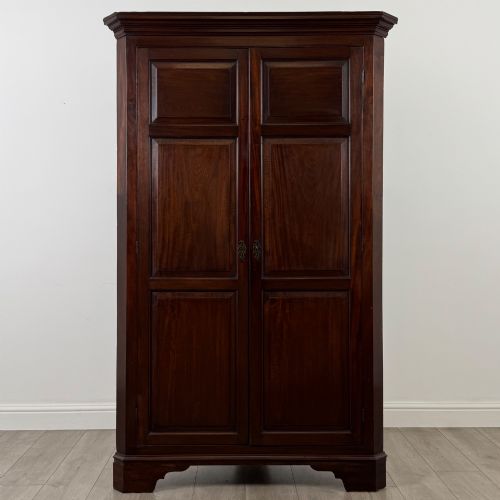
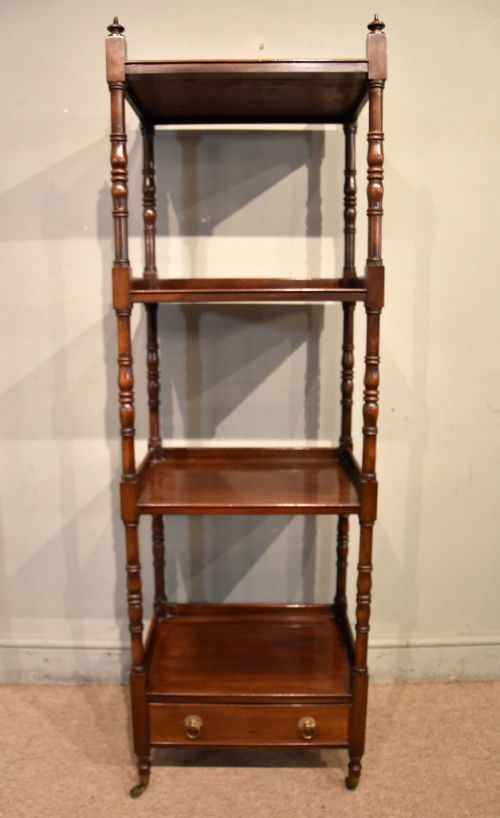
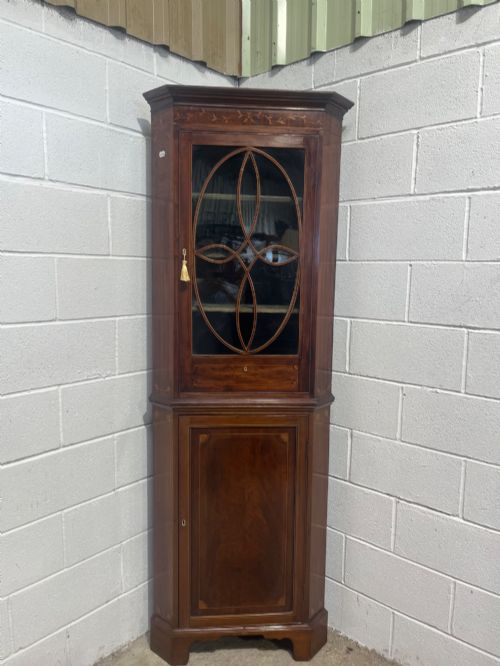
The pieces appearing here span wall-hanging cupboards, floor-standing cabinets, multi-tiered whatnots and open shelving structures originating from the eighteenth, nineteenth and early twentieth centuries.
Mahogany, oak and walnut dominate the selection, often taking Georgian or Victorian forms alongside Edwardian revivals, Jacobean influences and campaign styles.
How these units were constructed
Cabinet makers utilised dense domestic and exotic timbers, selecting mahogany, oak, walnut and burr walnut for stability and rich grain patterns.
Surface decoration relied on skilled craftsmanship, incorporating satinwood inlay, marquetry, painted finishes and barley twist turnings to articulate the timber.
Functional details such as brass hardware, glass panels and tiered shelving structures were integrated into the corner framework to balance utility with display.
Antique Wood Corner Unit Retail Price Guide 2026
Typical asking prices for wood corner unit among the pieces listed under this phrase on Sellingantiques today, from the lower quarter to the upper quarter. They describe what is for sale here now, not the wider market.
One extraordinary veranda gin cabinet travelled all the way from Ceylon.
What separates the finest examples
The caliber of an antique wood corner unit rests upon the choice of timber figures, such as highly figured burr walnut or rich mahogany, matched symmetrically across doors and panels.
Refinement shows in the crispness of secondary details, including precise satinwood inlay, carved pediments, brass mounts and well-fitted original doors.
Structural integrity and proportion distinguish superior cabinet work, ensuring the angles meet cleanly and cornices project with balanced authority.
Edwards & Roberts·Goodhall, Lamb and Heighway of Manchester
The Antique Wood Corner Unit Glossary
- Whatnot
- A set of open shelves used for displaying ornaments or books. These tiered pieces often feature turned uprights and stand independently.
- Pediment
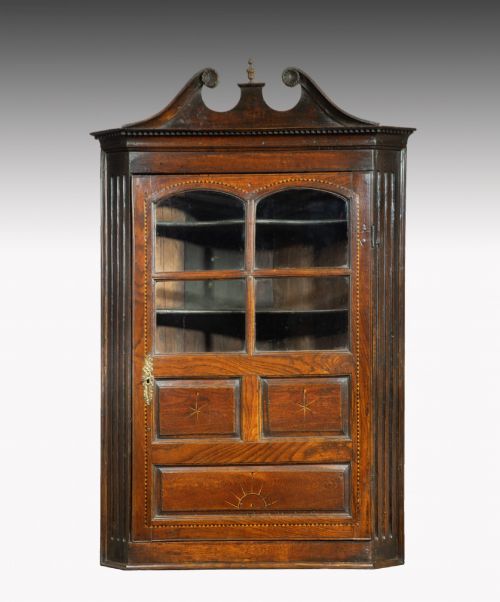
- The decorative crown situated above the main body of a cabinet. Examples on these cupboards occasionally feature broken arch designs.
- Marquetry
- Decorative woodwork where pieces of veneer are applied to a structure to form intricate patterns. This technique frequently employs satinwood on mahogany grounds.
- Campaign style
- Furniture constructed for portability, typically featuring recessed brass handles and corner brackets. Pieces in this category reflect military utility adapted for domestic spaces.
- Corner cupboard
- A cabinet designed specifically to fit into the junction of two walls. They occur as wall-hanging versions or tall floor-standing units.
Antique Wood Corner Unit: Frequently Asked Questions
How do I hang a wall corner cupboard?
Wall-hanging corner cupboards require secure fixings into solid masonry or substantial wall studs to support the weight of timber and stored contents.
Because these units concentrate weight at the rear angle, professional installation ensures the cabinet remains level and stable against both adjoining walls.
How can I tell Georgian from Victorian pieces?
Georgian units typically display restrained architectural proportions, solid timber construction and classical pediments.
Victorian pieces often introduce more exuberant decorative elements, including burr walnut veneers, elaborate marquetry, and turned supports like barley twists.
Where should I place a corner unit?
These units occupy dead space in room angles, freeing up flat wall space for larger seating or tables.
They work effectively in dining rooms for tableware or in living areas for display collections.