






Curved Cabriole Leg Table
These curved cabriole leg table examples bring fluid continental movement into a room, offering practical surfaces shaped with distinct sweeping lines.
Curved Cabriole Leg Table
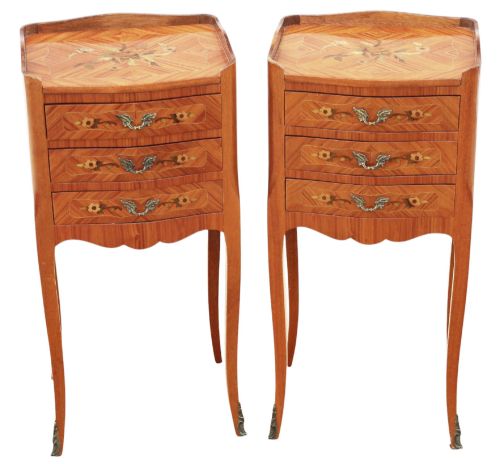
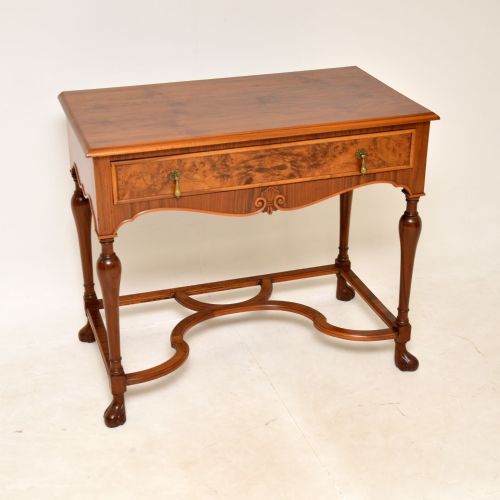
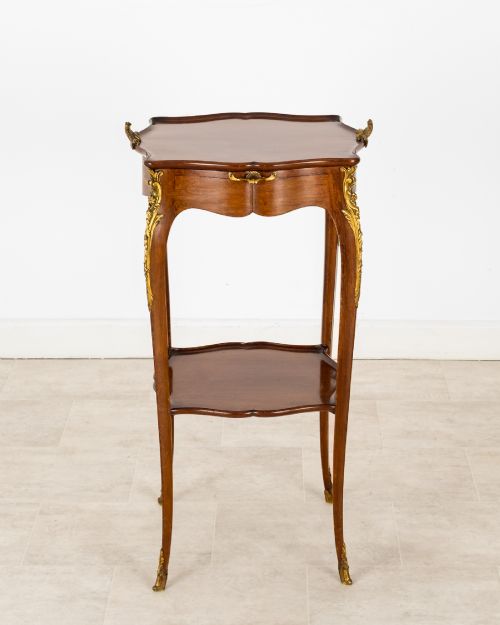
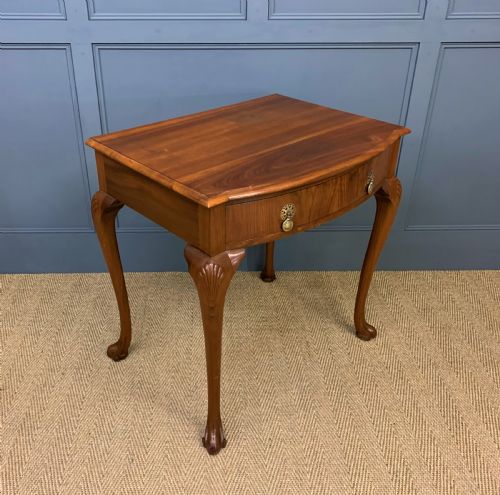
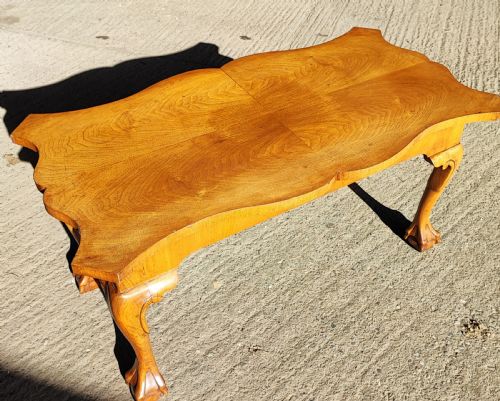
A curved cabriole leg table combines distinct S-shaped supports with surfaces ranging from console tables and side tables to desks and bedside tables. These forms draw heavily on revival aesthetics, notably Louis XV and Queen Anne traditions, creating an organic silhouette that stands apart from straight-legged furniture.
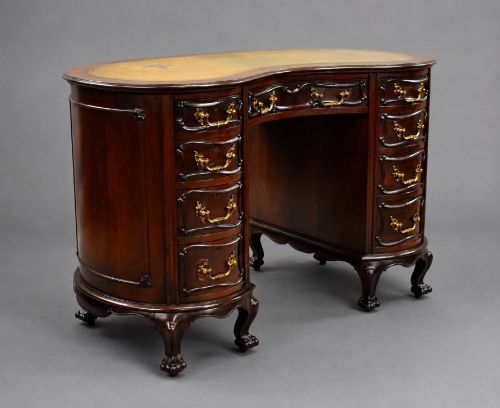
Buyers on this page most frequently encounter pieces fashioned from walnut, burr walnut, and mahogany, often shaped into kidney, serpentine, or demi-lune formats. Origins span the nineteenth century through the early twentieth century, including Victorian and Edwardian interpretations alongside French revival work.
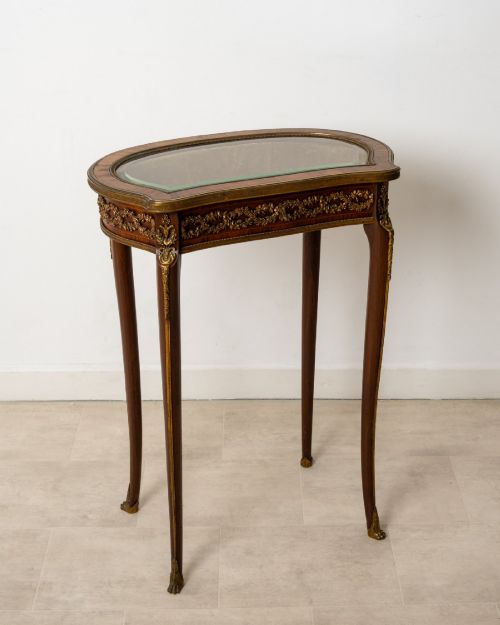
The assortment includes specialised items such as glazed display tables, library tables, and occasional lamp tables, each utilising the characteristic sweeping leg. This structural continuity unites diverse forms from console tables to writing desks under a single decorative language.
Distinctions in construction and finish
The standard of a curved cabriole leg table rests on the precision of its joinery and the fluidity of the leg carving. Superior examples exhibit seamless transitions where the leg meets the frieze, alongside deeply figured timber veneers that have been carefully matched across the surface.
Decorative elements such as cast ormolu mounts and marquetry inlay demonstrate the hand of the maker, with finer pieces showing crisp casting details and meticulous hand-cut veneers. The integrity of the underlying timber framework dictates how well the piece maintains its structural balance over decades of use.
Curved Cabriole Leg Table Retail Price Guide 2026
Typical asking prices for curved cabriole leg table among the pieces listed under this phrase on Sellingantiques today, from the lower quarter to the upper quarter. They describe what is for sale here now, not the wider market.
Some tables hide their drawers so cleverly within the sweeping apron that guests might search the entire room for a pen.
François Linke
The Curved Cabriole Leg Table Glossary
- Cabriole leg
- A furniture support that curves out and then in, resembling the leg of an animal. This form derives from classical antiquity and became central to seventeenth and eighteenth-century furniture design.
- Demi-lune
- A half-moon shape applied to tables designed to sit flush against a wall. Such formats maximise floor space while providing a decorative surface.
- Kidney shaped
- A curved, asymmetrical desk or table top resembling the bean-like organ. This outline allows the user to sit closer to the central writing or display area.
- Ormolu
- Gilded bronze ornamentation mounted onto wooden furniture. The technique involves applying a gold amalgam to cast bronze before heating.
- Serpentine
- A furniture front or edge that curves outward at the centre and inward at the ends. This undulating contour requires skilled timber shaping.
Curved Cabriole Leg Table: Frequently Asked Questions
What is a curved cabriole leg table used for?
These tables serve multiple functions depending on their specific form, operating as writing desks, display surfaces, bedside storage, or hallway console tables. Their decorative profiles allow them to anchor a room while providing functional surface space.
In living areas or libraries, smaller variants hold lamps or display collected objects, while larger kidney-shaped versions function as writing desks. Their finished backs often allow them to stand away from walls rather than remaining confined to the perimeter.
How do I identify the period of a table?
Dating relies on examining secondary timbers, construction methods, and stylistic revival cues rather than relying solely on the primary wood. Victorian and Edwardian pieces often blend earlier French or English revival motifs with period-specific hardware.
Looking beneath the top and inside drawer constructions reveals how joints were cut and assembled. Examining the wear patterns on the feet and legs also helps establish the age of the piece.
How do I care for burr walnut veneer?
Burr walnut surfaces require protection from direct sunlight and excessive humidity to prevent the delicate veneer from drying or cracking. Regular dusting with a soft, dry cloth maintains the finish without introducing moisture.
Avoid placing these tables near active heat sources or air conditioning vents. Periodic application of suitable wax nourishment keeps the timber grain deep and protected.
Where should I place a console table?
Console tables find their natural home against entrance hallway walls, living room perimeters, or positioned behind freestanding seating arrangements. Their shallow depth makes them suitable for spaces where full-sized furniture would obstruct movement.
Parks of these tables with a mirror or a piece of wall art above creates a balanced focal point in a room. Because many examples feature finished backs, they can also divide open-plan spaces effectively.