


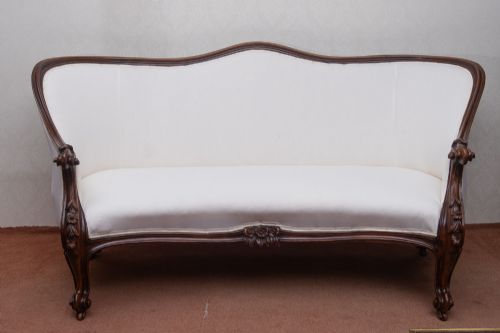
Curved Back Couch
These curved back couch designs offer deep, enveloping seating, bringing historic comfort and grand proportions to a room.
Curved Back Couch
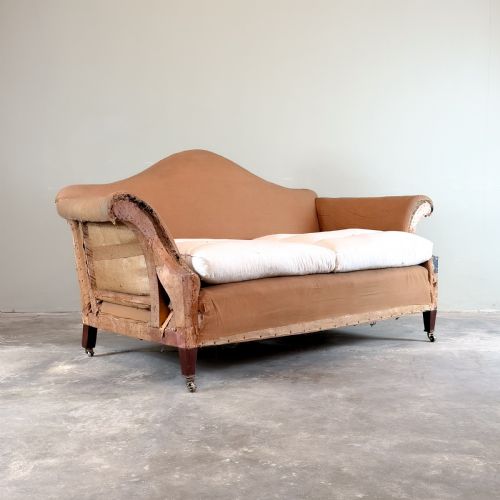
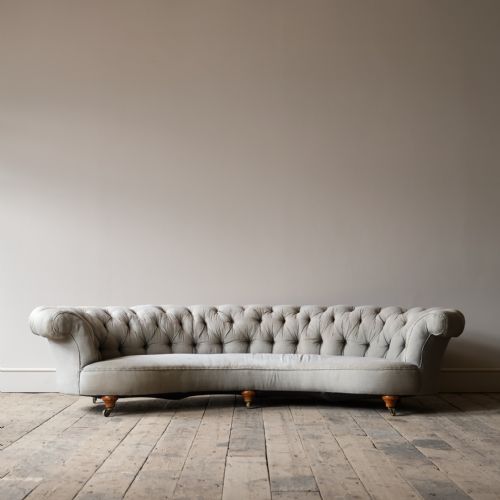
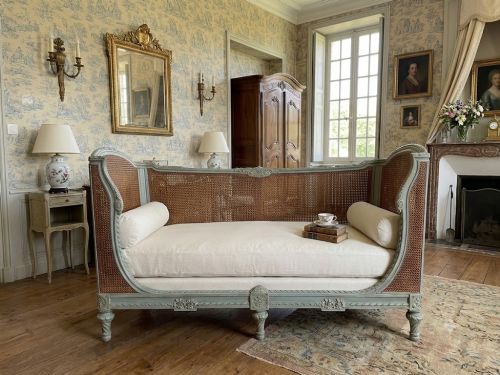
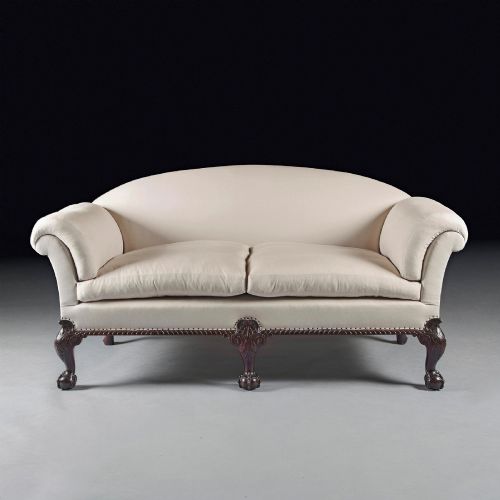
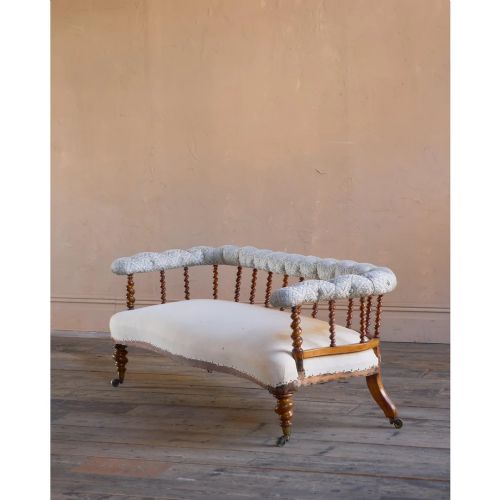
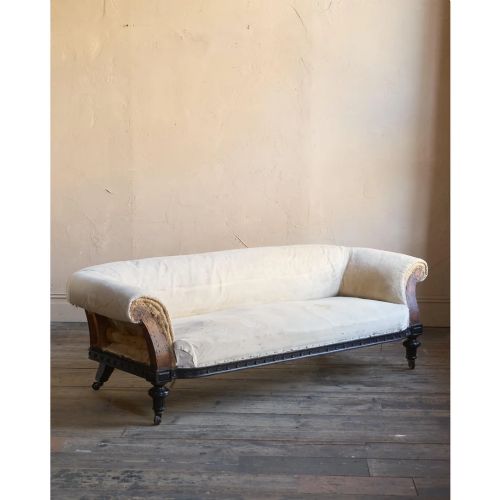
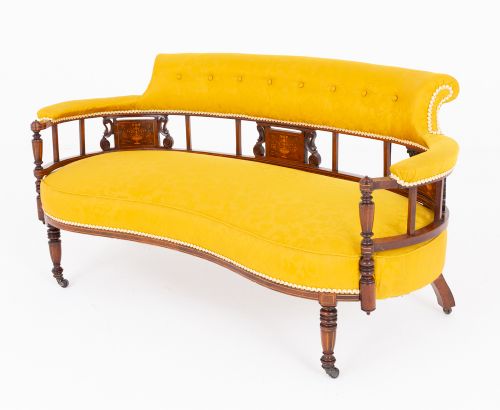
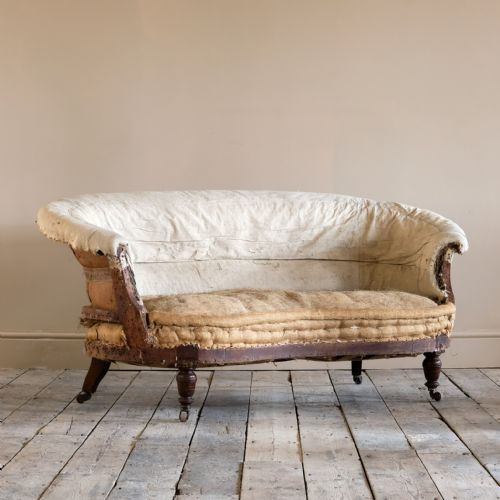
A curved back couch groups together generous seating forms like settees, daybeds, and chesterfields, drawing on Victorian, Edwardian, and Art Deco design. You encounter pieces ranging from spindle back salon sofas to kidney shaped chaises longues and painted French day beds.
The materials span mahogany, rosewood, and hardwood frames upholstered in leather, velvet, cotton, and fabric. These seating pieces emerge from the nineteenth and early twentieth centuries, reflecting diverse revivals from Louis XVI style to Aesthetic movement tastes.
How they were made
Timbers such as mahogany, rosewood, and hardwood form the structural carcasses, frequently shaped with turned legs, brass details, or intricate inlay work. Upholsterers then applied deep buttoning, cotton stuffing, and cane panels to build the curved profiles.
Coverings range from supple leather and rich velvet to cotton and painted finishes, often secured with traditional tacking methods. Frames display period joinery techniques appropriate to Victorian, Edwardian, and Art Deco workshops.
Some nineteenth century makers even shaped their sofas like kidneys, just so people could lounge with maximum architectural flair.
What varies in quality
The refinement of the timber carving and the integrity of the underlying hardwood frame set superior examples apart from standard production. Cabinetmakers who invested time in balanced proportions and precise joinery produced enduring forms.
The execution of the upholstery work, from buttoning depth to the choice of leather, velvet, or fabric, determines the visual weight and comfort of the piece. Maker attribution, such as pieces associated with Howard and Sons or C. Hindley and Sons, influences distinction.
Howard and Sons·C. Hindley and Sons·Hampton and Sons·Harry and Lou Epstein
The Curved Back Couch Glossary
- Chesterfield
- A deep buttoned sofa traditionally upholstered in leather or heavy fabric, known for its uniform back and arm height.
- Canapé
- A French term for an upholstered settee or sofa, frequently seen in Louis XVI and nineteenth century revival styles.
- Daybed
- A long seating item designed for reclining, combining elements of a chair and a bed with a raised end or back.
- Spindle back
- A chair or sofa back constructed from a series of slender, turned wooden rods.
- Kidney shape
- A curved, asymmetrical furniture form resembling a kidney bean, often utilised for salon sofas and chaises longues.
Curved Back Couch: Frequently Asked Questions
What is a curved back couch?
A curved back couch is a seating piece featuring a rounded or sweeping backrest, encompassing forms like chesterfields, settees, and daybeds from the nineteenth and early twentieth centuries.
These pieces utilise frames of mahogany, rosewood, or hardwood, paired with upholstery in leather, velvet, cotton, or fabric.
How do I identify Victorian examples?
Victorian pieces often display dark hardwoods like mahogany or rosewood, deep buttoning, and robust proportions associated with mid to late nineteenth century craftsmanship.
Details such as ball and claw feet or spindle backs help distinguish these traditional forms from later Edwardian or Art Deco designs.
Where were these couches used?
These seating items historically furnished grand parlours, drawing rooms, and salons, serving as both formal seating and places for daytime reclining.
Smaller kidney shaped or painted versions suited intimate boudoirs and dressing rooms during the Edwardian period.
How do I care for leather upholstery?
Leather upholstery requires regular dusting and conditioning to maintain the suppleness of the hide over decades of use.
Keeping the material away from direct sunlight and heat sources preserves the rich tone and texture of antique leather.