

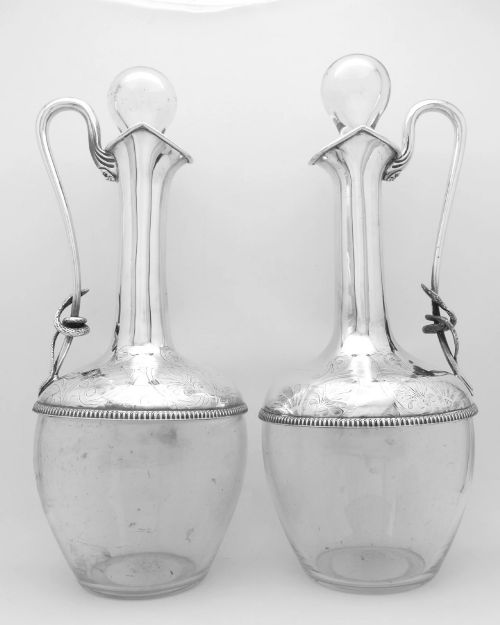


Crystal Wine Pitcher
These crystal wine pitcher examples span the Victorian, Edwardian, and Art Deco periods, offering heavy cut glass and silver mounts for serving wine.
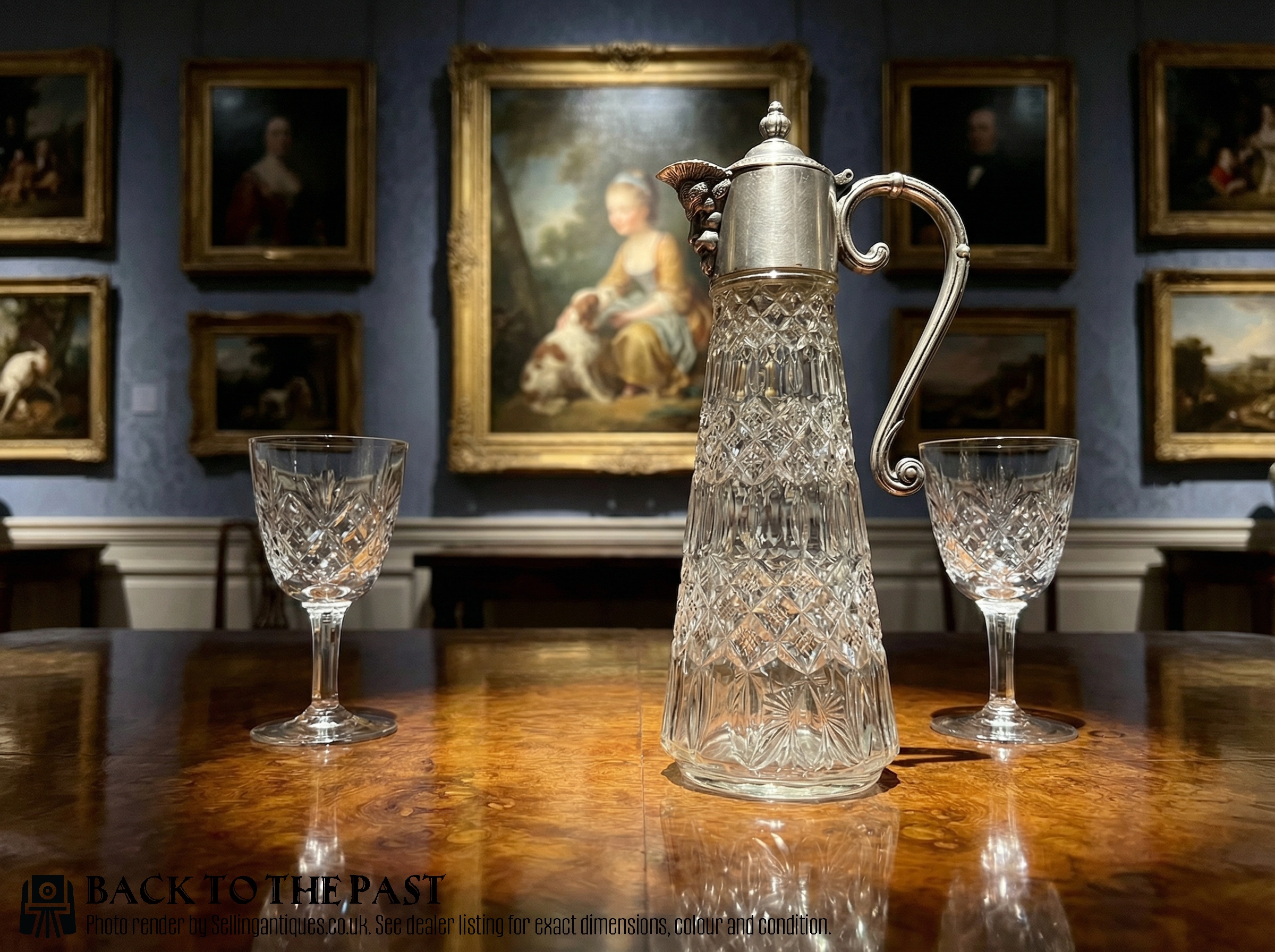
Crystal Wine Pitcher
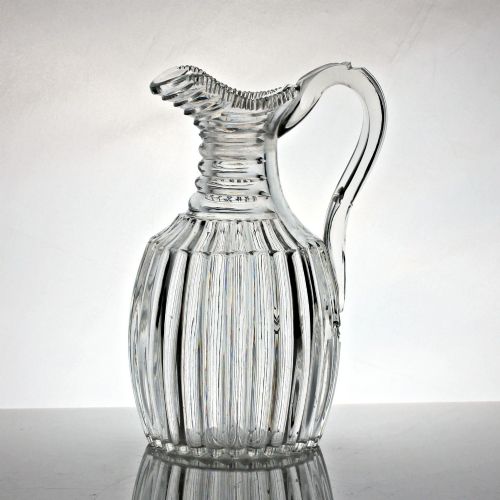
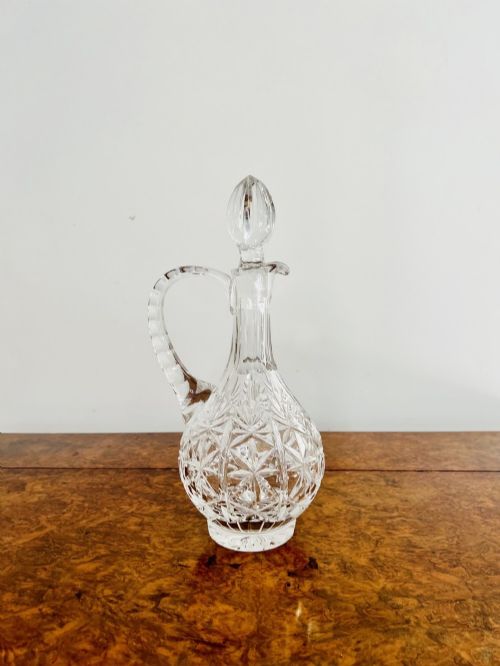
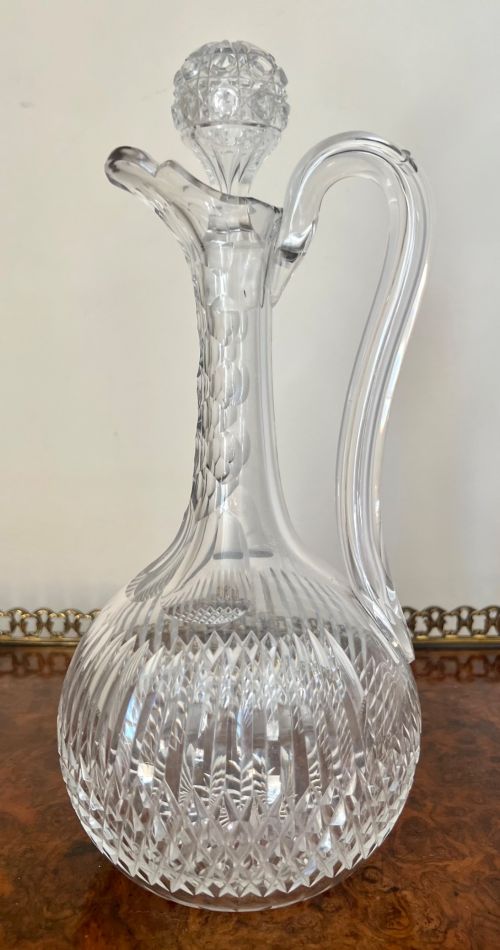
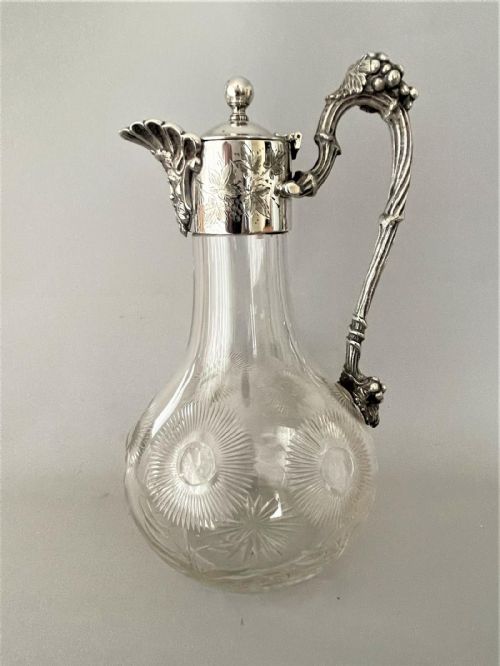
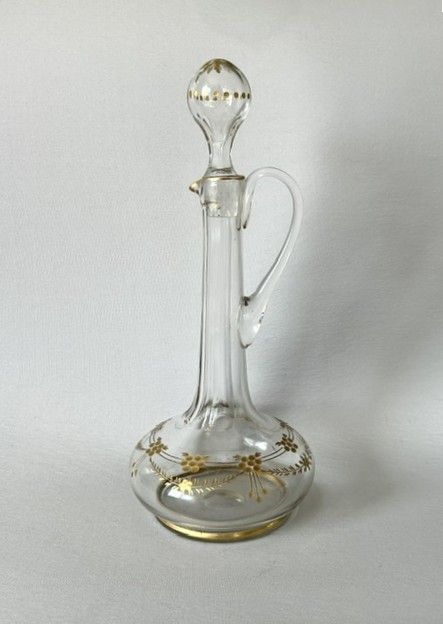
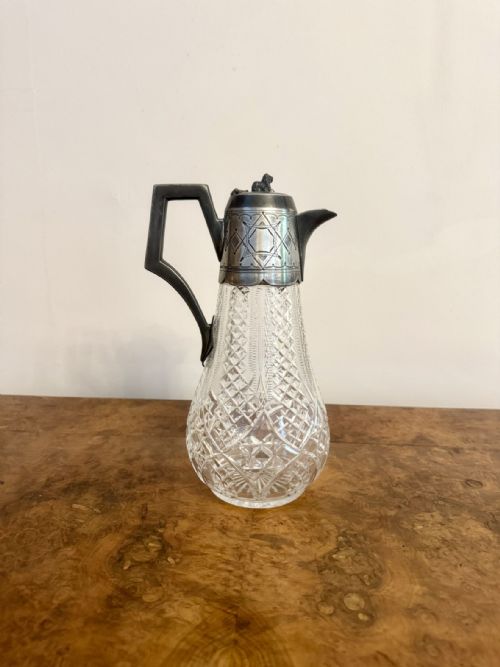
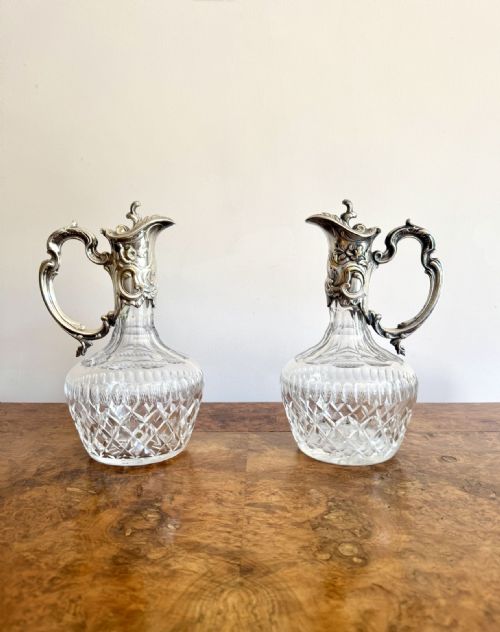
A crystal wine pitcher serves as a vessel for pouring wine at the table, taking the form of claret jugs, ewers, and decanters across the Victorian, Edwardian, and Art Deco eras. Buyers searching this phrase meet pieces ranging from heavy cut glass vessels with silver-plated mounts to slender crystal jugs decorated with enamel or engraving.
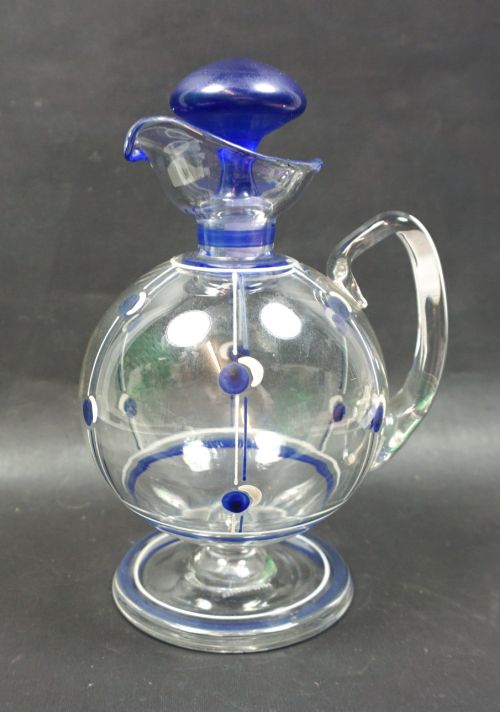
The material combinations alter the silhouette significantly, moving from robust 19th Century pillar-cut water jugs to delicate Bohemian gilded vessels and Czechoslovakian blue enamel designs. English and continental workshops produced these items for formal dining, linking servingware directly to late Victorian and Edwardian hospitality.
Most entries on this page originate from the Victorian and Edwardian periods, appearing alongside mid-century silver-topped examples and earlier 19th Century interpretations. Collectors encounter both single vessels and matched pairs intended for functional service or display.
Materials and technique
Makers shaped these bodies from clear glass, crystal, and coloured glass, applying deep pillar, prism, and intaglio cuts to catch the light. Intricate surface decoration involved blue enamel, white latticinio twists, and engraved motifs depicting fruiting vines.
Metal mounts in solid silver, sterling silver, and silver plate form the hinged lids, handles, and collars of these vessels. Artisans secured these mounts around the glass necks, incorporating structural elements like Bacchus masks and serpent handles into the design.
Materials appearing across these entries include clear crystal, coloured glass, solid silver, and silver plate.
Craftsmanship and weight
Superior examples display precise, deep cutting across the crystal body that creates sharp light refraction, paired with substantial silver or silver-plated mounts. Inferior items feature lighter glass bodies with shallow pressing and thin, worn plating on the metal covers.
The integration between the glass vessel and the metal mount determines structural success, requiring a secure collar and a tightly fitting hinged lid. Artistry in secondary details, such as hand-engraved grape motifs or modelled serpent handles, elevates the piece above standard production.
Asprey and Co. Ltd·Webb Corbett·Baccarat
The Crystal Wine Pitcher Glossary
- Claret Jug
- A specialised pouring vessel designed specifically for serving red wine, typically featuring a handle and a hinged metal cover.
- Ewer
- A large pitcher with a wide spout and a bulbous body, often used interchangeably with jugs in period serving sets.
- Latticinio
- A glassblowing technique involving opaque white or coloured glass threads twisted within clear crystal.
- Intaglio
- A design carved into the surface of the glass so that the impression sits below the flat plane.
- Pillar and Prism Cut
- Heavy linear facet cutting applied to 19th Century glass to refract light through thick walls.
Crystal Wine Pitcher: Frequently Asked Questions
What is a crystal wine pitcher used for?
These vessels were originally manufactured to hold and serve wine at the dining table, particularly claret and dessert wines during the Victorian and Edwardian periods.
Today, buyers utilise them both as functional serving pieces for dinner parties and as decorative items for cabinet display.
How do I clean an antique decanter?
Cleaning requires warm water and mild detergent, avoiding harsh abrasives that might scratch the old crystal or damage the delicate silver plate.
Submersion should be avoided if the silver mount is glued or sealed to the glass to prevent moisture penetration.
Are these pitchers made of solid silver?
The main body of the vessel consists of glass or crystal, while the mounts, handles, and hinged lids use solid silver, sterling silver, or silver plate.
Hallmarks on the metal parts often indicate the specific silver standard and the year of manufacture.
How can I tell Victorian from Edwardian pieces?
Victorian examples often feature heavier cut glass patterns, elaborate engraving, and robust silver-plated mounts with naturalistic motifs like grapes and vines.
Edwardian and later pieces frequently display lighter, more restrained cutting styles alongside simpler geometric mounts or specific modernist influences.