





Crystal Regulator Clock
A crystal regulator clock brings light and mechanical precision together, housed in bevelled glass and polished brass for the mantelpiece.
Crystal Regulator Clock
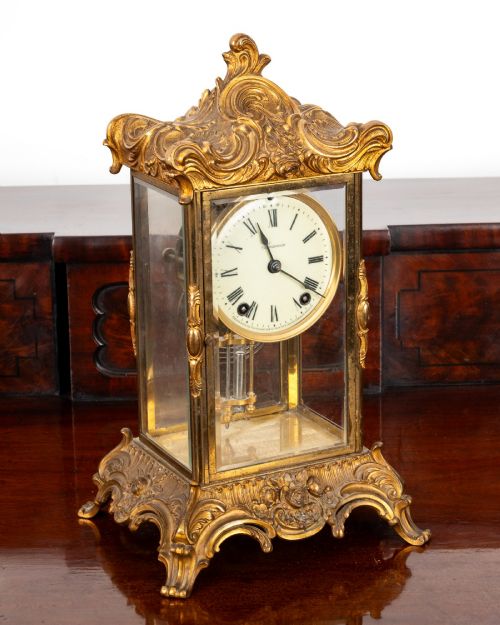
When you search for a crystal regulator clock, you find heavy mantel timepieces enclosed in bevelled glass panes that display the swinging pendulum and moving gear train from every side. The pieces seen here date from the Victorian era up to the mid-twentieth century, with the majority originating from French workshops during the late nineteenth century.
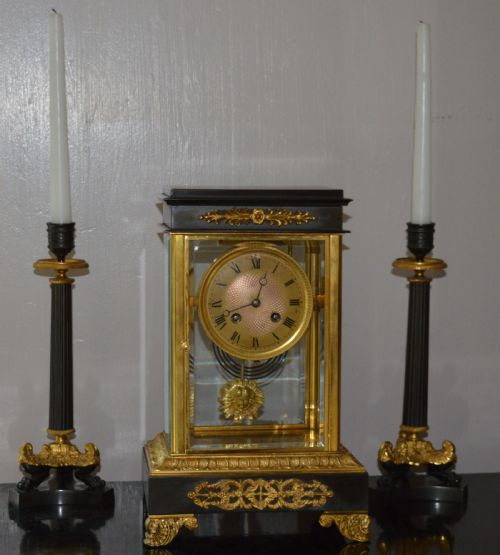
You meet mantel clocks and four glass clock sets in various structural outlines, including oval, bow fronted, and rectangular glass cases. These decorative items sit upon the mantelpiece to record the hours while offering a clear view of the inner mechanics through transparent panels.
Materials and construction
The housing combines brass, gilt brass, gilt bronze, ormolu, and heavy bevelled glass to create a transparent vitrine for the movement. Metal mounts and frames support the glass panels, while decorative elements incorporate enamel, painting, paste stones, onyx, and specimen marble.
French makers housed complex mechanical movements behind these glass panes, often pairing the clock with matching side pieces in clock sets. Dials typically feature enamel construction with painted numerals, visible through the front glass door.
Crystal Regulator Clock Retail Price Guide 2026
Typical asking prices for crystal regulator clock among the pieces listed under this phrase on Sellingantiques today, from the lower quarter to the upper quarter. They describe what is for sale here now, not the wider market.
Listings feature items from the Victorian period through to nineteen sixty, utilising brass, glass, enamel, and marble.
Distinctions in quality
Quality rests upon the execution of the cast metal mounts, the clarity and thickness of the bevelled glass, and the sophistication of the clockmaker's movement. Finer examples display crisp ormolu or gilt bronze ornamentation, intricate enamel dial painting, and signed movements from known makers.
The presence of matching side ornaments, specialised dial panels in green, pink, or blue enamel, and substantial stone bases in onyx elevate a piece above standard domestic timepieces.
Samuel Marti et Cie·L Epee France·Henry Marc Paris·Tiffany & Co
The Crystal Regulator Clock Glossary
- Crystal regulator clock
- A mantel clock housed in a glass case with bevelled panes that expose the movement and pendulum to view.
- Ormolu
- Gilded bronze produced by applying a mercury and gold amalgam to cast bronze, common in French clock cases.
- Bevelled glass
- Glass with an angled edge cut around the perimeter, fitted into the metal frame of the clock case.
- Enamel
- A glassy substance fused to metal dials or panels through firing, used for the clock face and decorative colourful sections.
Crystal Regulator Clock: Frequently Asked Questions
Where should I place a crystal regulator clock?
Place the clock on a sturdy mantelpiece or shelf away from direct sunlight and drafts. A stable surface ensures the pendulum swings evenly and keeps accurate time.
Because these clocks have glass panels on multiple sides, positioning them where light can pass through enhances the visibility of the internal movement.
How do I wind a crystal regulator clock?
Use the appropriate winding key on the dial arbors to tension the springs gently. Turn the key smoothly until you feel resistance, avoiding over-winding.
Consult the specific movement layout to determine whether the clock strikes the hours and requires a separate winding for the striking train.
Why do some clocks include side pieces?
Clock sets were produced with matching garnitures, such as urns or candelabra, to create a balanced decorative arrangement on a mantelpiece.
These matching elements utilise the same materials, such as ormolu, onyx, or gilt bronze, to unify the decorative scheme of the room.
How do I identify French pieces?
French pieces often bear maker stamps on the backplate of the movement, such as marks from Samuel Marti or L Epee. The distinct styling follows periods like the Belle Epoque and Louis XVI revival.
Additionally, the use of mercury gilding, specific enamel dial signatures, and precise brass framing point directly to nineteenth-century French workshops.