
Ansonia Clock Company
When you want ansonia clock company, you are looking at substantial nineteenth-century timepieces that bring mechanical character and architectural brasswork to a mantelpiece.
What ansonia clock company pieces are
When you search for ansonia clock company, you encounter nineteenth-century American timepieces designed for the mantel. These items capture the mechanical and decorative ambitions of New York clockmaking during the Victorian era.
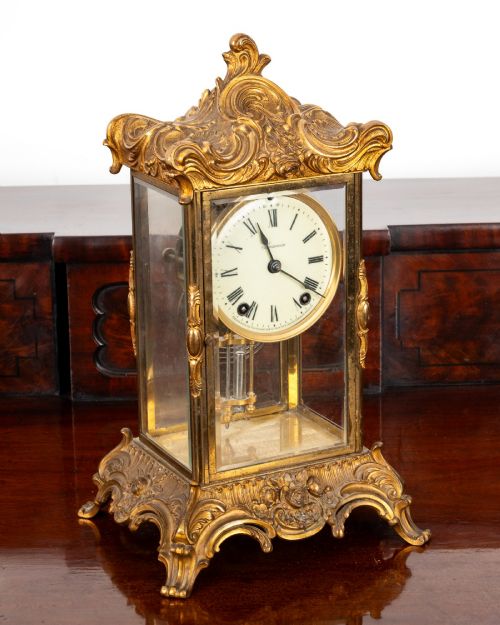
The most common form you meet on this page is the mantel clock, frequently executed in the elaborate Rococo Revival style with architectural or sculptural presence. These pieces function as both reliable timekeepers and heavy decorative focal points for a room.
Originating from the nineteenth century, these objects combine robust brass movements with decorative outer cases in gilt bronze and glass. Their design reflects the period taste for ornate domestic machinery.
How they were made
Makers constructed these clocks using heavy brass for the internal mechanical movements and durable gilt bronze for the structural exterior cases. Bevelled glass panels were integrated into the design to enclose the movement and protect the dial.
Enamel was utilised for the clock faces, providing a smooth, legible surface for the painted numbers. The Rococo Revival aesthetic guided the cast bronze ornamentation, featuring scrollwork and decorative motifs characteristic of the nineteenth century.
Listings for ansonia clock company span the 19th Century, featuring mantel clocks built from gilt bronze, brass, bevelled glass, and enamel.
What varies in quality
The standard of an ansonia clock company piece is determined by the crispness of the gilt bronze casting and the complexity of the Rococo Revival ornamentation. Finer examples display deep, clean relief work and well-finished bevelled glass without distortion.
Mechanical integrity and the preservation of the original enamel dial also separate higher quality specimens from simpler productions. The weight and thickness of the brass components dictate the longevity and substantial feel of the clock.
The Ansonia Clock Company
The Ansonia Clock Company Glossary
- Mantel clock
- A portable clock designed to sit on a fireplace mantel or shelf. These pieces were standard domestic furnishings in nineteenth-century parlours.
- Gilt bronze
- Metal coated with a thin layer of gold for decoration and protection against tarnish. This material gave nineteenth-century clock cases their bright metallic finish.
- Bevelled glass
- Glass with its edges cut at an angle to create a framed, prismatic effect. It is typically found encasing the movements of crystal regulator clocks.
- Rococo Revival
- A nineteenth-century design style drawing on eighteenth-century French motifs such as scrolls, asymmetry, and floral curves. It dominates the ornamentation of these clock cases.
- Enamel
- A glassy substance fused to metal under high heat to create a hard, glossy surface. Clock dials used enamel for a durable, clean white background.
Frequently Asked Questions
What is an ansonia clock company piece?
It is a nineteenth-century mechanical timepiece originating from New York, typically housed in a gilt bronze case with bevelled glass panels.
These clocks served as both functional instruments and decorative centerpieces in Victorian homes.
How do I date an ansonia clock company clock?
Dating relies on stylistic markers such as Rococo Revival design details, the use of gilt bronze, and nineteenth-century manufacturing methods.
Examining the materials, including enamel dials and bevelled glass, helps place the object within the Victorian period.
Where were they placed?
They were designed primarily for mantelpieces, sideboards, and prominent shelves in principal rooms of the house.
Their substantial weight and decorative presence made them natural focal points for interior displays.