





Gilt Crystal Regulator
A gilt crystal regulator combines heavy brass or ormolu framing with transparent bevelled panels, offering a clear view of the precision movement within.
Gilt Crystal Regulator
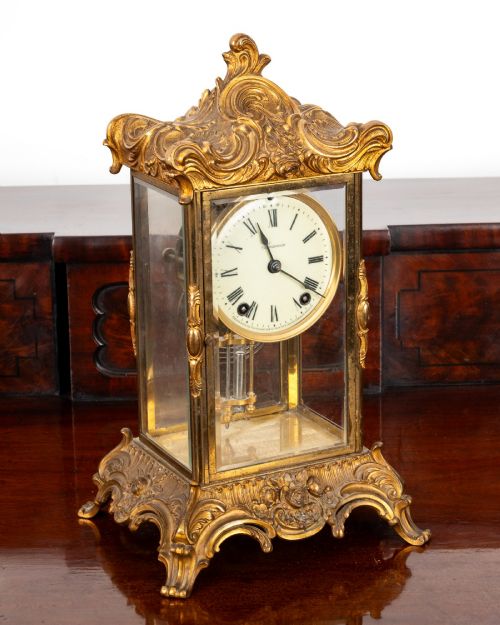
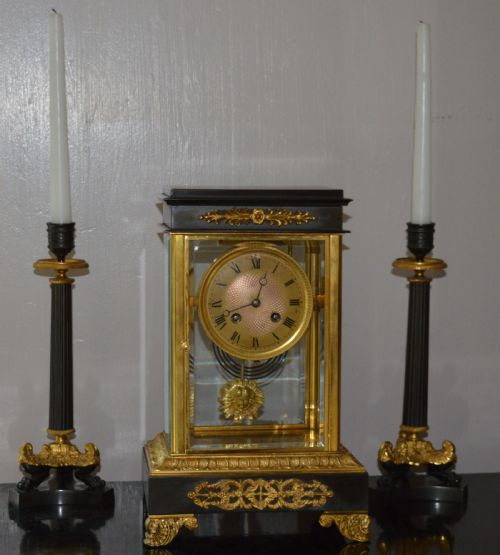
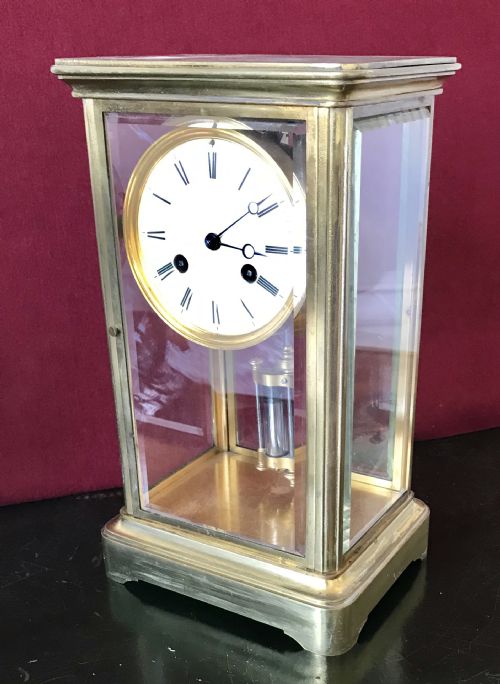
A gilt crystal regulator is a substantial mantel clock enclosed within bevelled glass panels, designed to display the movement from multiple angles. When you search for a gilt crystal regulator, you encounter tall architectural cases built in France and America during the late nineteenth century and the early twentieth century.
The most common examples on this page are French carriage-style mantel clocks featuring four glass walls and polished brass frames. These pieces date across the Victorian era and the Belle Epoque, spanning styles from Louis XVI revival to French Second Empire and Rococo Revival.
Most specimens incorporate decorative elements such as hand-painted enamel dials or coloured glass panels set into the metal housing. Forms range from standard rectangular shapes to curved oval and bow-fronted designs that showcase the pendulum mechanism.
Construction and materials
Makers constructed these clocks using heavy cast brass, gilt bronze, or ormolu to form the structural skeleton, often applying fire-gilding or electroplating for a bright metallic finish. Thick plate glass was precisely bevelled at the edges to fit snugly into the metal channels without adhesives.
Dials and internal decorative panels rely on vitreous enamel fired onto copper bases, frequently decorated with hand-painted floral motifs or Arabic numerals. Some models integrate paste stones or contrasting green, pink, and blue enamel inserts to accent the gilded brass housing.
Gilt Crystal Regulator Retail Price Guide 2026
Typical asking prices for gilt crystal regulator among the pieces listed under this phrase on Sellingantiques today, from the lower quarter to the upper quarter. They describe what is for sale here now, not the wider market.
The inventory records French and American production, encompassing styles from Rococo Revival to Belle Epoque and Louis XVI.
Determinants of quality
Quality rests primarily in the casting work of the gilt bronze or brass frame, where sharper chased details and heavier metal gauge distinguish superior examples. Finer housings feature thicker bevelled glass with clean, deep mitres that sit flush within the metal rebates.
The sophistication of the internal movement and the artistry of the enamilled dial further separate standard production from exceptional pieces. Clocks bearing the stamps of established makers display superior finishing on the brass plates and more refined hand-painting on the enamel panels.
Samuel Marti·Ansonia New York
The Gilt Crystal Regulator Glossary
- Crystal regulator
- A mantel clock housed in a glazed case with glass panels on four sides, allowing the movement and pendulum to be viewed from all angles.
- Ormolu
- Gilded bronze produced by applying a mercury and gold amalgam to a bronze base and heating it to drive off the mercury.
- Bevelled glass
- Plate glass featuring an angled edge cut and polished to a specific width, catching the light and fitting into a metal frame.
- Vitreous enamel
- Glass powder fused to a metal substrate at high temperatures, creating a smooth, glossy surface used for clock dials and decorative panels.
Gilt Crystal Regulator: Frequently Asked Questions
What is a crystal regulator clock?
A crystal regulator is a mantel clock featuring transparent glass panels on all four sides and the top, held together by a metal frame. This design places the mechanical movement and swinging pendulum on full visual display.
Most examples date from the nineteenth century and the Edwardian period, originating primarily in French workshops. They served as prestigious timepieces for parlour mantels and drawing rooms.
Where were crystal regulators made?
The majority of crystal regulator clocks originate from French manufacturing centres such as Paris, produced during the Victorian and Belle Epoque eras. Makers in these workshops supplied both domestic markets and international buyers.
American firms such as Ansonia also produced similar regulator clocks in New York, adapting the French aesthetic for local tastes. These American versions often feature distinct movement designs housed in comparable glass cases.
How do I date a crystal regulator?
Dating relies on examining the style of the gilt brass case, the typography on the enamel dial, and any maker stamps on the brass movement backplate. Pieces from the 1870s and 1880s often display heavier Rococo or Second Empire ornamentation.
Later examples from the 1900s and 1910s tend to reflect cleaner Louis XVI revival lines or simpler architectural forms. Archival records and maker signatures help narrow the decade of production.