



Crystal Lustre Candlesticks
Crystal lustre candlesticks catch every flicker of the room, bringing together cut glass and glowing metal to illuminate a mantelpiece.
Crystal Lustre Candlesticks
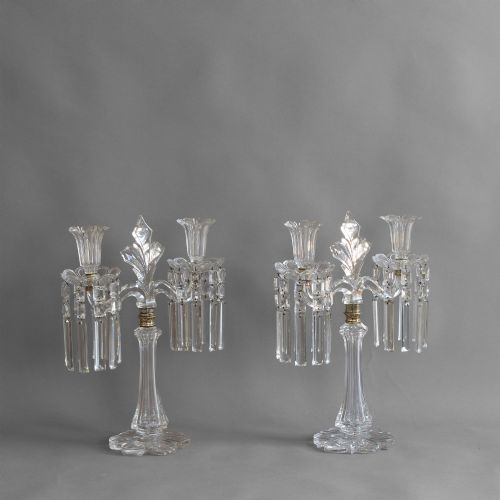
Crystal lustre candlesticks are decorative lighting pieces designed to hold candles while hanging glass pendants refract the flame. When searching for crystal lustre candlesticks, buyers encounter varied forms spanning the eighteenth century through the Victorian era and into the early twentieth century.
The inventory demonstrates pieces ranging from simple single-stem candlesticks to elaborate mantel lustres hung with glass drops. Many examples originate from Victorian and Regency periods, often appearing in pairs alongside French Empire and Rococo Revival variants.
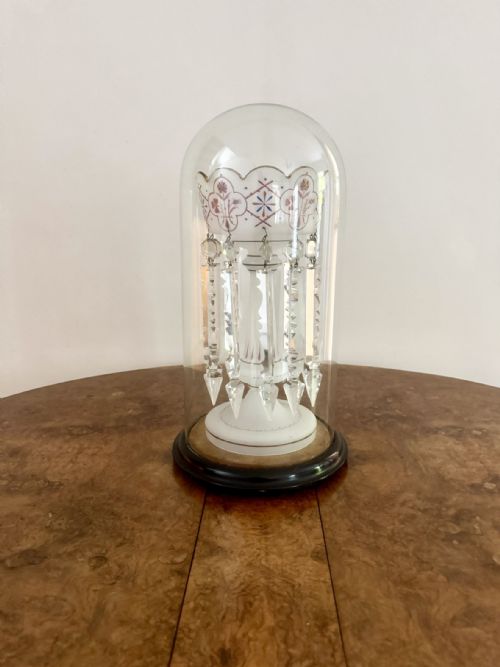
Mantle lustres and candelabras dominate the selection, frequently paired with glass domes or fitted with storm shades. These items serve primarily as decorative table centrepieces rather than utilitarian sources of illumination.
How they were made
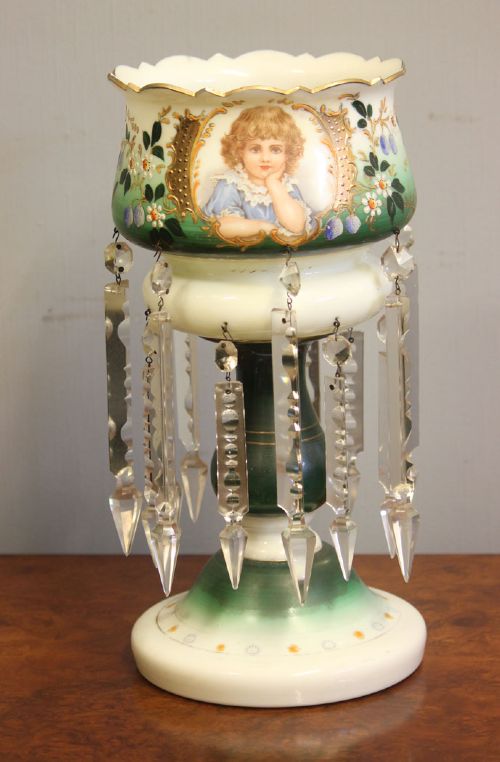
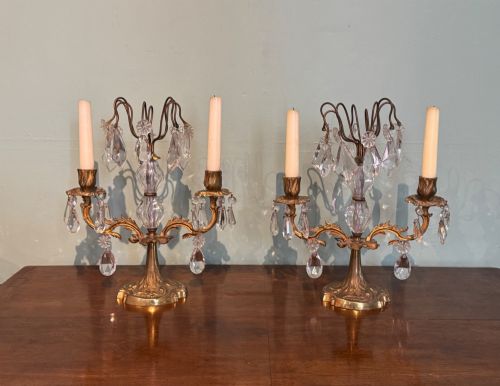
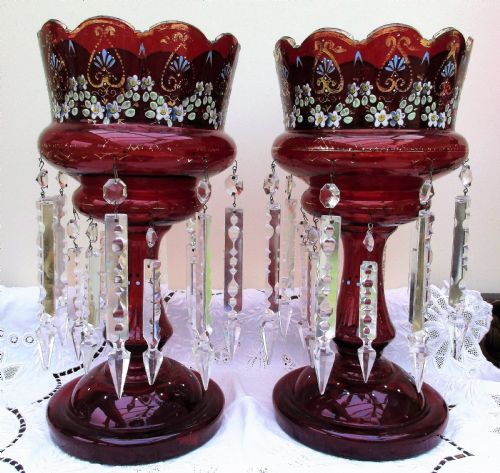
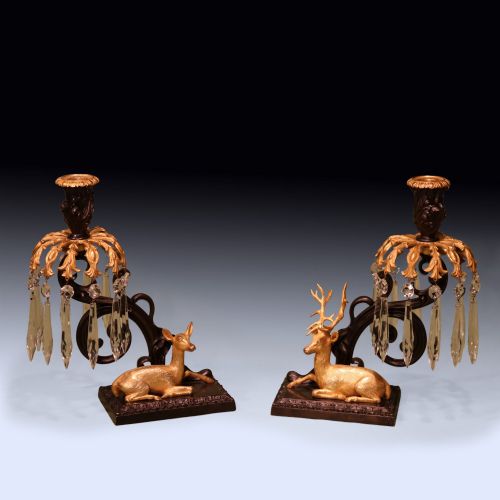
Makers shaped these pieces using combinations of cut crystal, ruby glass, cranberry glass, and opaline glass alongside cast metals. Ormolu, gilt bronze, and brass provide structural weight and decorative mounts for the glass elements.
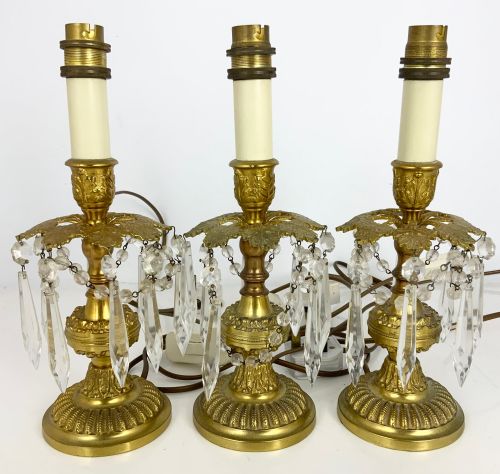
Hanging glass prisms, known as drops or spears, hang from brass or gilt metal rims to catch and multiply the candlelight. Hand-cutting techniques create facets on the glass bodies and hanging pendants to maximise light refraction.
What varies in quality
Quality rests upon the depth and crispness of the glass cutting, where sharper facets produce superior light play. The weight and proportion of the bronze, ormolu, or brass mounts distinguish finer examples from standard production.
The presence of matching original glass drops significantly elevates a piece, as replacements alter the unified appearance. Rich colour saturation in ruby, cranberry, or opaline glass indicates higher grade material selection.
Clarkes
The Crystal Lustre Candlesticks Glossary
- Lustre
- A decorative tabletop vessel or candlestick hung with cut glass pendants designed to reflect light. These pieces became immensely popular during the Georgian and Victorian periods.
- Ormolu
- Finely ground high-carat gold applied to a bronze base using a mercury amalgamation process. This technique gives metal mounts a rich, warm lustre that resists tarnishing.
- Cricklite
- A patented brand of table lamp and candelabra system utilising specialised glass shades and candle holders. Clarkes produced these notable Victorian lighting pieces.
- Opaline
- An opaque or translucent glass developed in France, varying in colour from soft white to vibrant hues. It provides a smooth, porcelain-like surface often painted or gilded.
- Drop
- A hanging glass pendant suspended from the rim of a lustre or candelabra. These cut prisms swing and catch the ambient light.
Crystal Lustre Candlesticks: Frequently Asked Questions
How do I clean crystal lustre candlesticks?
Remove the hanging glass drops individually and wash them in lukewarm soapy water using a soft cloth. Wipe the metal and glass body carefully without submerging glued or gilt components.
Dry every part thoroughly with a lint-free towel before reattaching the drops to prevent water spots on the glass facets.
Are these candlesticks safe to use with real candles?
Most antique lustres function perfectly well with standard taper candles, provided you place them away from draughts. Ensure the wax sits securely in the nozzle to prevent drips onto delicate glass or ormolu mounts.
Many collectors prefer LED candles to eliminate heat risk and potential wax damage to nineteenth-century glass.
How can I tell a Regency lustre from a Victorian one?
Regency pieces lean towards neoclassical bronze and ormolu mounts with clean architectural lines and refined cut crystal. Victorian examples often embrace bolder ruby, cranberry, and opaline glass with exuberant Rococo revival detailing.
Examining the metal casting and the depth of the glass cutting helps reveal the manufacturing period of the piece.
Why do some lustres have glass domes?
Glass domes protected delicate cut glass and gilt surfaces from household dust and coal smoke in nineteenth-century rooms. They were often sold alongside the lustres to keep the hanging drops pristine.
Keeping the dome in place preserves the original pairing and shields the fragile crystal pendants from accidental knocks.