




Crystal Liquor Decanters
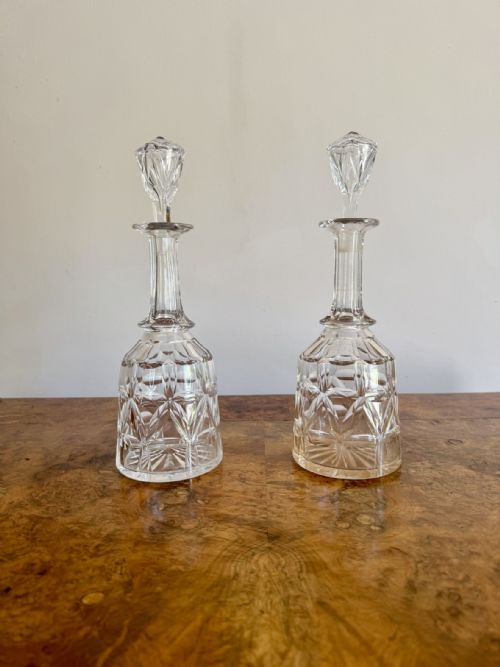
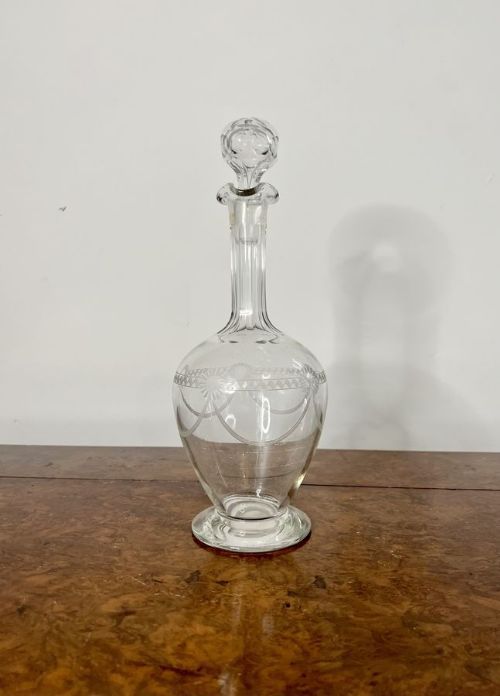
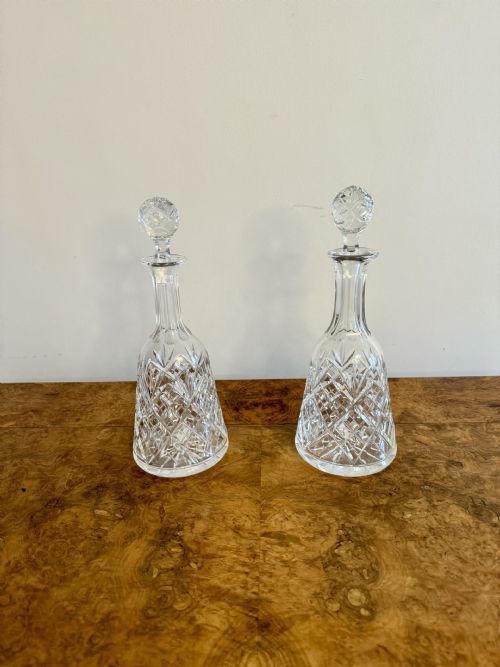
Crystal liquor decanters are heavy glass vessels designed to hold spirits, ranging from solo bell-shaped bottles to elaborate locking tantalus sets.
Crystal Liquor Decanters
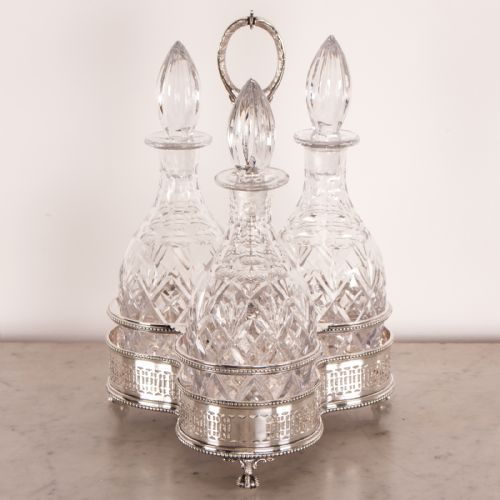
Crystal liquor decanters comprise individual bottles, matched sets, and locking tantalus housings designed to store and serve spirits. You will frequently find Victorian and Edwardian examples alongside Art Deco geometric sets from the early twentieth century.
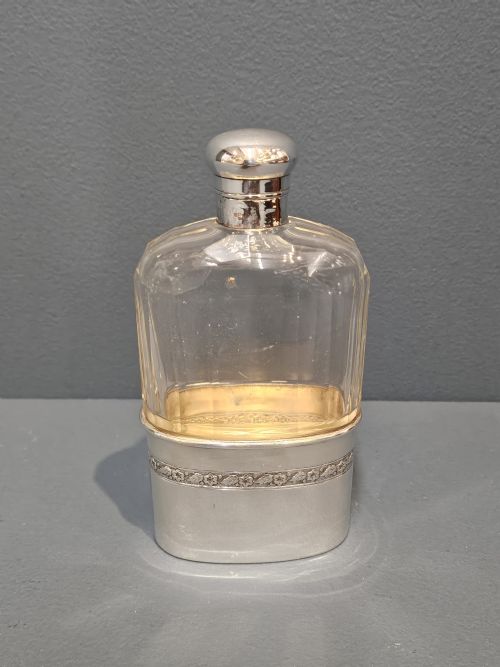
The forms span simple bell-shaped bottles, hip flasks, and barrel dispensers paired with tot pails. Many incorporate silver collars, stoppers, and fitted wooden boxes lined for portable service.
How they were made
Makers utilised lead crystal and cut glass, shaping vessels through blowing and deep wheel cutting to refract light through the heavy material. Silver plate, sterling silver, brass, and ormolu mounts provide structural collars, handles, and locking mechanisms.
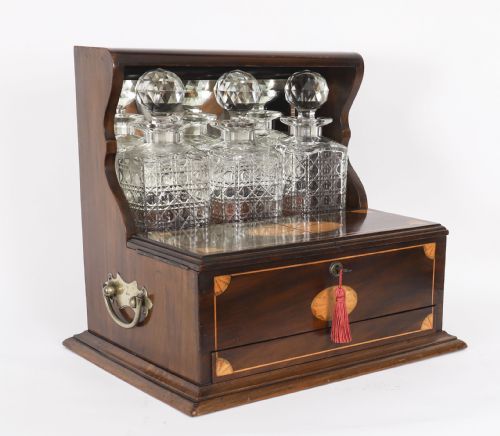
Wooden housings employ oak, walnut, coromandel, and inlaid mahogany, often fitted with internal games compendiums or dry bar compartments.
Some Victorian tantalus cabinets secretly doubled as games compendiums, hiding playing cards beneath the spirits.
What varies in quality
Quality rests upon the depth and crispness of the glass cutting, the clarity of the crystal, and the substance of the metal mounts. Heavier lead content yields a more resonant ring and sharper facets.
Cabinetwork distinguishes the finer boxes, seen in figured veneer selection, precise silver hallmarks, and fully functioning locking frames.
Walker & Hall·Betjemann·Karl Palda·Baccarat·James Powell·Elkington·Val Saint Lambert·Freeman & Son Ltd·Orfèvrerie Produx Saint Hilaire
The Crystal Liquor Decanters Glossary
- Tantalus
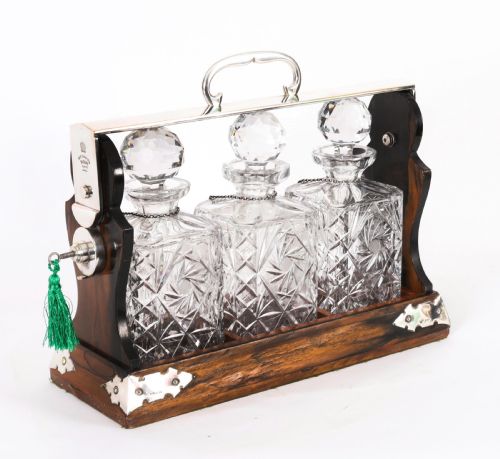
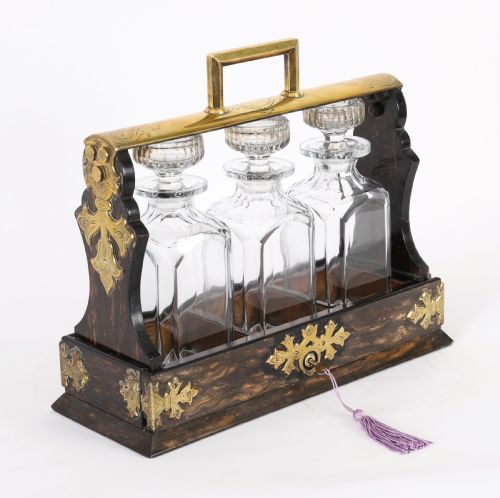
- A locking wooden frame that secures decanters by their stoppers to prevent unauthorised access to the spirits within. The design exposes the bottles while keeping them physically barred until a key is turned.
- Cave a Liqueur
- A French portable liquor cabinet, typically lined with velvet or silk and fitted with cut glass decanters and matching glasses. These containers often feature brass inlay and ormolu mounts.
- Lead Crystal
- Glass containing metallic oxide that increases weight, refractive index, and brilliance. This material allows for deep wheel cutting without compromising structural integrity.
- Silver Collar
- A metal band fitted around the neck of a decanter, frequently bearing silversmith hallmarks and assay office stamps. It reinforces the pouring rim and provides a secure seating for the stopper.
- Optically Blown
- A glassblowing technique that creates subtle vertical ribs or patterns in the vessel wall through the use of a multi-mould before final expansion.
Crystal Liquor Decanters: Frequently Asked Questions
What is a tantalus decanter set?
A tantalus set houses cut crystal decanters inside a lockable wooden frame fitted with a metal bar. This mechanism prevents removal of the bottles until the lock is opened with a key.
Originating in the Victorian period, these units were kept in studies and drawing rooms to secure expensive spirits from household staff or guests.
How do I date an antique decanter?
Dating relies on checking silver hallmarks on collars, stopper matching, and the depth of the glass cutting. Victorian and Edwardian pieces often feature registered design numbers or maker stamps on the mounts.
Cabinet woods and construction methods on accompanying stands or boxes also provide reliable chronological markers.
Are decanter stoppers original?
Original stoppers generally share the same cut pattern, glass tint, and internal number markings as the neck of the bottle. Slight variations in grinding or fit can indicate a replacement gathered over time.
Inspect the ground glass portion of both the stopper and the neck for matching wear patterns and hand-scribed assembly numbers.
How should I clean cloudy crystal decanters?
Cloudiness is typically caused by mineral deposits or spirit residue etching the interior glass surface over long periods. Gentle soaking with warm water and non-abrasive cleaning agents helps restore clarity.
Avoid extreme temperature changes to prevent thermal shock and cracking in heavy lead crystal vessels.