


Silver Plate Tantalus
A silver plate tantalus is a locking barware frame designed to keep spirits secure while displaying cut glass decanters with considerable elegance.
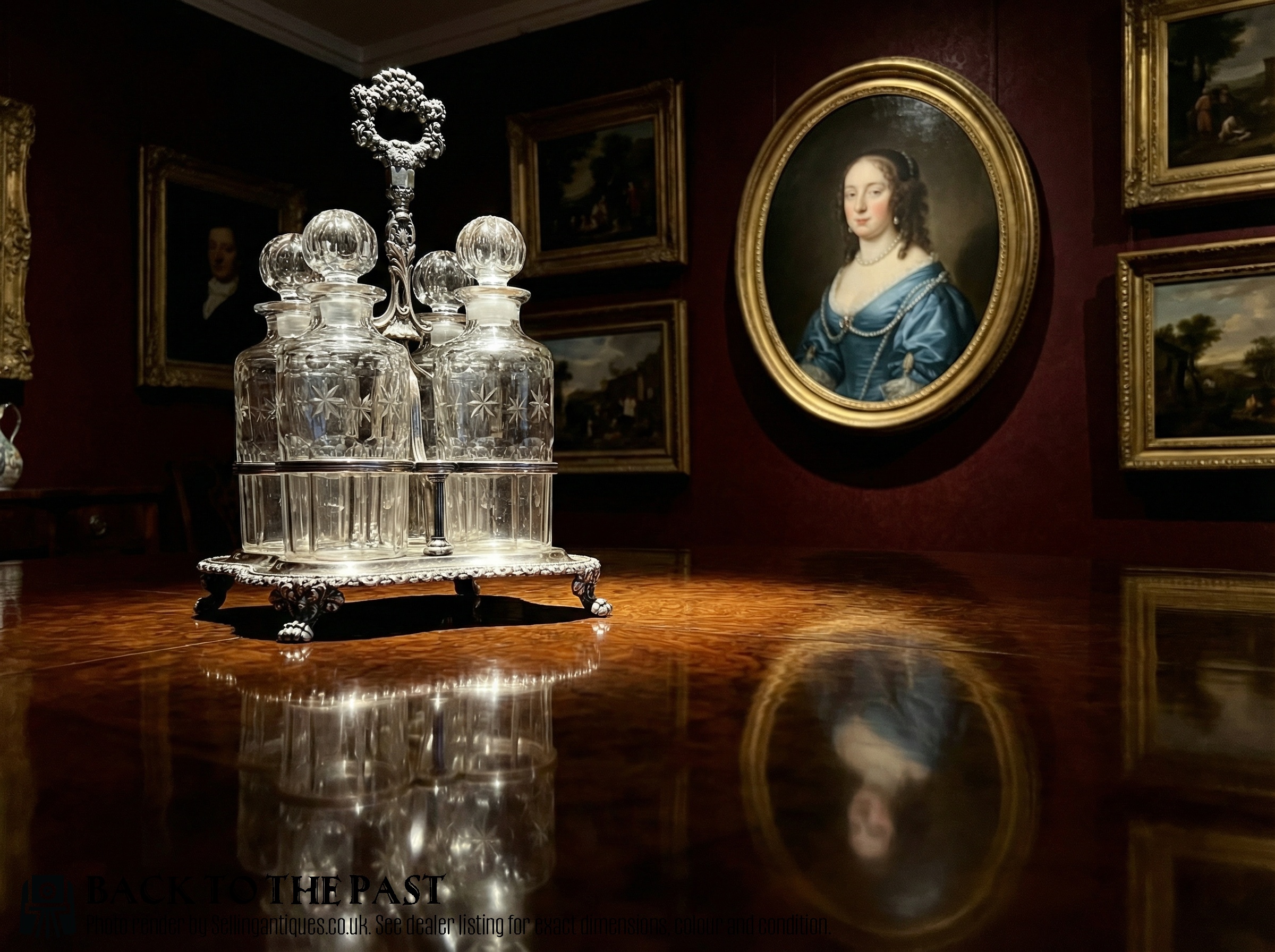
Silver Plate Tantalus
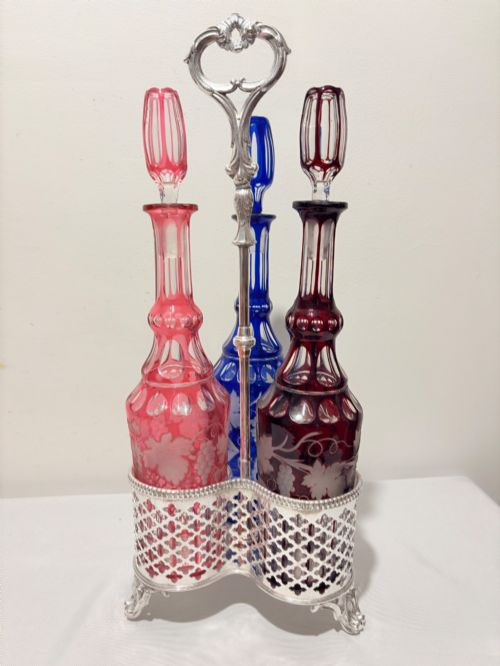
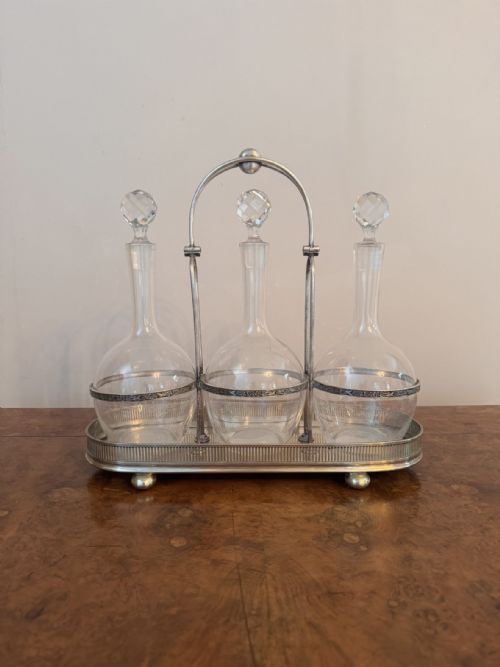
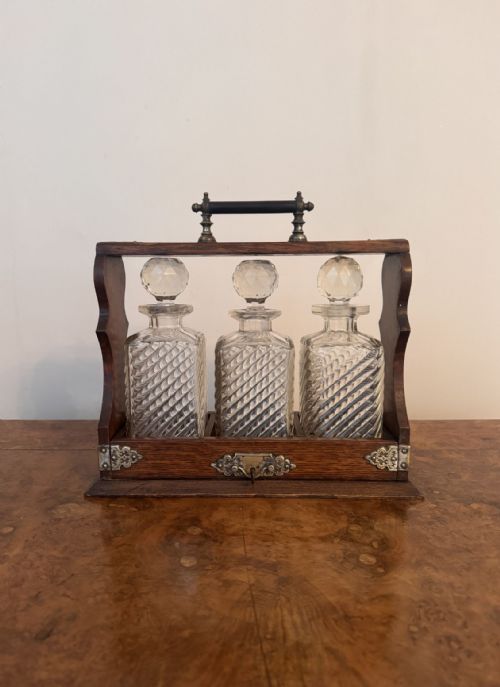
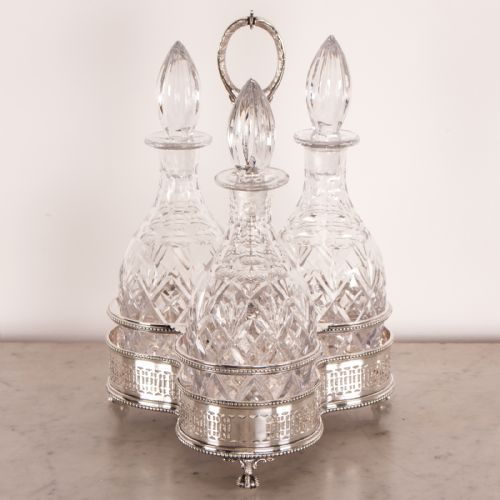
A silver plate tantalus combines a secure metal locking mechanism with a fitted wooden or metal base to house several glass decanters safely. Most pieces encountered on this page originate from the Victorian and Edwardian periods, often taking the form of three-bottle frames.
The primary purpose of these items was to prevent servants from sampling the master's private whiskey, gin, or brandy. Consequently, the locking handle folds down over the stoppers, meaning the decanters cannot be removed without the correct key.
Beyond standard upright frames, buyers will also encounter travelling bars, liqueur stands, and rotating barrel dispensers housed in oak, walnut, or coromandel. These variations reflect the diverse entertaining habits of the nineteenth and early twentieth centuries.
Materials and Construction
The framework relies heavily on silver plate or Old Sheffield Plate mounted over a base of solid oak, walnut, or exotic hardwoods like coromandel, sometimes enhanced by marquetry inlay. Metal mounts secure the bottles, while internal locking bars slide into place to trap the decanter stoppers.
The vessels housed within these frames consist of heavy cut glass or cut crystal, occasionally complemented by frosted crystal barrels or coloured glass inserts. Makers utilised precise bevelling and deep fluting to catch the light on the sideboard.
Some Victorian manufacturers offered caged cockatoo designs alongside standard spirit barrels for domestic entertaining.
Factors of Distinction
The weight and gauge of the silver plate dictate the longevity of the metal framework, alongside the complexity of the locking mechanism and its key assembly. Better examples exhibit robust cabinetry in quartersawn oak or dense exotic woods rather than simple veneered carcases.
The inclusion of matching original cut glass decanters with their correct stoppers elevates the integrity of the piece. Superior items often feature registered design numbers or maker stamps from notable silversmiths, indicating higher workshop standards.
Walker & Hall·Elkington·The Goldsmith Co·Hukin and Heath·Philip Ashberry·Mappin Brothers·Hobbs & Co·Sol Goldfeder·Betjemann & Sons·John Round·Mappin & Webb
The Silver Plate Tantalus Glossary
- Tantalus
- A locking decanter stand named after the mythological figure of Tantalus, who was kept just out of reach of food and drink. The frame prevents access to the spirits until the key is turned.
- Old Sheffield Plate
- An early method of fusing a thin sheet of silver to a thicker copper base before rolling. This technique produces a warm, durable finish distinct from later electroplating.
- Decanter Stand
- An open framework or tray for holding bottles without the locking bar mechanism of a true tantalus. These often feature ornate handles and feet.
- Coromandel
- A dense, heavily figured hardwood imported from Asia, frequently utilised for luxury Victorian cabinet work and tantalus bases. Its dark grain provides a striking contrast against silver mounts.
- Cut Crystal
- High-clarity glass containing lead oxide, deeply faceted by wheel-cutting to create sharp light-refracting patterns. It forms the standard material for tantalus bottles.
Silver Plate Tantalus: Frequently Asked Questions
How does a tantalus lock work?
A metal bar runs across the tops of the glass stoppers, secured at one end by a lock built into the wooden base. Turning the key releases the bar so it can swing upward to free the decanters.
Most mechanisms require the handle to be completely upright before the bottles can be lifted clear of the retaining frame.
Are the decanters always original to the stand?
Many pieces survive with their matched set of cut glass decanters, though replacements occur frequently due to accidental breakage over the decades. Inspecting the matching facet cuts and glass tint helps confirm period authenticity.
Finding pieces with matching original stoppers remains a significant advantage for collectors.
What woods were used for the bases?
Oak and walnut appear most frequently in the listings, providing a sturdy foundation for the heavy metal frames and glass bottles. Finer luxury examples utilise exotic hardwoods such as coromandel.
Some iterations incorporate marquetry inlay to decorate the wooden surfaces further.
How do I date a silver plate tantalus?
Stylistic clues such as heavy Victorian casting, Edwardian proportions, or registration numbers stamped into the metal help establish the production era. Patent dates on the locking mechanism provide a reliable earliest possible year of manufacture.
Maker marks stamped onto the silver plate offer direct reference to active workshop years.