




Crystal Glass Rummers
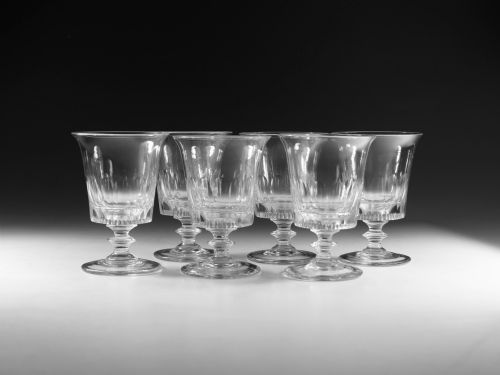
Crystal glass rummers are substantial antique drinking vessels designed for robust toasts, combining heavy lead metal with generous bowls.
Crystal Glass Rummers
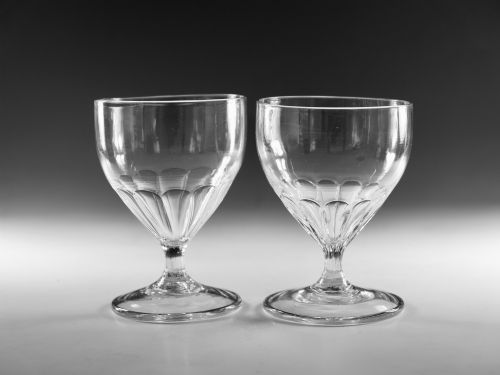
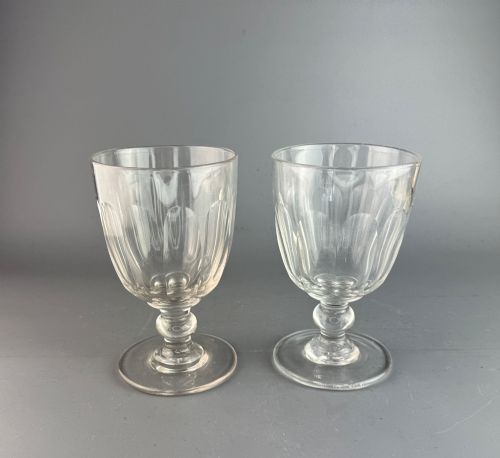
Crystal glass rummers are large, sturdy drinking vessels produced across the Georgian, Regency, and Victorian eras for everyday toasts and heavy hospitality. When searching for crystal glass rummers, buyers encounter generous bowls supported by short stems or substantial feet, designed to sit firmly on the dining table.
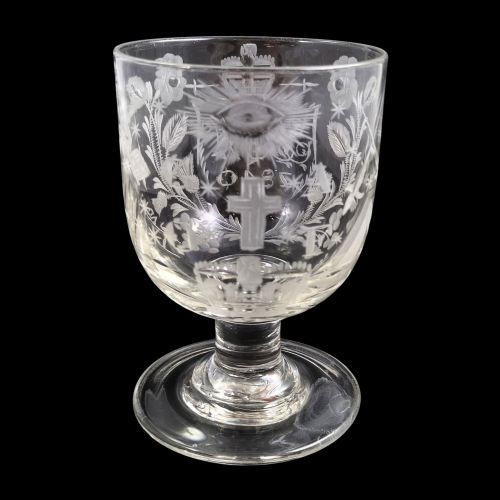
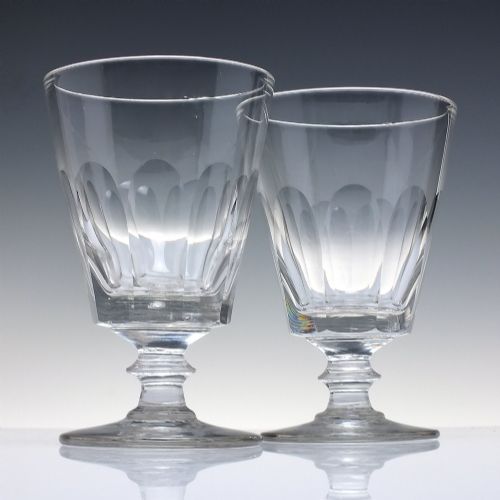
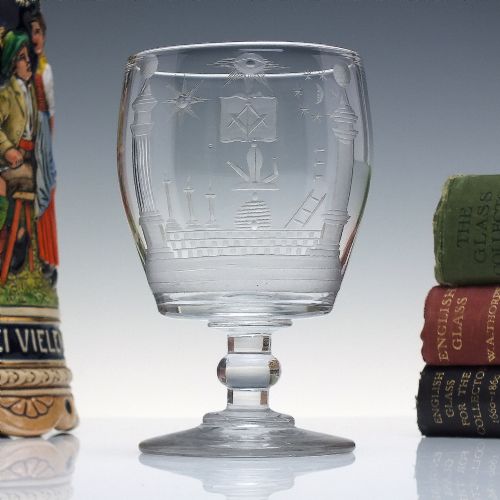
The English tradition dominates the evidence, with pieces ranging from late eighteenth-century gin glasses to large Victorian table rummers and Masonic presentation pieces. Specimens appear singly, in pairs, or in sets, often featuring deep ovoid or bucket bowls intended for ale, spirits, or wine.
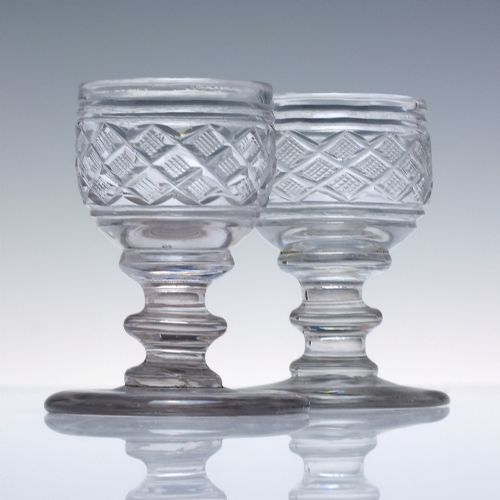
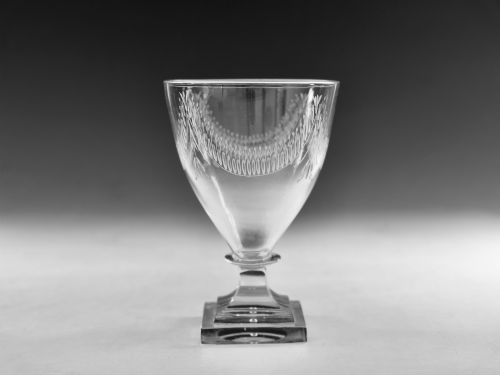
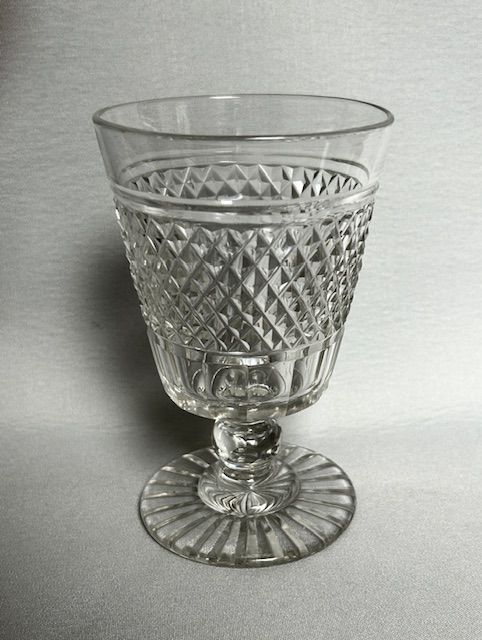
Makers utilised distinct regional patterns, from North-East English diamond engraving to Anglo-Irish deep cutting, creating varied profiles that reflect the shifting tastes of nineteenth-century drinkers. Collectors find both plain-stemmed Georgian goblets and heavy lead crystal examples fitted with square lemon squeezer bases.
Materials and production
Glasshouses relied heavily on lead glass and flint glass to achieve the high refractive index and heavy weight characteristic of these drinking vessels. This dense material supported deep wheel cutting, faceting, and surface engraving without compromising structural integrity.
Hot-formed bowls were joined to various stem types, including baluster turns and heavy square lemon squeezer bases pressed in moulds. Artisans then applied wheel engraving, diamond-point etching, or brilliant cutting to adorn the exterior surfaces with hops, barley, armorials, or commemorative ships.
Early drinkers toasted safely with heavy glass that doubled as an impromptu cudgel during tavern disputes.
Assessing quality
Quality rests upon the clarity and weight of the metal itself, alongside the crispness of the wheel cutting or engraving. Superior examples display brilliant light refraction and precise, deep incisions that hold their edges sharply to the touch.
Proportion and stability dictate overall merit, particularly in pieces featuring square bases or heavy baluster stems. A well-balanced rummer exhibits harmonious wall thickness from the rim down to the foot, avoiding excessive cloudiness or heavy bubbles within the glass matrix.
The Crystal Glass Rummers Glossary
- Lemon squeezer base
- A square, moulded glass foot with indented corners that resembles a kitchen lemon squeezer. These bases were popular on Georgian rummers and large table salts.
- Flint glass
- An early British term for heavy, brilliant lead glass containing potash and lead oxide. It offers superior clarity compared to soda glass.
- Hop and barley
- A popular decorative engraving motif on ale glasses and rummers. It signifies the contents and purpose of the drinking vessel.
- Anglo-Irish cut
- Deep, sharp geometric cutting associated with glasshouses operating in Ireland and England during the late eighteenth and early nineteenth centuries. This style maximises the sparkle of lead crystal.
- Bucket bowl
- A straight-sided drinking vessel bowl that flares outwards towards the rim. It provides a stable, capacious form for heavy toast glasses.
Crystal Glass Rummers: Frequently Asked Questions
What were rummers used for?
Crystal glass rummers served as large drinking vessels for hearty toasts, ale, wine, and punch during the Georgian and Victorian periods. Their substantial capacity made them popular in taverns, Masonic lodges, and domestic dining rooms.
Unlike delicate wine glasses, these sturdy vessels were built to circulate safely around a crowded table after dinner.
How do I date an old rummer?
Dating relies on combining bowl shape, stem type, and decorative techniques recorded in the evidence. Eighteenth-century examples often feature plain ovoid bowls, while Regency pieces frequently display square lemon squeezer bases and deep Anglo-Irish cutting.
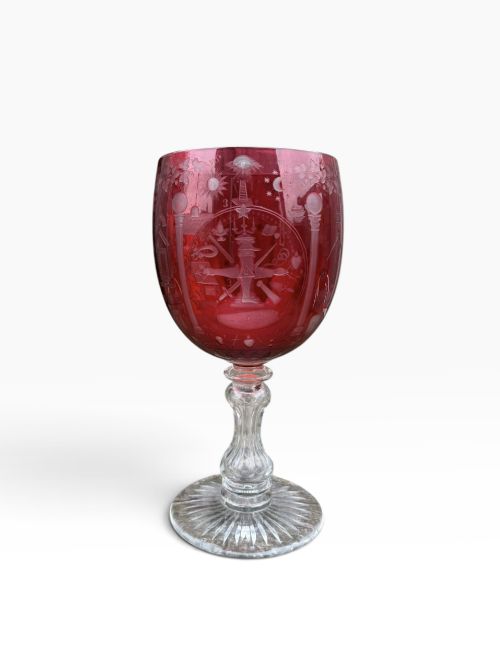
Victorian pieces tend toward larger proportions, heavier etched ornamentation, and occasionally coloured glass bodies like cranberry or amber.
Are all rummers clear glass?
While the majority of listings feature clear lead crystal or flint glass, coloured examples do occur. The evidence includes vibrant turquoise green, cranberry, and amber glass vessels.
Coloured specimens often served specific social functions, such as Masonic gatherings or specialised club toasts, adding variety to the standard clear table glass.
How should I clean antique glass?
Antique glass requires gentle hand washing in warm water using mild soap, avoiding harsh scrubbing or sudden temperature changes. Sudden heat shifts can crack old lead crystal.
Wooden drying racks and soft linen cloths prevent scratching the high-lead surface and preserve the crisp edges of wheel engravings.