




Crystal Droplet Pendant
These crystal droplet pendant fixtures deliver refracted light and historic weight, catching the eye as functional sculpture in any room.
Crystal Droplet Pendant
A crystal droplet pendant brings together historic illumination and reflective glass elements designed to scatter light across a space. Buyers searching this phrase will find a variety of configurations spanning multi-arm chandeliers, compact bag styles, and single-light ceiling fixtures.
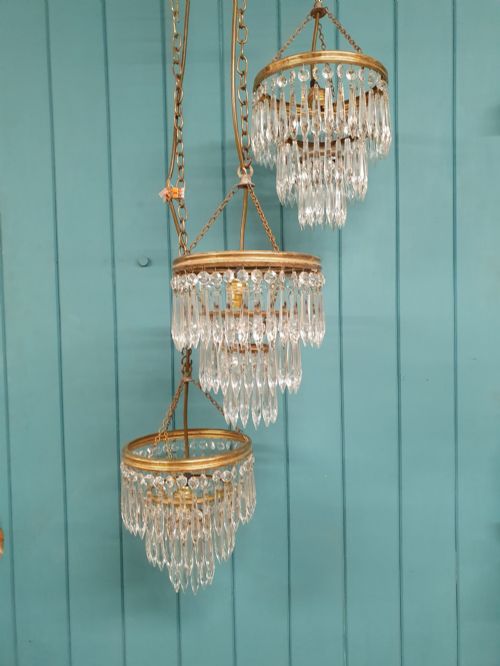
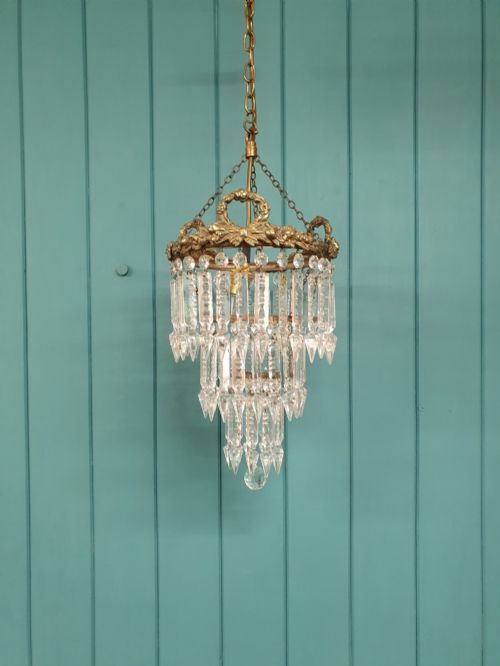
The selection on this page draws heavily from early twentieth-century production, the Edwardian era, and the nineteenth century. Common forms include tiered structures, birdcage frames, and basket arrangements ornamented with hanging glass components.
Materials and Construction
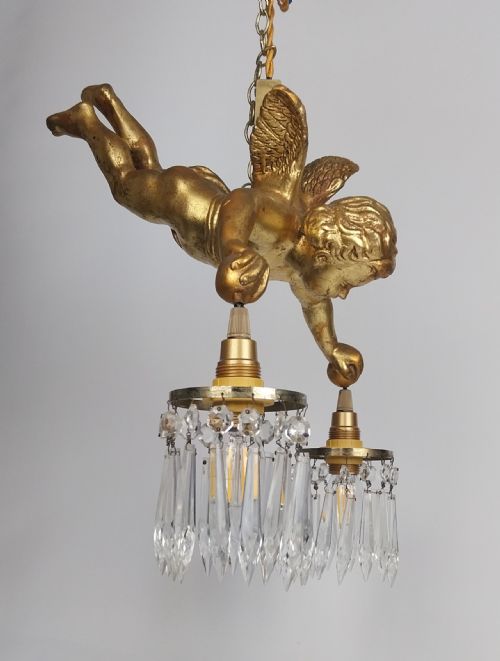
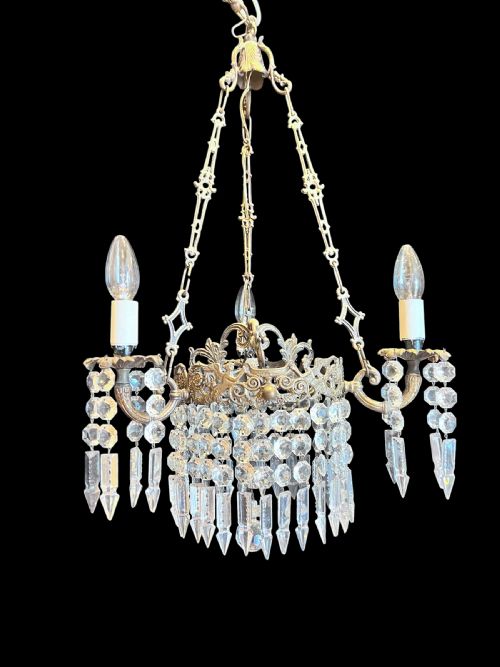
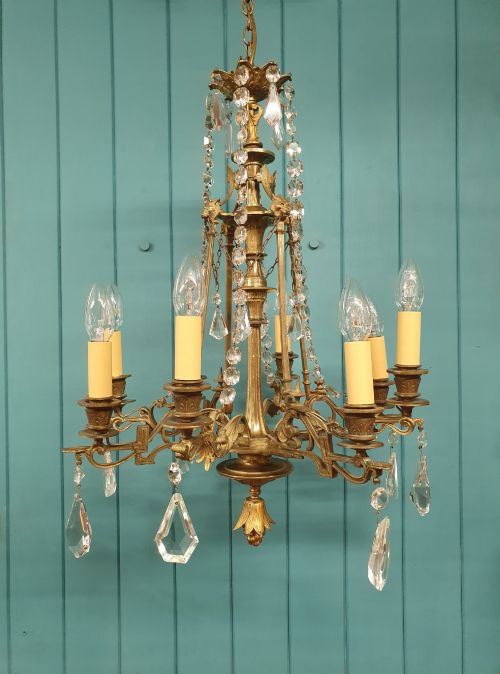
The structural frameworks utilise brass, gilt metal, iron, and silvered metal to support the weight of the glass components. Workshops shaped these metals into arms, rings, and decorative motifs such as cherubs, lion masks, and floral elements.
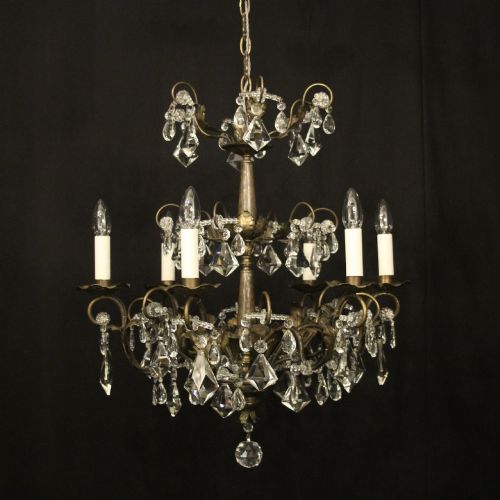
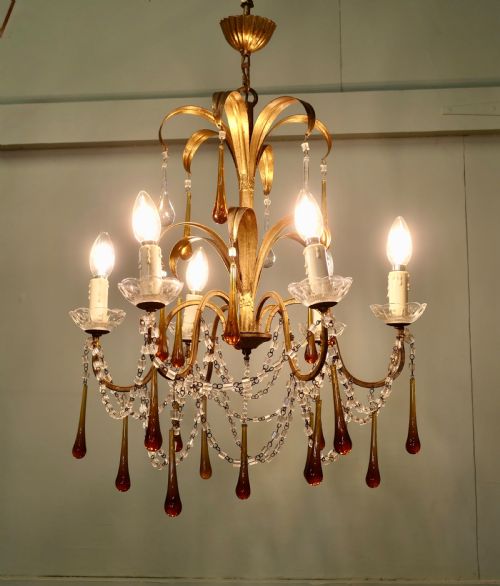
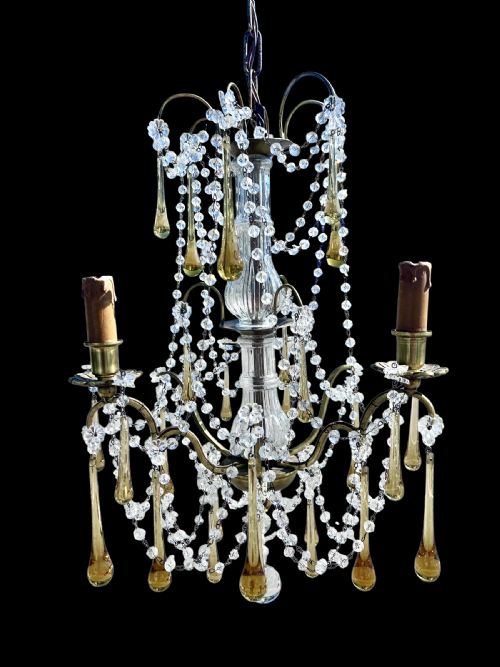
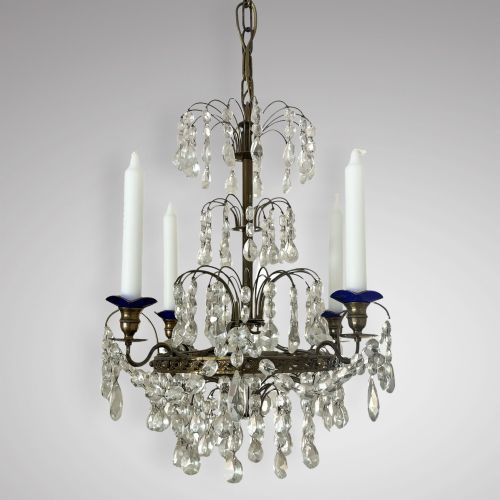
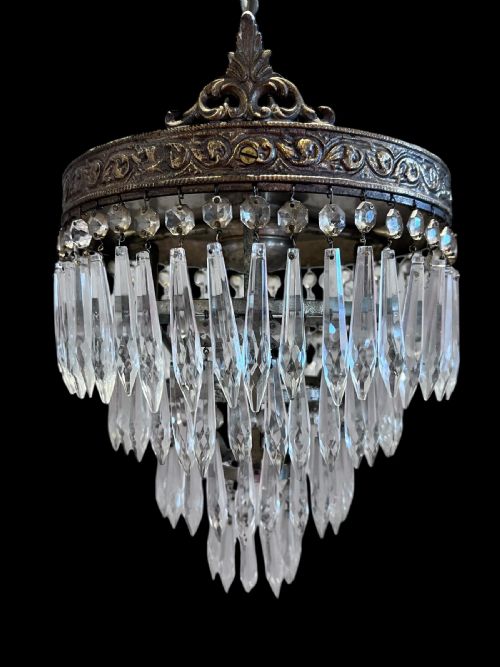
Pendant assemblies incorporate cut glass and crystal droplets suspended by wire or pinned directly to the metal frame. Coloured crystals, amber teardrops, and cobalt accents appear alongside clear glass to alter the quality of the emitted light.
Gilded winged cherubs keep a permanent, silent watch over the room from within the metalwork of nineteenth-century ceiling lights.
Assessing Quality and Execution
Quality rests in the weight and clarity of the crystal elements and the precision of their cutting. Finer examples display sharp facets that refract light cleanly, while lesser pieces rely on simple moulded glass with softer edges.
The integrity of the metal framework dictates the overall substance of the piece. Substantial cast brass or gilded bronze mounts demonstrate superior craftsmanship compared to lighter wire or pressed metal alternatives.
The Crystal Droplet Pendant Glossary
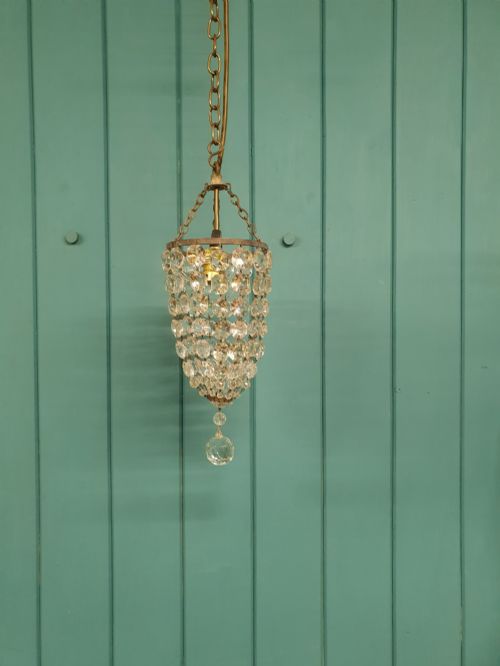
- Bag chandelier
- A lighting fixture featuring a gathered lower section shaped like a bag or basket, densely hung with crystal droplets. This form became particularly popular during the Edwardian period.
- Pendant light
- A hanging luminaire suspended from the ceiling by a single cord, chain, or rod. These fixtures focus light downward into a specific area of a room.
- Toleware
- Enamelled or lacquered metalware, often painted to imitate natural finishes or applied in bold decorative colours. It provides a contrasting body for crystal drops in certain French pieces.
- Gilt metal
- Metal coated with a thin layer of gold leaf or gilt wash to impart a warm, reflective surface. This finish complements the sparkle of adjacent crystal components.
- Spike chandelier
- A vertical lighting design incorporating rigid metal spikes or stems that project outward from the central axis. These elements often carry additional glass drops or decorative beads.
Crystal Droplet Pendant: Frequently Asked Questions
How do I hang a crystal droplet pendant?
These fixtures suspend from ceilings using matching chains or fixed rods secured to an internal electrical junction box. Professional installation is recommended due to the combined weight of the metal frame and glass components.
Ceiling height dictates the overall drop of the pendant, particularly for multi-tier or multi-light chandeliers. Ensuring proper structural support in the ceiling joists protects both the ceiling and the antique fixture.
What periods do these pendants come from?
The available lighting spans the nineteenth century, the Edwardian era, and the 1920s and 1930s. Design characteristics shift from ornate nineteenth-century gilt bronze to streamlined Art Deco tiers.
Earlier examples often feature heavy brass frames and hand-cut crystal drops, while later 1930s pieces introduce geometric glass arrangements. Identifying the period relies on examining both the metal casting style and the assembly techniques used for the droplets.
How do I clean a crystal pendant?
Routine maintenance involves dusting the glass droplets and metal frame with a soft, dry cloth to prevent film buildup. For deeper cleaning, individual crystals can be wiped with a mild solution of warm water and professional glass cleaner.
Harsh chemical sprays should be avoided as they can damage gilt surfaces and patinated metalwork. Keeping the electrical components entirely dry during any cleaning process is essential.
Where do these lighting styles originate?
Many of the listed fixtures trace their design roots to French workshops and Italian glassmaking traditions. Styles such as the Marie Theresa or Florentine floral arrangements reflect distinct regional decorative movements.
French pieces frequently incorporate gilded bronze, tschechoslovakian or French crystal, and intricate birdcage frames. Italian examples often emphasise beaded swags and colourful glass elements.