


Cherub Ceiling Light
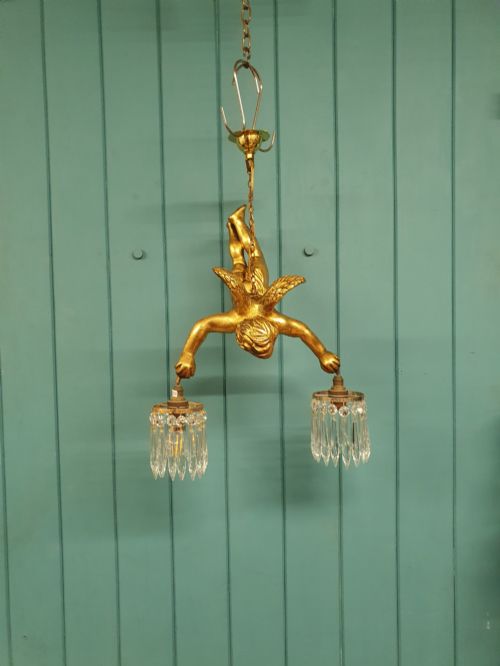
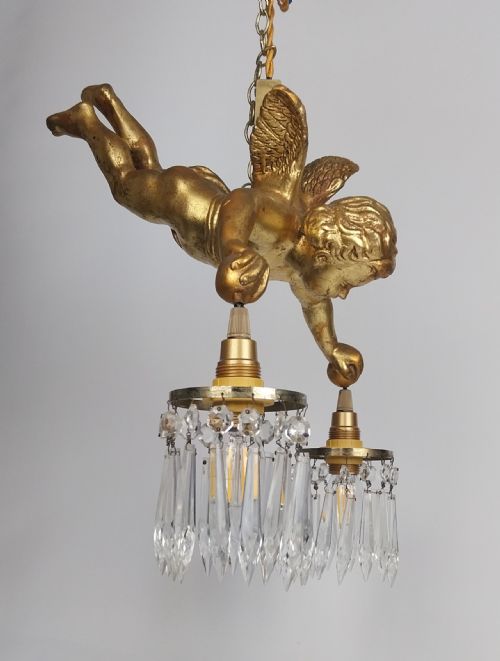
A cherub ceiling light brings figurative bronze and gilt metalwork to a room, suspending winged figures and putti above.
Cherub Ceiling Light
A cherub ceiling light combines interior illumination with sculptural cast metal figures of winged infants, putti, and cupids. These fixtures span the nineteenth century and the early twentieth century, drawing on French Rococo Revival and Neoclassical styles.
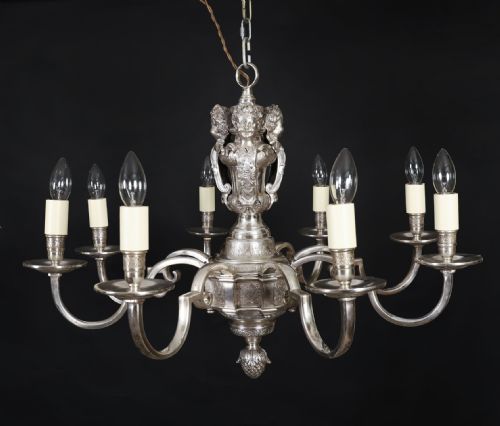
Buyers will most frequently encounter brass, bronze, and gilt metal chandeliers fitted with multiple lights, sometimes complemented by cut glass crystals or icicle shades. The forms range from multi-arm candle-style chandeliers to single-pendant ceiling lights featuring flying figures.
Originating largely from French and English workshops, these pieces function as both central lighting sources and decorative bronze sculptures. The figures appear either supporting the arms or suspended directly within the ceiling fitting.
Assessing quality and craftsmanship
The weight of the primary metal frame and the quality of the glass components, such as cut crystal spikes or original shades, indicate the standard of manufacture. The integration of the sculptural cherubs into the structural arms shows the level of design consideration.
Materials recorded across these listings include bronze, brass, silver plate, and crystal.
The Cherub Ceiling Light Glossary
- Putti
- Plural of putto, representing a chubby male infant, often winged, found in classical art and decorative metalwork. These figures form the central sculptural motif of many ceiling fixtures.
- Spelter
- A zinc alloy used as a substitute for bronze in decorative castings, often painted or bronzed to simulate heavier metals. It appears frequently in twentieth-century light fittings.
- Gilt metal
- Metal that has been given a thin coating of gold or gold-coloured finish. This treatment brightens the appearance of chandeliers and highlights the cast details.
- Rococo Revival
- A nineteenth-century style drawing on eighteenth-century French design, characterised by asymmetrical scrolls and naturalistic ornamentation. It heavily influences the decorative framing of these lights.
- Cut glass
- Glass that has been shaped and faceted on a wheel to increase brilliance and light refraction. These elements hang from the chandelier frame to catch and scatter illumination.
Cherub Ceiling Light: Frequently Asked Questions
How do I date a cherub ceiling light?
Dating relies on examining the casting materials, underlying metal finishes, and overall stylistic vocabulary. Nineteenth-century examples often utilise heavier bronze or gilt bronze with hand-chiselled details.
Later pieces from the twentieth century tend to employ brass, spelter, or silver plating alongside early electrical components. Comparing the form to documented French and English design periods helps narrow the decade of production.
Are these lights suitable for low ceilings?
Many fixtures hang at a fixed drop that suits standard room heights, though chain lengths vary across different models. Flush or semi-flush ceiling lights with flying cherubs work particularly well where vertical space is limited.
Larger multi-arm chandeliers require higher clearance to allow passage underneath while providing balanced illumination.
How should I clean a gilt bronze chandelier?
Maintenance requires gentle dusting with a soft brush to protect delicate gilt surfaces and glass crystals. Moisture and harsh chemical cleaners should be avoided to prevent stripping the surface finish.
Crystal spikes and shades can occasionally be removed for careful washing in warm soapy water before being dried and reattached.
Did these fixtures originally use candles?
Earlier nineteenth-century examples were constructed to hold wax candles before being adapted for electricity. Many surviving pieces show evidence of conversion or wiring additions made during the twentieth century.
Chandeliers retaining original shades or candle tubes often reflect mid-century electrical updates.
What is the difference between bronze and spelter figures?
Bronze is a heavy, durable copper alloy that takes fine chisel work and develops a rich patina over time. Spelter is a softer, lighter zinc-based metal used as a more economical alternative for decorative castings.
Close inspection of the underside and weight helps distinguish the dense mass of true bronze from lighter alloy alternatives.